A robotic arm typically has around 3 to 7 joints. It consists of multiple joints and motion axes, and each joint or axis has a different movement pattern and range limit. The exact number of joints depends on the design and purpose of the robotic arm. Below are the joint configurations of several common robotic arms.
1. Three-DOF Geometric Structure
This structure consists of three rotational joints, with each joint rotating around a different axis. It can achieve movement in three directions.
2. SCARA Robotic Arm
A SCARA arm is composed of three or four joints, usually including one rotational joint and two or three translational joints. It can perform horizontal translation, vertical movement, rotation, and extension.
3. Six-Axis Robotic Arm
A six-axis arm consists of six joints, including rotational joints and extension joints. It provides six degrees of freedom, allowing rotation and reach in the X, Y, and Z directions.
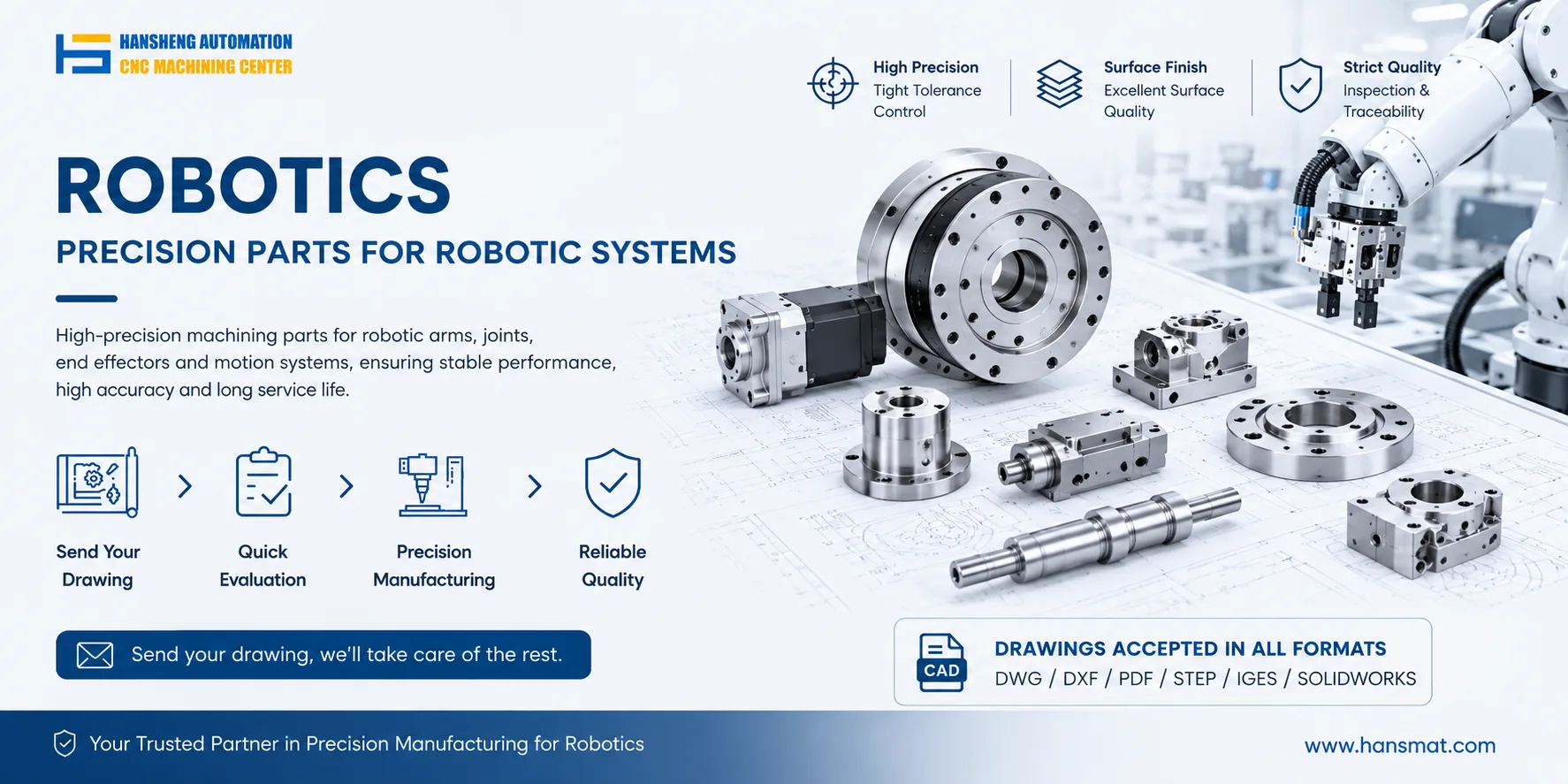
For non-standard joint housings, adapter brackets, or other custom mechanical parts used in these robotic arms, Hansheng Automation provides machining services based on customer drawings, supporting both prototype development and small-batch production.