The fulcrums of a humanoid robotic arm are mainly divided into two types: the overall load-bearing base fulcrum and the joint hinge fulcrums. In mass-produced industrial models, the core load-bearing fulcrum is concentrated at the shoulder base.
I. Overall Load-Bearing Base Fulcrum
The base fulcrum of an industrial humanoid robotic arm is usually installed on a floor-mounted base, cantilever bracket, or AGV mobile platform. It serves as the main supporting structure of the entire arm, bearing the weight of the arm body, end effector, workload, and dynamic operating torque. It is the core support point for ensuring working accuracy and stability, and it must meet the rigid installation requirements of the ISO 10218-1:2011 industrial robot safety standard.
II. Joint Hinge Fulcrums
Each movable joint of a humanoid robotic arm is equipped with a hinge-type fulcrum, including the shoulder where the base connects to the upper arm, the elbow where the upper arm connects to the forearm, and the wrist where the forearm connects to the end effector. Each fulcrum corresponds to an independent servo drive axis and achieves high-precision rotary motion through precision bearings and harmonic reducers. Lightweight collaborative humanoid arms often use integrated joint modules that combine the fulcrum and drive structure.
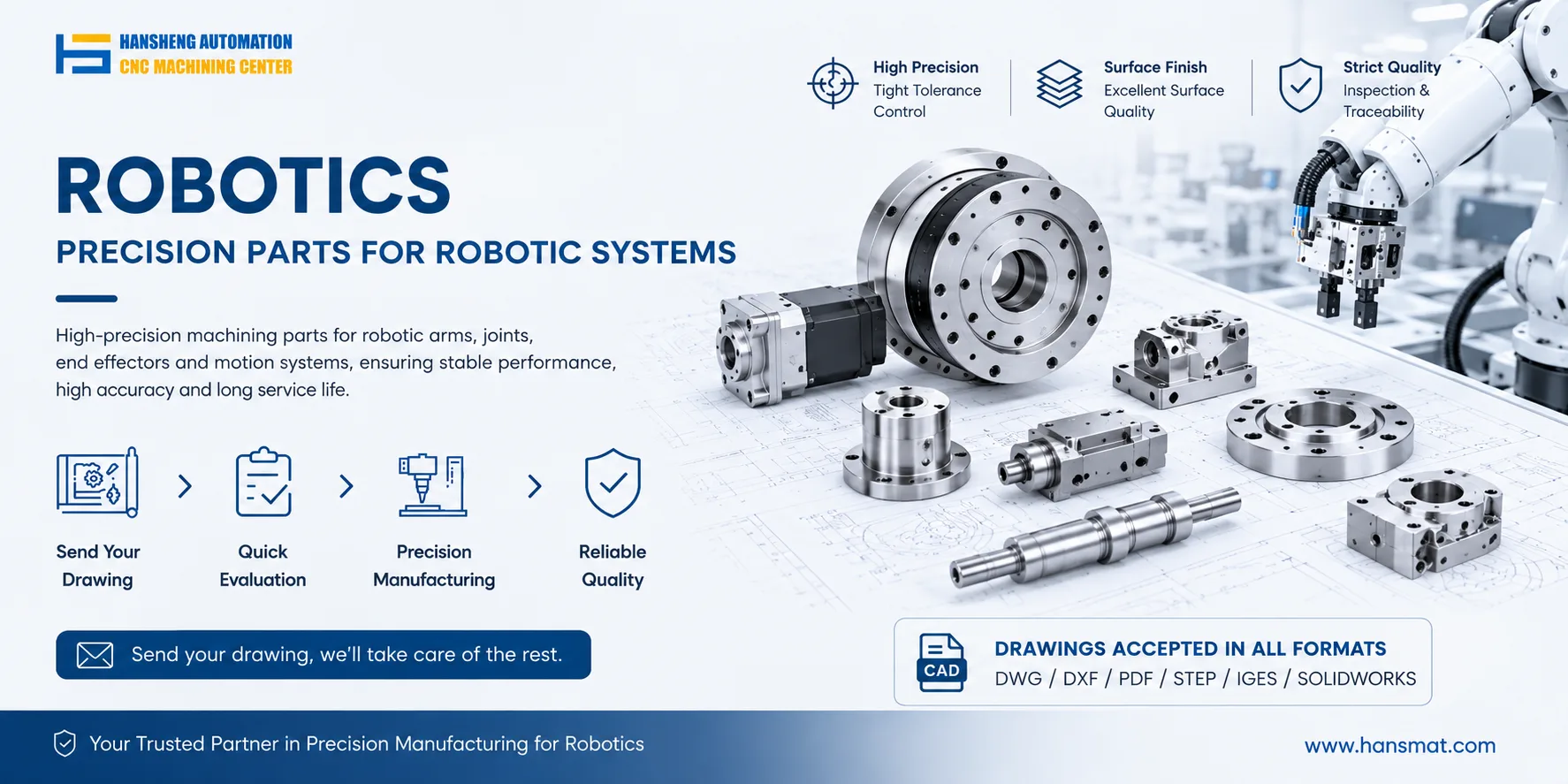
For these precision joint fulcrums, Hansheng Automation provides custom machining of bearing housings, joint shafts, and adapter parts based on customer drawings, helping maintain motion accuracy and long-term stability.
In humanoid service robots, the fulcrum structure is closer to human physiological layout. The shoulder fulcrum is integrated on the outer side of the torso chest, matching the position of the human shoulder joint and supporting mobile operation scenarios of humanoid robots.