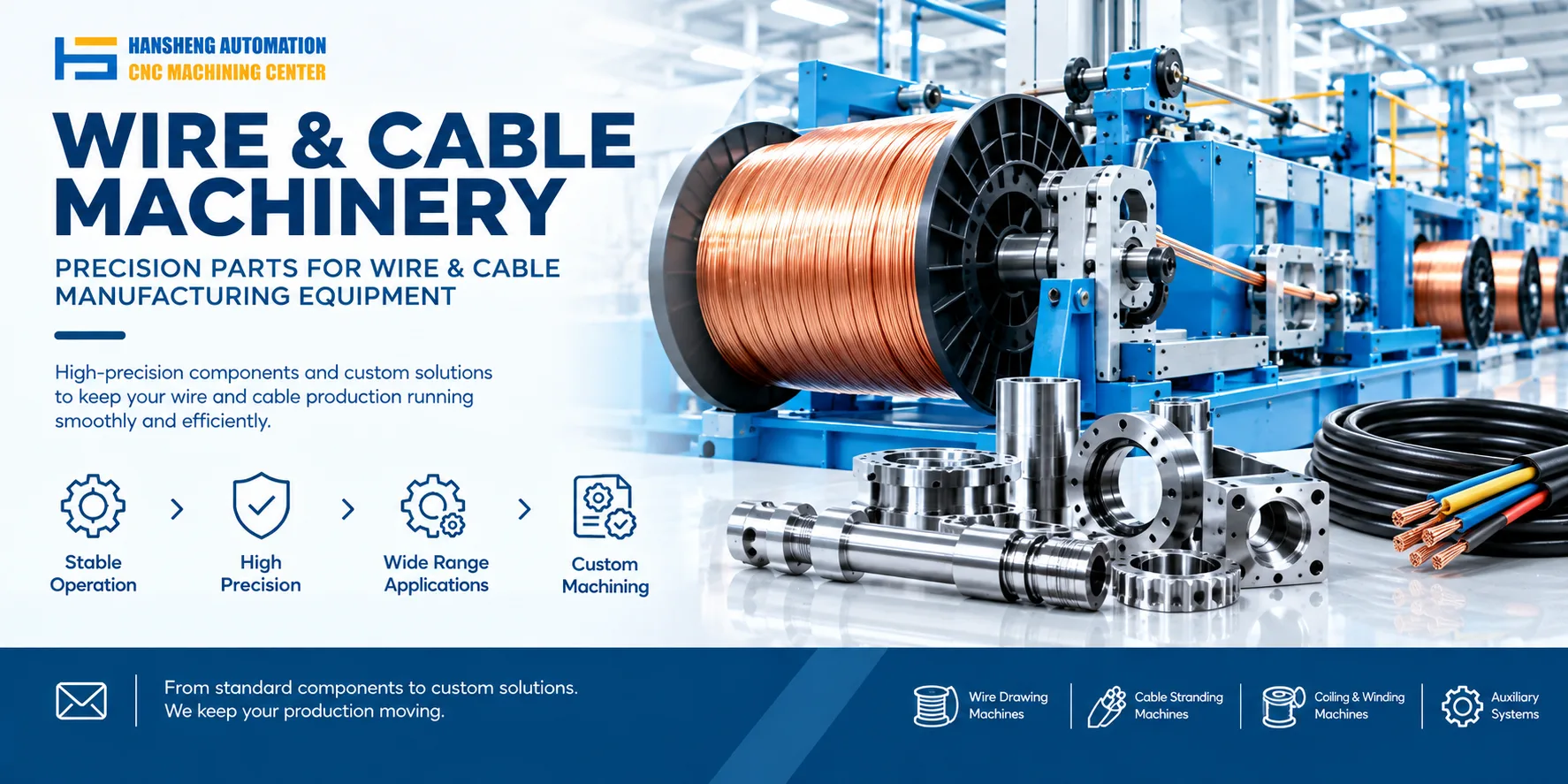
High-voltage cable manufacturing involves several processing stages, from conductor preparation to insulation, shielding, and final inspection. Each stage requires appropriate process control to ensure that the finished cable meets its electrical and mechanical requirements.
1. Conductor processing
High-voltage cable conductors are typically made from high-purity copper or aluminum. The metal is first processed into rods of the required specifications. A wire drawing machine then reduces the rods to the required wire diameter.
Next, a stranding machine twists multiple individual wires together to form the conductor. This structure provides the required electrical conductivity and mechanical properties.
2. Insulation extrusion
The insulation layer is a critical part of a high-voltage cable. The preheated conductor passes through an extrusion line, where an insulating material such as cross-linked polyethylene (XLPE) is extruded evenly around it.
The process requires careful control of parameters such as material temperature and extrusion speed. Consistent extrusion helps produce an insulation layer that meets the required electrical performance specifications.
3. Shielding layer application
A shielding layer is applied around the insulation to help control electromagnetic interference. Copper tape or copper wires are commonly used to form this layer, with the material wrapped closely around the insulated conductor.
The shielding structure must be applied consistently to provide the intended shielding function.
4. Outer sheath extrusion
The outer sheath protects the internal cable structure from external influences. After shielding, the cable passes through another extrusion process, where a sheath material such as polyvinyl chloride (PVC) or polyethylene (PE) is applied around the cable.
The completed sheath provides an external protective layer. The material selected depends on the cable design and its intended application.
5. Cable assembly, inspection, and packaging
For multicore high-voltage cables, multiple insulated single-core cables are laid or twisted together according to the specified arrangement to complete the cabling process.
The finished cable then undergoes quality inspection, including visual checks and electrical performance testing. After passing the required inspections, the cable is wound onto a suitable cable drum for storage and transportation.
Custom machining for wire and cable manufacturing equipment
Wire and cable production equipment also relies on precision mechanical components, including shafts, mounting brackets, supports, and other structural parts. These components must meet the relevant dimensional and assembly requirements of the equipment.
Hansheng Automation provides custom precision machining based on customer drawings. We assess component geometry, material specifications, and dimensional tolerances to determine suitable machining processes for prototypes and small batch orders.
Our drawing-based machining services also support other industries, including packaging and filling machinery, tobacco equipment, yacht components, and RC racing car parts. Customers can submit their drawings and technical requirements for evaluation and custom manufacturing.