A slower feed rate in a calendering machine can cause uneven thickness, surface bubbles, flow marks, wrinkles, and changes in material properties. The actual effects depend on feed consistency, roller speed, roll gap, and processing temperature. If the feed rate remains outside the required range, the feeding system and process settings should be checked to prevent defects from affecting subsequent production.
Uneven thickness and dimensional deviations
A calendering machine requires a stable material supply to maintain continuous flow through the roll gap and produce sheets or films at the required thickness.
When the feed rate decreases, less material enters the roll gap per unit of time. If the supply becomes insufficient or intermittent, local areas may become thinner, and severe interruptions can cause breaks in the material. If the feed rate continues to fluctuate while roller speed and roll gap settings remain unchanged, the material flow becomes less stable. This can lead to thickness variations outside the specified tolerances.
The effect of a slower feed rate cannot be assessed in isolation. The actual material supply and roller operating conditions must also be considered.
Surface defects, including bubbles, flow marks, and wrinkles
Changes in feed rate can affect surface quality in several ways.
Bubbles and flow marks
When a slower feed rate increases the time material spends between heated rollers, some materials may undergo thermal decomposition and release gas. Air trapped in the material may also remain in the sheet if it is not expelled during calendering. Both conditions can lead to bubbles on the surface.
Unstable feeding and uneven heating can also produce visible flow marks, reducing surface uniformity.
Wrinkling and tearing
Insufficient feeding can leave some areas of the material too thin, making the sheet less continuous. These weak areas are more susceptible to tearing under roller pressure.
If the feed supply fluctuates, differences in thickness and tension between adjacent areas can also cause irregular wrinkles.
Uneven surface gloss
Variations in heating time and plasticization across the material can produce inconsistent surface gloss. This affects the appearance of the finished sheet or film and may indicate that feeding or temperature control is unstable.
Inconsistent plasticization and reduced material performance
For materials that require plasticization before calendering, changes in feed rate can affect both surface quality and the material's processing condition.
Some areas may become overplasticized if they remain between the rollers for too long, while other areas may not receive sufficient plasticization. The resulting variation can affect mechanical properties such as tensile strength and elongation at break. If these properties fall outside the specified limits, the finished material may fail to meet the required standards.
Interrupted feeding can also affect the bonding between successive sections of material. If the sections do not fuse adequately, delamination or loss of adhesion may occur during subsequent processing or use.
How to troubleshoot a slower feed rate
When calendering quality deteriorates, first check whether the actual feed supply is stable. Then verify that roller speed, roll gap, and temperature settings match the current process requirements. The feeding mechanism should also be inspected to determine whether the problem comes from an inconsistent material supply, abnormal equipment operation, or incompatible process settings.
If the problem persists, adjusting the feed rate alone may not resolve it. The installation accuracy and operating condition of the relevant machine components should also be checked.
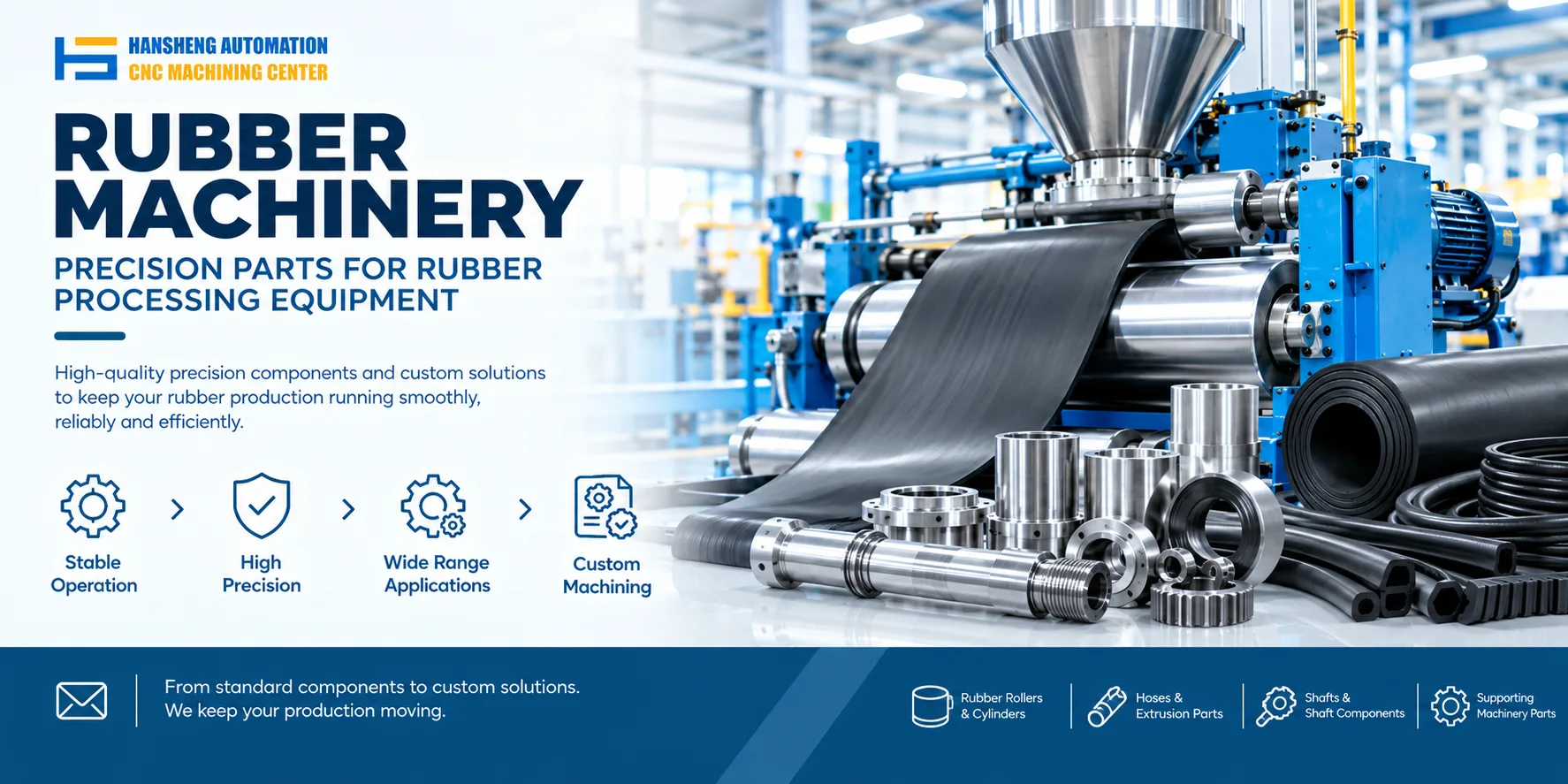
For calendering equipment and rubber machinery, we provide custom machining of precision components based on customer supplied drawings. This service supports equipment maintenance, replacement parts, and the manufacture of components for specific machinery requirements.
Hansheng Automation also provides custom precision machining for components used in food processing equipment and tobacco packaging machinery, as well as precision structural parts for yachts and remote control racing cars. We manufacture nonstandard components to customer drawings for different equipment configurations and applications.