Automatic roll changing on a coating machine unwinder uses multiple stations and coordinated tension control. The system switches from an old roll to a new one and keeps the web moving without a break.
Roll preparation
The machine usually has a two-station unwinder. One station holds the running roll. The other holds a new roll installed in advance. The new roll gets initial tension calibration and edge alignment. Its core diameter and material properties must match the running roll.
Dynamic parameter monitoring
A photoelectric encoder collects roll speed in real time. An ultrasonic sensor checks remaining material thickness. The system calculates remaining length from these signals. A tension feedback module controls tension with ±0.5 N accuracy. A PID algorithm balances the speed difference between the unwinder motor and the rewinding unit. This prevents stretching or deformation.
Automatic change trigger
When remaining material reaches the critical switch threshold, usually 10% to 15% of roll diameter, the PLC activates the roll change program. The new roll pre-accelerates. The servo drive brings its surface line speed to match the running roll, with error within ±0.1 m/min.
Precise splicing
A rotary press arm presses the leading end of the new roll onto the tail end of the old roll at a 30° entry angle. A high-pressure pneumatic device applies instantaneous pressure above 5 N/cm². Some high-end models use laser-assisted positioning. The splice position error stays within ±0.3 mm. The tension system increases by 10% to 15% at the same time to offset the splicing impact.
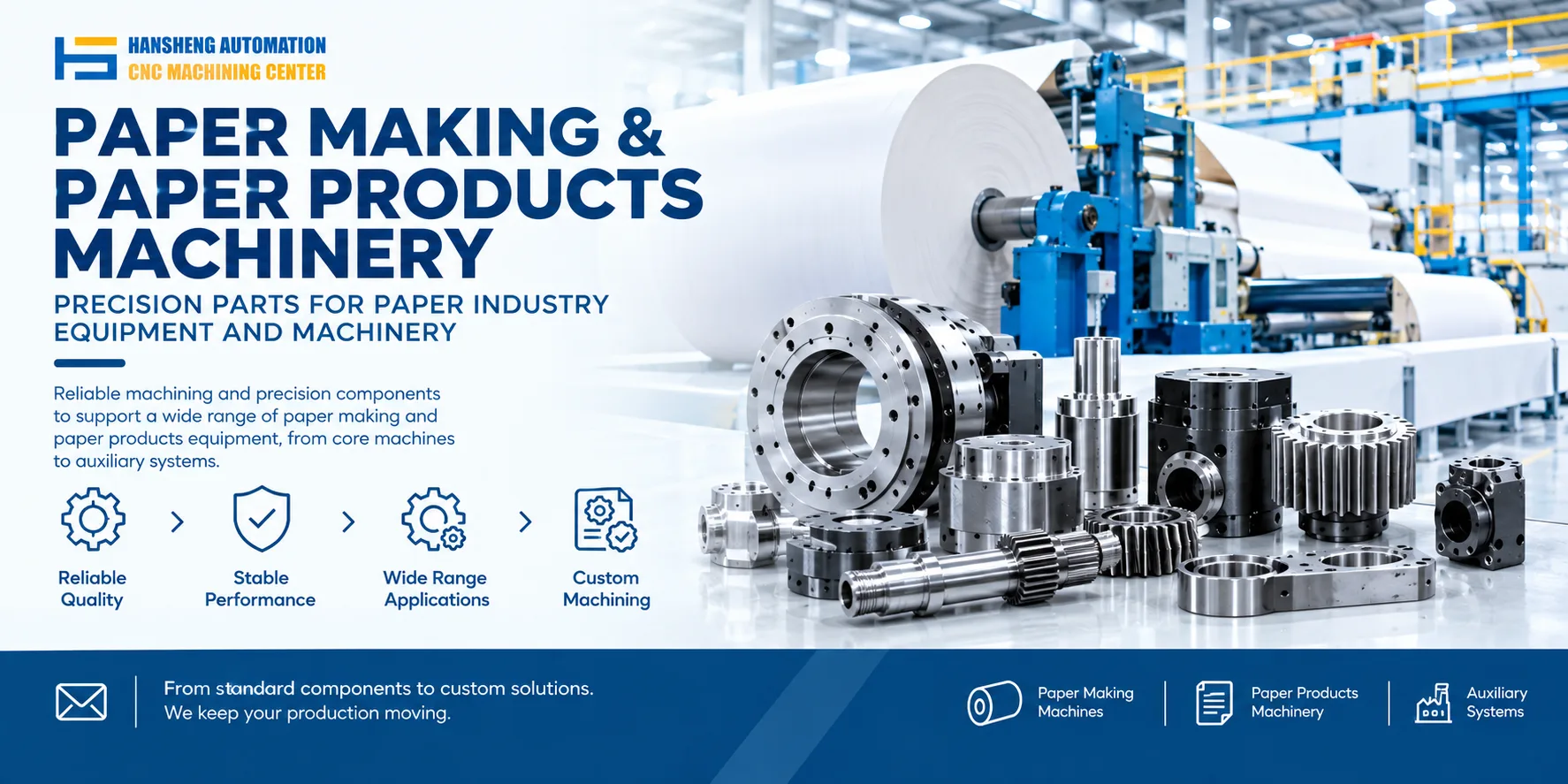
When unwind shafts, press arms, or cutting blades need replacement, Hansheng Automation can machine these precision parts from customer drawings in single pieces or small batches.
Instant cutover
Within 0.2 seconds after splicing, a hydraulic cutting knife cuts at 60 m/s line speed. The tension control unit completes switch compensation within 50 ms. Advanced models use dual closed-loop control. Tension fluctuation during the switch stays within ±3% of the set value.
Closed-loop optimization after the switch
After the new roll is in place, the system recalculates roll diameter and resets the tension curve. The empty shaft moves to the recovery position through the automatic unload mechanism. The machine then enters dynamic observation mode. It monitors stability over the next 3 to 5 roll diameter change cycles and makes fine parameter adjustments if needed.
Our precision custom machining is not limited to coating machine unwinder parts. We also produce non-standard components for medical devices, food machinery, printing equipment, yacht hardware, RC car parts, tobacco packaging machinery, and filling machinery. Hansheng Automation supports single-piece and small-batch production from customer drawings. We focus on precision parts machining and delivery, which helps maintenance and replacement across different industries.