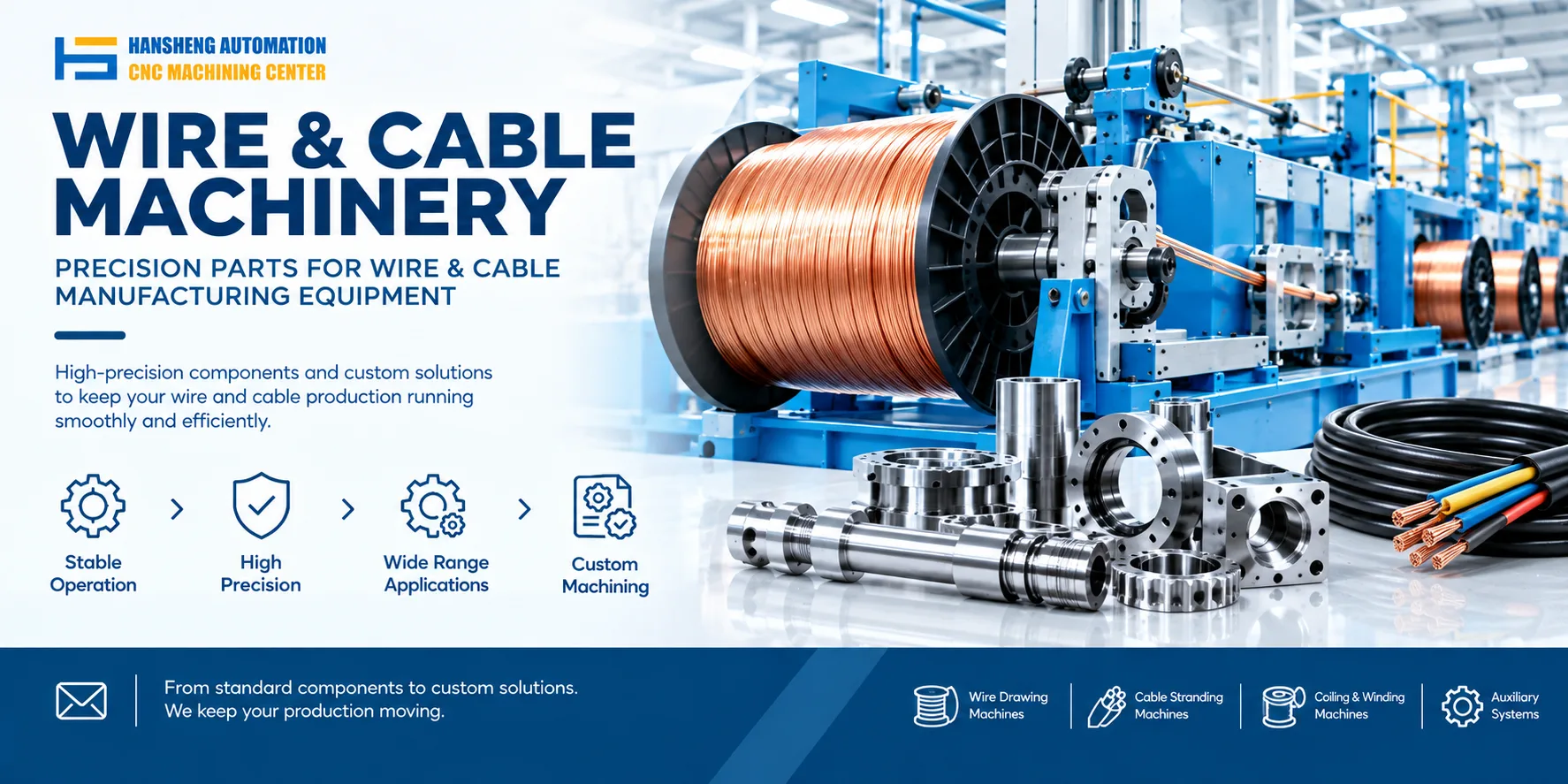
A sliding wire drawing machine creates a controlled slip between the drawing capstan and the wire. Sliding friction pulls the wire through the drawing die. The wire cross section shrinks plastically, so diameter decreases and length increases.
Core parts
Drawing die: made of cemented carbide or diamond, with a calibrated bore. It is the station where plastic deformation happens.
Drawing capstan or stepped cone group: several capstans arranged in series, driven by a variable frequency motor. Anti-slip grooves on the surface raise friction with the wire.
Tension control system: monitors and adjusts drawing tension in real time. It prevents wire breakage from too much tension and slack or pile-up from too little.
Cooling and lubrication system: feeds drawing lubricant to the die bore and wire surface. It lowers friction heat and reduces wire wear and die wear.
Pay-off and take-up units: unwind the coarse wire and wind the finished wire into coils.
When dies, capstans, or tension wheels wear, we machine replacement parts from customer drawings in single pieces or small batches.
Full process and working details
(1) Threading preparation
Mount the coarse wire on the pay-off unit. Thread it through the die bores of each group in order. Fix the wire end in the anti-slip groove of the matching capstan.
(2) Sliding pull and plastic deformation
Slip control: capstan surface speed is slightly higher than the actual wire speed after the die. The slip difference is usually kept at 0.5% to 5%. This gives enough pulling force without excessive slip that can scratch or break the wire.
Deformation: as the wire enters the die bore, the tapered inner wall applies radial compressive stress. The wire cross section shrinks plastically at the set single-pass drawing ratio, usually 1.2 to 2.5. Wire length increases at the same time.
Multi-pass drawing: series capstans and dies reduce wire diameter step by step. Each pass stays within the material plastic limit, so one large reduction does not break the wire.
(3) Take-up
After all drawing passes, the take-up unit winds the finished wire into coils at the set tension and number of turns.
Safety boundaries
Keep the slip difference strictly within 0.5% to 5%. Do not increase it on your own, or the wire may break and the machine may overload.
Do not touch rotating capstans or wire during operation. Prevent entanglement injury.
Keep the cooling and lubrication system running. Overheating during drawing can cause brittle wire breakage or faster die wear.
Our precision custom machining goes beyond sliding wire drawing machine parts. Hansheng Automation also produces non-standard components for tobacco packaging machinery, filling machinery, printing equipment, food processing equipment, medical device production equipment, yacht hardware, and RC car components. We work from customer drawings for single pieces or small batches. The focus stays on precision parts machining and delivery, which keeps maintenance and replacement flexible across different industries.