A paper cup machine is automated equipment used in food service, quick-service restaurants, coffee shops, milk tea shops, and ice cream shops. It makes paper cups in different sizes.
Basic structure
The machine has a body or frame, cup molds, a motor, a transmission system, a heating system, and a control system. The body supports and protects the other parts. The cup mold is the key part. Its shape and size decide the final cup style. The motor drives the mold through the transmission system. The heating system heats the paper material so it can form. The control system monitors and controls machine operations.
Working steps
- Paper material preparation. Paper roll stock goes into the feed inlet. Conveying and positioning devices move the paper to the cup mold.
- Mold positioning. The cup mold positions itself according to the preset program. This lets the paper enter the mold accurately.
- Heating and forming. The heating system heats the paper. The heated paper is pressed into the mold. The mold shape and size form the paper into the cup shape.
- Cooling and setting. The formed cup cools for a period so it keeps a stable shape. After cooling, it is ejected from the mold automatically.
- Automatic discharge. Finished cups go to a set position through the discharge device, ready for collection.
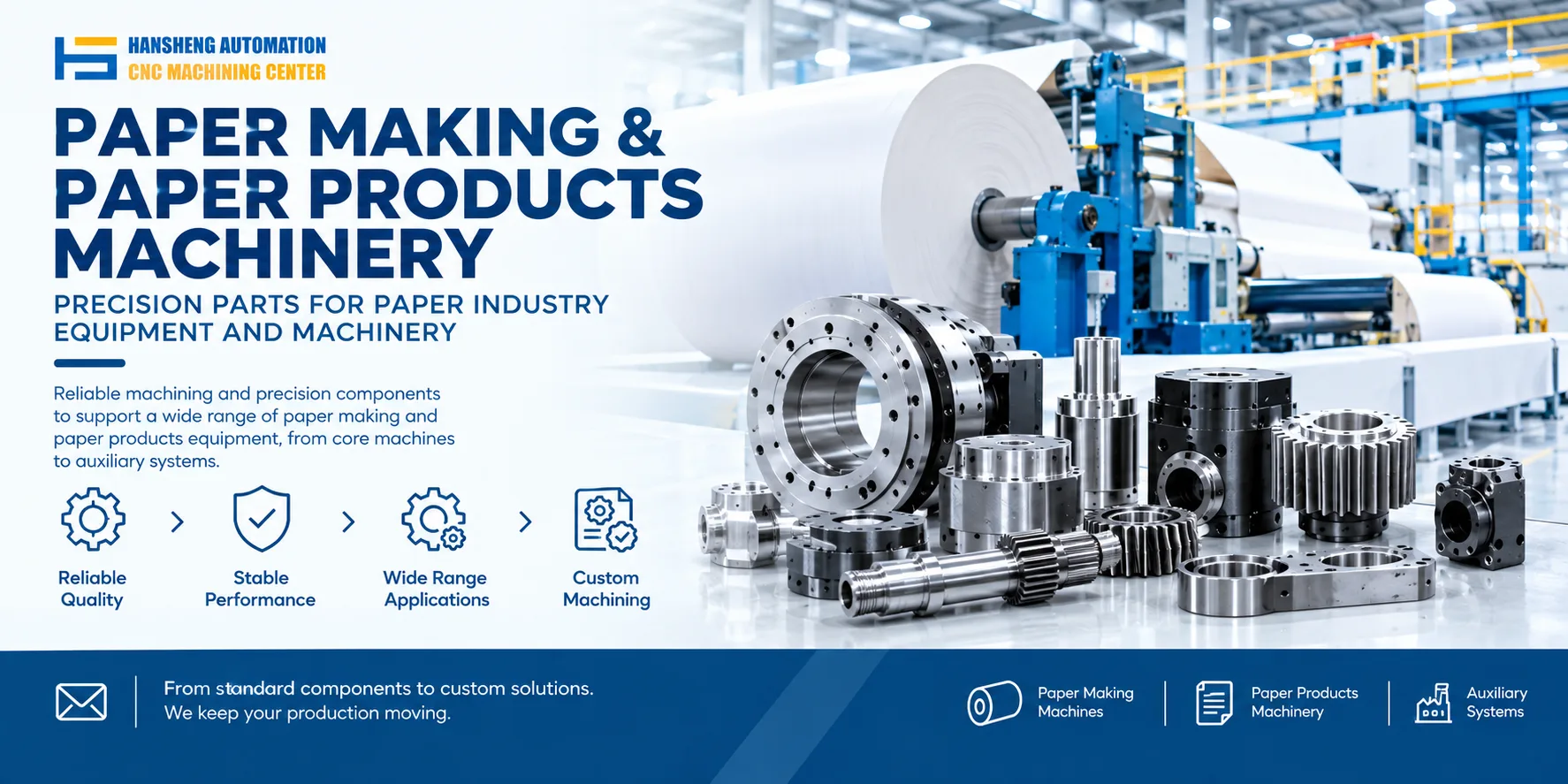
For mold parts, feed rollers, and other precision components, we can machine custom parts from customer drawings in single pieces or small batches.
Applications and trends
Paper cup machines are used in restaurants, fast-food chains, coffee shops, milk tea shops, and ice cream shops. Demand grows as people expect more convenience and hygiene.
Three trends stand out. Automation is increasing, so the full cup making process needs less manual work and runs faster. Cup styles are becoming more varied for different occasions. Design and manufacturing also focus more on environmental protection and energy saving, using efficient heating systems and energy-saving motors to cut energy use.
Beyond paper cup machine parts, Hansheng Automation also produces non-standard components for food packaging equipment, filling machinery, tobacco packaging machinery, printing equipment, medical devices, yacht hardware, and RC car parts. We work from customer drawings for single pieces or small batches. The focus is precision parts machining and delivery, which helps maintenance and replacement across different industries.