Removing and replacing a suction pickup press roll follows a strict sequence: shutdown and lockout, media drainage, step-by-step removal, proper reassembly, and trial run verification. Special tooling is required, and paper machine safety rules must be followed.
Preparation
Shutdown, lockout, and media drainage
Follow the paper machine shutdown and lockout procedure. Cut power and media supply to the drive motor, hydraulic system, vacuum system, and heating lines. Lock the valves and switches. Hang "Do Not Close" and "Do Not Operate" safety tags.
Drain residual vacuum media, hydraulic oil, steam, and condensate from the roll body. Remove quick couplings from the related lines and seal the pipe openings with caps. This keeps debris out of the equipment.
Tooling and spare parts
Prepare special tooling: hydraulic puller, lifting slings, torque wrench, seal removal pry bar, and roll surface damage gauge.
Prepare replacement parts: a new suction pickup press roll of the same model, matching bearing assemblies, and line seals.
Check the new roll parameters, including roll diameter, vacuum hole pattern, and roll surface material. Make sure they match the original roll exactly.
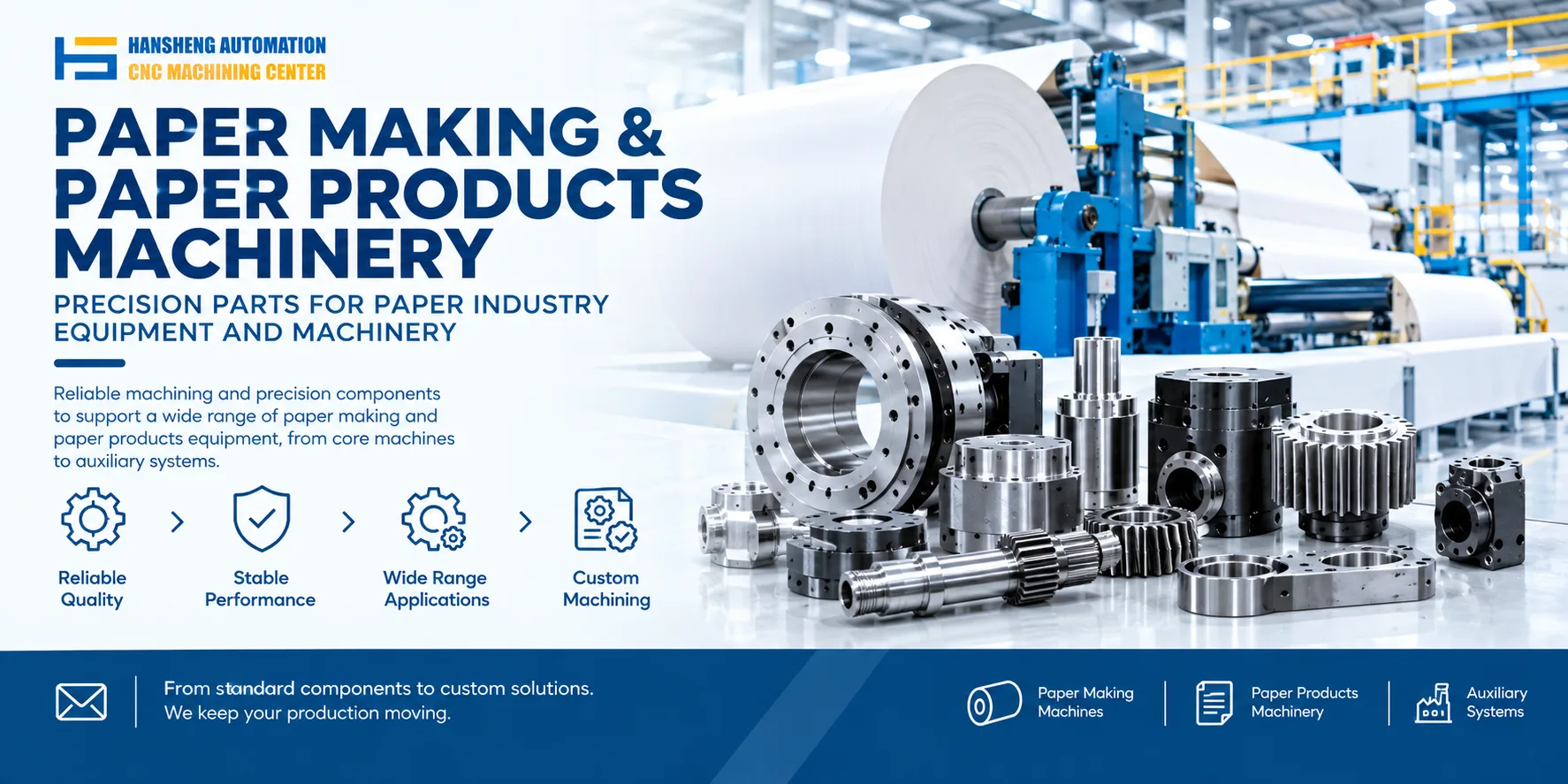
Hansheng Automation can machine custom roll journals, bearing housings, seal components, and vacuum roll parts from customer drawings, in single pieces or small batches.
Removing the old roll
Remove external parts
Remove the bearing housing guards at both ends of the roll. Loosen the bearing housing mounting bolts. Move the bearing housings outward 100 to 150 mm to create working space.
Remove the vacuum suction connections and hydraulic press lines at both ends, if equipped. Mark the line connections for reassembly.
Lift out the old roll
Use lifting slings around the center of gravity of the old roll. Assign a dedicated person to direct the lift. Adjust sling angles to prevent the roll from swinging or hitting nearby parts.
Use a hydraulic puller to remove the bearing assemblies at the roll journals. Do not damage the seal mating surfaces on the journals.
Slowly lift the old roll out of the press frame and place it on a dedicated repair stand.
Installing the new roll
Pre-treatment of the new roll
Clean the bearing housing mounting surfaces and the new roll journals. Remove burrs and oil. Check the bearing housings for cracks or deformation.
Apply special grease to the new roll journals to ensure smooth bearing assembly.
Lifting into position
Use lifting slings to move the new roll smoothly to the frame mounting position. Align the roll axis with the machine centerline.
Fit the new roll journals into the bearing housings. Use a torque wrench to tighten the bearing locknuts to the standard torque in the equipment manual.
Restore external parts
Connect the vacuum lines and hydraulic lines according to the marks. Tighten the fittings to prevent media leaks.
Install and secure the bearing housing guards.
Remove safety tags. Unlock the shutdown and lockout devices. Gradually restore media supply.
Trial run verification
No-load trial run: Check that roll radial runout is ≤0.05 mm according to equipment standards. Confirm vacuum level meets process requirements. Check for abnormal vibration and noise.
Loaded trial run: Confirm the suction pickup and pressing effect meets papermaking process parameters. Check for sheet drift, media leaks, and other problems.
Safety limits
All work must be done by personnel qualified for paper equipment repair. Uncertified work is not allowed.
Lifting operations must follow crane safety rules. Overloading, side pulling, and angled lifting are prohibited. Set up warning tape around the work area.
If work height exceeds 2 m, use approved scaffolding and wear a safety harness.
Do not remove lines until hydraulic and vacuum media are fully drained. This prevents media spray injuries.
Beyond paper machine suction pickup press roll parts, our precision component customization serves other industries. We machine yacht components, RC car components, printing machinery parts, food machinery parts, medical device components, tobacco packaging machinery parts, and filling machinery parts. Hansheng Automation works from customer drawings and delivers one-off or batch parts to the required material, tolerance, and surface finish. Our scope is precision components, not complete machines.