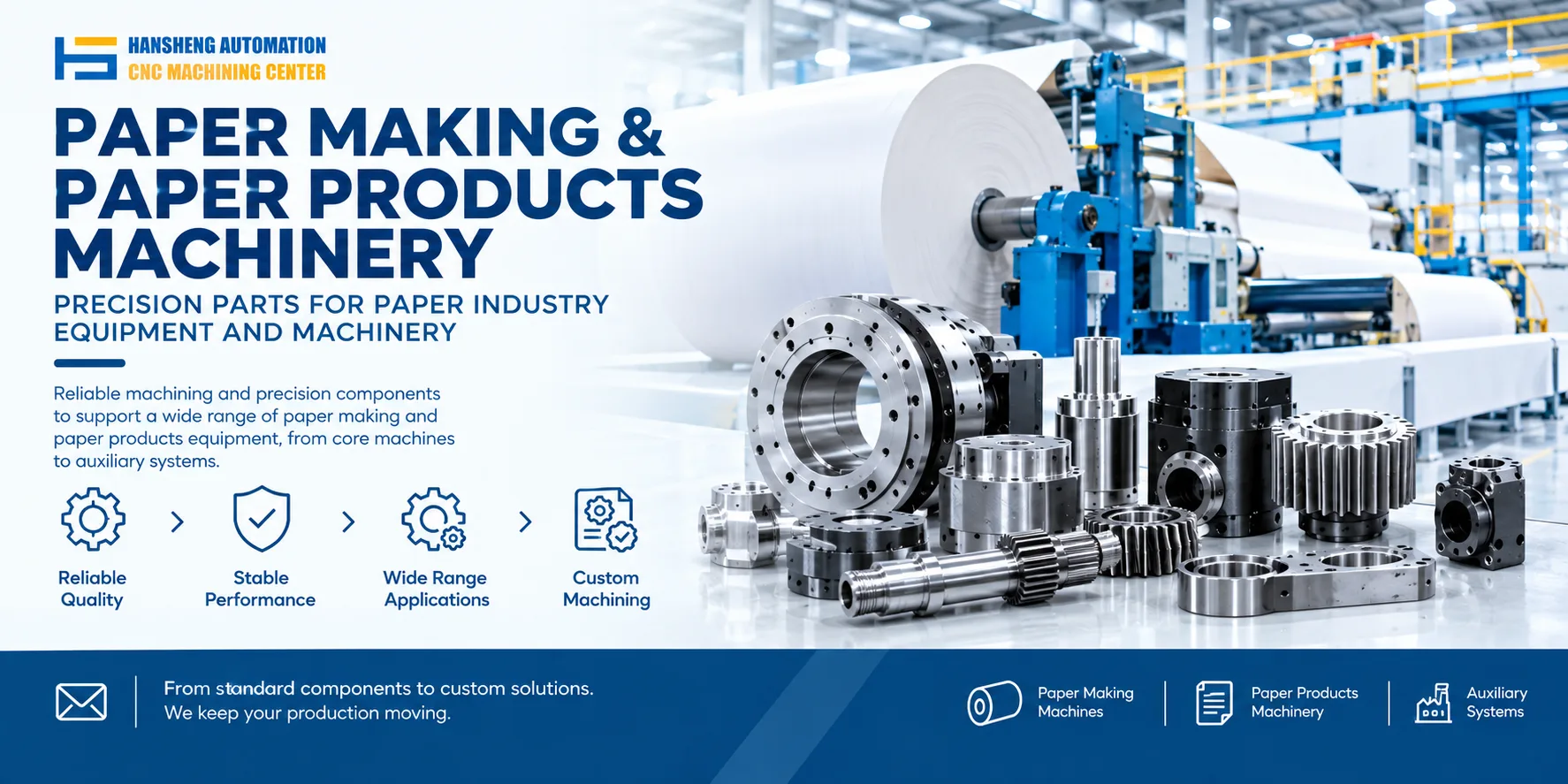
A rewinder uses five main rolls: the unwind roll, spreading roll, pressure roll, winding roll, and guide roll. Each one handles a different part of web control.
Unwind roll
Supports the parent roll. Tension control keeps the unwinding speed steady, so the web enters the process smoothly.
Spreading roll
Spreads the web across its width to remove wrinkles. It keeps the sheet flat and prevents unevenness during rewinding.
Pressure roll
Works with the winding roll and applies pressure. It directly affects roll tightness and edge alignment after rewinding.
Winding roll
The core roll in rewinding. It rotates and winds the web. Its speed and torque affect roll formation quality.
Guide roll
Guides the web along the intended path. It keeps rewinding smooth and prevents web drift.
For rewinder builders, Hansheng Automation can machine custom pressure rolls, winding rolls, guide rolls, and roll shafts from customer drawings, in single pieces or small batches.
Beyond rewinder rolls, our precision component customization is not limited to this topic. We machine yacht precision components, RC car precision components, printing machinery parts, filling machinery parts, tobacco packaging machinery parts, medical device components, and food machinery parts. Hansheng Automation works from customer drawings and delivers one-off or batch parts to the required material, tolerance, and surface finish. Our scope is precision components, not complete machines.