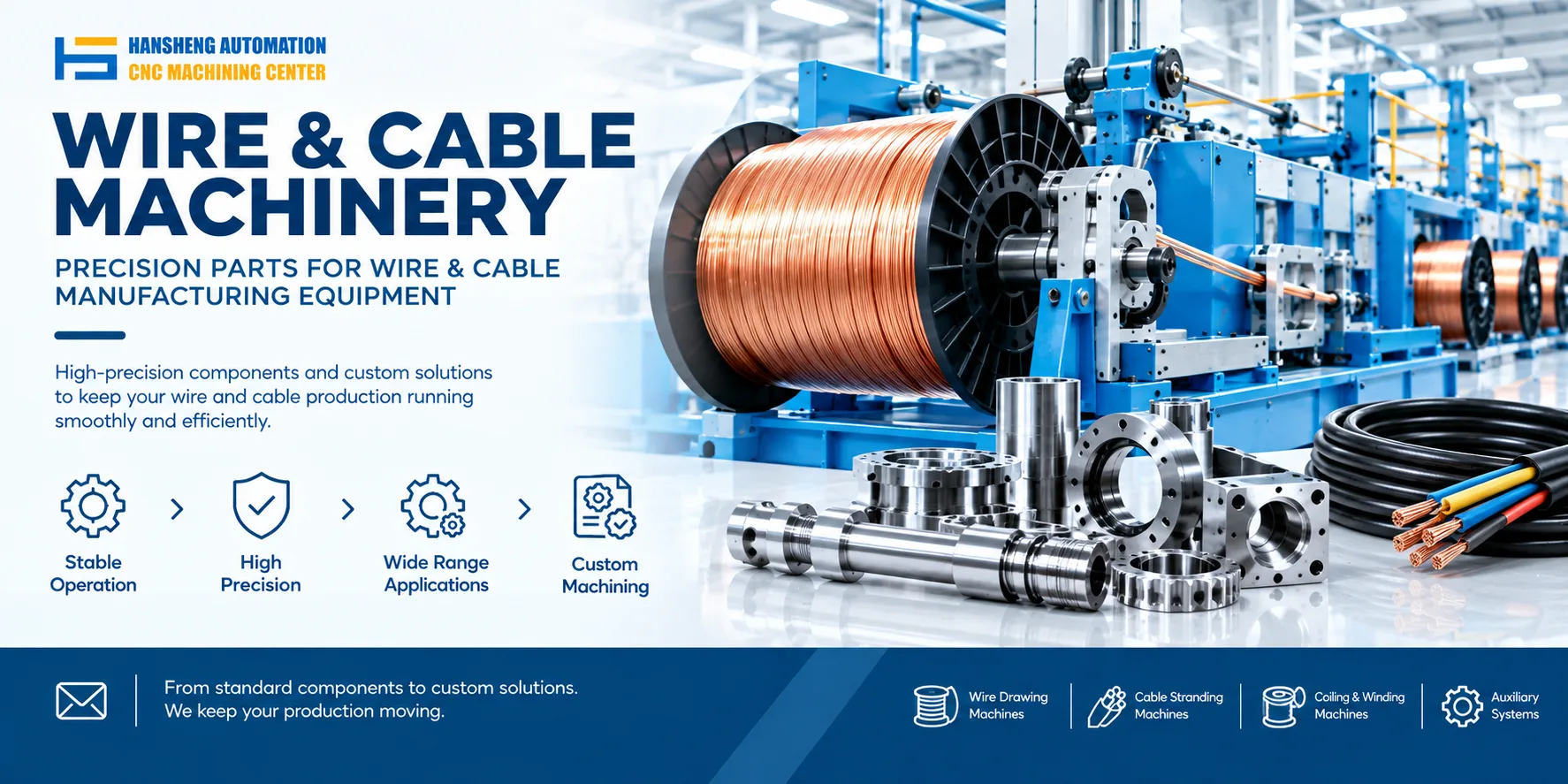
Adjusting the lay length on a wrapping machine depends on the equipment type, cable specification, and production process. The core task is to match the ratio between the wrapping bow speed and the cable forward speed by adjusting the bow drive ratio, lay length gear position, or haul-off feed. This produces the target lay length. At Hansheng Automation, we provide build-to-print custom machining for wrapping machines. We make precision parts such as transmission gears, lead screws, wrapping bows, and guide wheels from customer drawings, in single pieces or small batches.
1. Preparation
Confirm the target lay length: Define the required lay length value, usually in mm per revolution. This is the distance the cable advances for each full rotation of the wrapping bow.
Check the original equipment manual: Confirm the adjustable range, adjustment structure type (mechanical or electronic), and safe operating rules for the current wrapping machine.
Power off and set a warning: Cut the main power before adjustment. Hang an "under adjustment" warning sign to prevent accidental startup.
2. Adjustment by type
2.1 Mechanical wrapping machine
These machines usually adjust the drive ratio through gear sets or a lead screw.
If there is a gear position adjustment: Turn the lay length adjustment handle directly to the position for the target lay length. Tighten the fixing bolts.
If gears need to be changed: Use the lay length formula, lay length = cable haul-off speed / wrapping bow speed, to calculate the required driving and driven gear tooth ratio. Replace with matching transmission gears and tighten.
For fine adjustment, adjust the lead screw feed to correct small lay length deviations.
2.2 Electronic or variable frequency wrapping machine
These machines support parameter adjustment and are easier to operate.
Enter the "lay length setting" screen on the control panel.
Input the target lay length value directly. The system automatically matches the speed ratio between the haul-off motor and the wrapping bow motor.
Some machines support a fine adjustment compensation value to correct lay length errors caused by tension deviation in actual production.
3. Testing and calibration
No-load test: Thread a substitute wire or run the machine empty. After 1 to 2 minutes, check the real-time lay length display, or use a tape measure to check the cable advance distance after several rotations. Confirm it matches the set value.
Trial production with material: Thread the actual production cable and run at low speed for 3 to 5 meters. Cut a sample and measure the actual lay length. If there is deviation: if the lay length is too large, increase haul-off speed or reduce wrapping bow speed. If the lay length is too small, reduce haul-off speed or increase wrapping bow speed.
Lock parameters: After confirming the lay length meets requirements, tighten all adjustment mechanism fasteners to prevent movement during production.
4. Safety and maintenance notes
Never adjust parameters while the machine is running. This avoids accidents such as clothing or hands being pulled in.
Operate strictly within the adjustable lay length range marked on the machine. This avoids equipment damage from overload.
Check wear on transmission gears, lead screws, and similar structures regularly. Replace old parts in time to maintain lay length accuracy.
If an adjustment problem cannot be solved, contact the equipment manufacturer's technical support.
Our precision custom machining capability is not limited to wrapping machines. Hansheng Automation can machine yacht precision components, RC car precision components, tobacco packaging machinery parts, and filling machinery parts from customer drawings. We also machine non-standard metal parts for printing machinery, food machinery, and medical devices. We focus on build-to-print custom machining and produce single pieces or small batches according to customer drawings. We do not sell complete machines.