Laser cutting machines, laser marking machines, and laser etching machines are all used for cutting or marking workpieces. The differences can be understood from their working principles, classifications, applicable workpieces, and laser power characteristics.
Working Principles
A laser cutting machine uses a focused high-power-density laser beam to irradiate the workpiece. The irradiated material quickly melts, vaporizes, ablates, or reaches its ignition point. At the same time, a high-speed coaxial gas flow blows away the molten material, cutting the workpiece apart. Laser cutting is a thermal cutting method.
A laser marking machine generates a high-energy continuous laser beam. After focusing, the laser acts on the substrate, causing the surface material to melt instantly or even vaporize. By controlling the path of the laser on the material surface, the required graphic or text mark is formed.
A laser etching machine uses high-energy, extremely short-pulse laser to vaporize material instantly without damaging the surrounding area. The processing depth can be precisely controlled, allowing accurate etching.
The basic principle of laser cutting, marking, and etching is similar: after beam shaping, high-energy light irradiates the material surface and causes chemical or physical changes to form cuts, marks, or circuit patterns.
Classifications
Laser cutting machines can be divided into laser vaporization cutting, laser fusion cutting, laser oxygen cutting, and laser scribing with controlled fracture.
Laser marking machines mainly include CO2 laser marking machines, semiconductor laser marking machines, fiber laser marking machines, and YAG laser marking machines.
Laser etching machines include metal film laser etching machines, silver paste laser etching machines, and ITO coating laser etching machines.
Applicable Workpieces
Laser cutting machines are generally divided into several types. High-power metal cutting machines are used for steel plates and stainless steel plates. Micro-precision cutting machines use UV lasers for PCB, FPC, and PI film. CO2 laser cutting machines are used for leather, cloth, and similar materials.
Laser marking machines usually use low-power lasers with different light sources to mark QR codes, patterns, and text on glass, metal, silicon wafers, plastics, and other materials.
Laser etching machines are mainly used for conductive materials in photovoltaic and electronics industries, such as ITO glass etching and solar cell laser scribing. Their main purpose is to create circuit patterns.
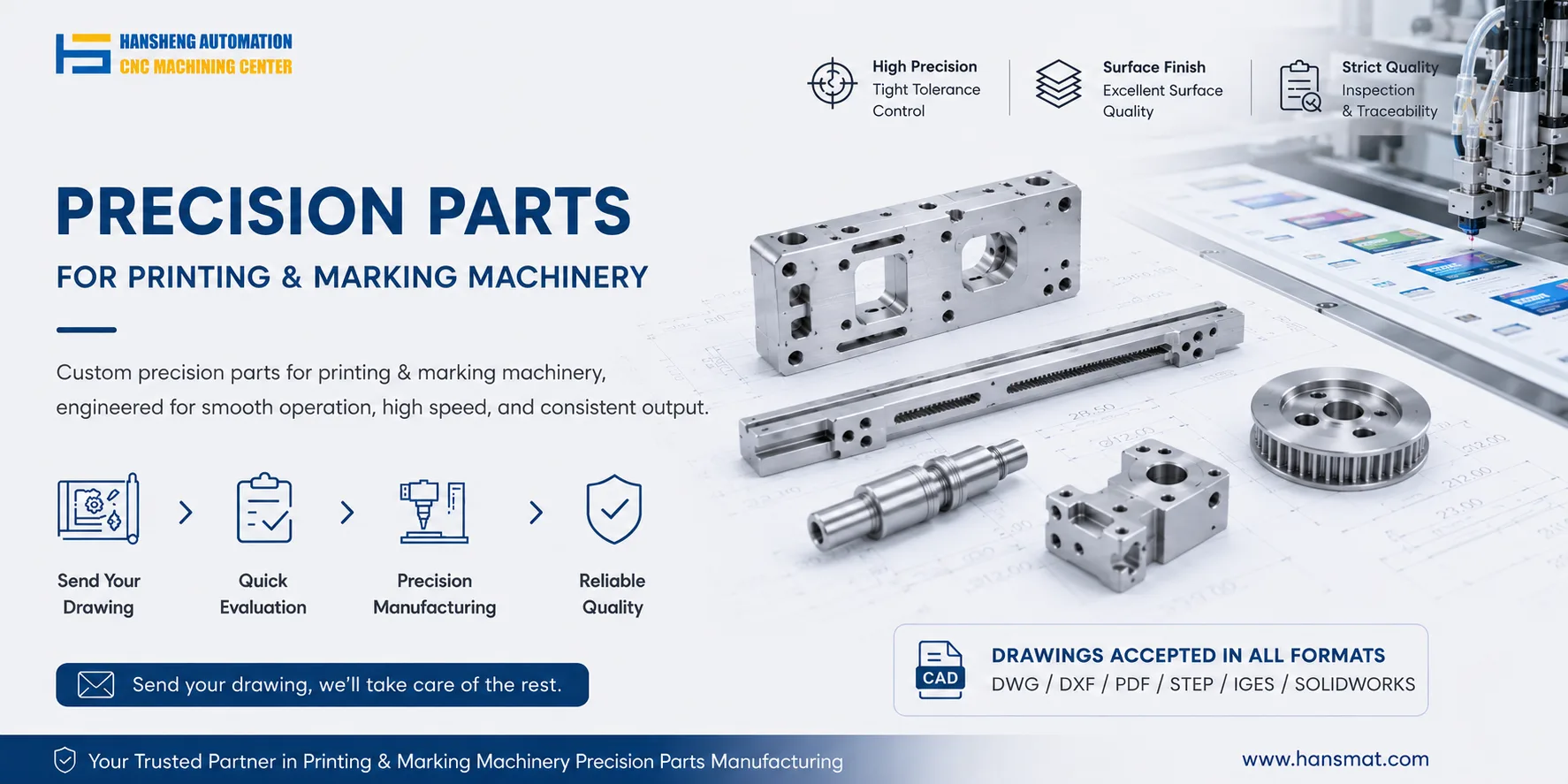
For non-standard mechanical components used in these laser systems, such as optical mounting brackets, workholding fixtures, and galvanometer seats, Hansheng Automation provides custom machining based on customer drawings or samples, including single-piece and small-batch orders.
Laser Power and Frequency Characteristics
Laser marking machines generally operate at 0–50 W, with CO2 models slightly higher, and can cut materials 0.01–0.05 mm thick.
Laser etching machines typically operate at around 50–100 W.
For laser cutting machines, higher power means greater laser energy and the ability to cut thicker materials.
When selecting a machine, users should consider the workpiece condition and the required result. Safety should also be observed during operation.