Machine vision defect detection equipment uses machine vision inspection systems to comprehensively inspect product surfaces, shape defects, and appearance flaws. The main inspection contents include the following:
General Surface Inspection
This covers scratches, cracks, dents, discoloration, bright spots, dark spots, stains, and similar defects. These defects commonly appear on various product surfaces and can be identified quickly and accurately through machine vision technology.
Metal Part Inspection
Metal parts often develop defects during processing, such as impact marks, scratches, corrosion, and tool marks. Machine vision defect detection equipment can inspect these defects efficiently to ensure that metal parts meet quality standards.
Panel Inspection
Panel defects include point defects, cluster defects, and line defects. These defects may affect display performance or usability. Machine vision technology can detect them precisely and enable timely problem handling.
Different industries also have different requirements and focuses for defect detection:
Photovoltaic Industry
In the production of crystalline silicon solar cells, from hidden cracks that may occur during silicon rod cutting at the raw material stage to final sorting at the end, machine vision defect detection equipment can be used throughout the process. This helps ensure the quality and performance of photovoltaic products.
Film Industry
During composite film production, various surface defects may appear, such as dust from the air and defects caused by air entering the film during the high-pressure lamination process. These defects are usually micron-sized and difficult for the human eye to observe, and prolonged manual observation causes eye fatigue. Machine vision defect detection equipment can perform full inspection, improve product quality, and feed inspection results back to the process to form a closed loop for production optimization.
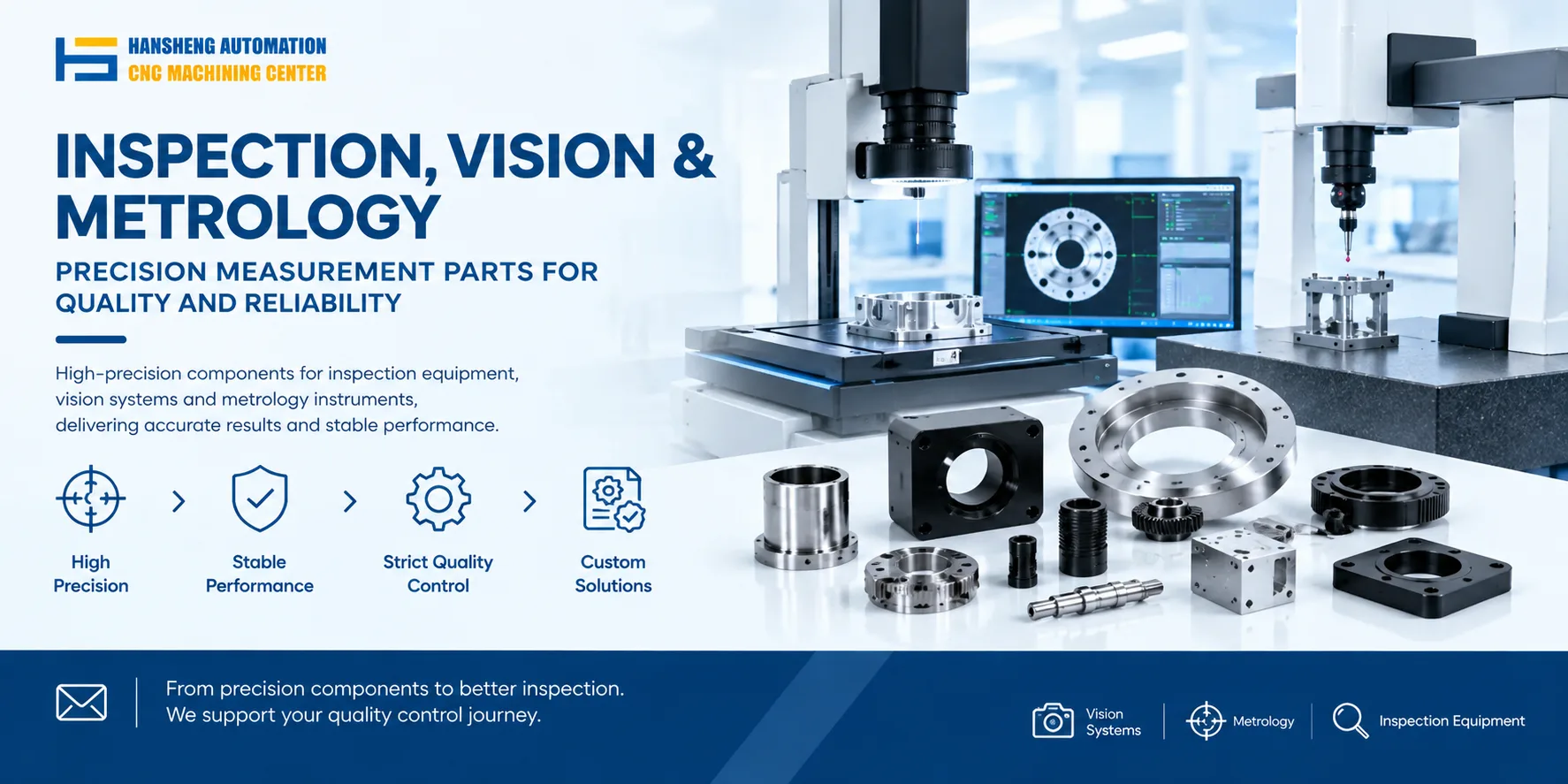
For integration into these machine vision systems, Hansheng Automation provides custom-machined components including camera mounts, light source brackets, and precision alignment parts according to customer drawings.
Machine vision defect detection technology is now widely used in many industries, including rubber, electronics, hardware, automotive, packaging, printing, chemicals, mobile phones, food, plastics, textiles, and fasteners. It plays an important role in improving product quality and production efficiency.