Corrosion on the mating surface of a tire vulcanizing press base plate can create gaps between the base plate and the thermal insulation plate, affecting equipment reliability and vulcanization quality. A field repair method using a polymer composite material can restore the mating surface without removing the base plate from the machine.
Causes of corrosion on the base plate
Corrosion on the base plate is primarily caused by condensate penetration during high temperature steam vulcanization. When condensate accumulates on the surface, it can create a localized electrolyte environment that accelerates electrochemical corrosion of the metal substrate. The resulting surface irregularities prevent the base plate and thermal insulation plate from fitting together properly.
Under high pressure, this loss of contact can damage the thermal insulation plate and may affect tire vulcanization quality.
Conventional repair options and their limitations
Weld overlay and machining
This method requires removing the base plate and transporting it to a machining workshop. The process typically takes 3 to 5 days.
The heat generated during weld overlay may deform the base plate, requiring additional alignment and calibration. The heat affected zone may also have reduced corrosion resistance, creating a risk of further corrosion.
Replacement of the base plate
Replacing the base plate involves substantial costs, as the base plate accounts for 15% to 20% of the total machine cost. Spare parts may also have long procurement lead times, potentially disrupting production schedules.
Field repair using Fushilan 2296 polymer composite
Fushilan 2296 polymer composite can be used for on site repair of the corroded mating surface. The stated advantages of this method include the following.
Bonding strength: The material provides a bond strength of more than 20 MPa with the metal substrate and can withstand alternating loads during vulcanization.
Corrosion resistance: The material resists acids, alkalis, salt spray, and high temperature steam. It also forms a barrier that prevents condensate from contacting the metal surface.
Compressive strength: The material has a compressive strength of ≥85 MPa, suitable for the stated vulcanizing press operating pressure of 10 to 20 MPa.
Repair time: The work can be completed on site without dismantling the equipment, reducing the repair time to 8 to 12 hours.
Repair procedure
Surface preparation
Grinding: Use an angle grinder or other suitable grinding tool to remove the oxide layer and corrosion products from the mating surface until the metal substrate is exposed.
Abrasive blasting: Blast the surface with quartz sand measuring 0.2 to 0.5 mm in particle size. The target cleanliness level is Sa2.5 according to ISO 8501-1, with a surface roughness of Ra ≥6.3 μm to improve material adhesion.
Cleaning: Wipe the surface with anhydrous ethanol to remove oil, dust, and residual abrasive particles. The surface must be clean and dry before the composite is applied.
Application of release agent
Apply Fushilan 803 release agent evenly to the mating surface of the thermal insulation plate. Control the coating thickness at 50 to 100 μm and allow it to dry for 30 minutes to form a release layer. This prevents the repair compound from bonding to the thermal insulation plate.
Mixing and application of the composite
Mixing: Mix Fushilan 2296 components A and B at a volume ratio of A = 3:1. Stir for approximately 3 minutes until the material is uniform in color and consistency, taking care to avoid introducing air bubbles.
Application: Use a scraper to spread the compound across the base plate's mating surface. Apply a thickness 0.5 to 1.0 mm greater than the measured wear depth. The typical total thickness is 2 to 3 mm to compensate for curing shrinkage.
Shaping: Complete application within the material's working time, approximately 40 minutes at 25°C. Use a template or leveling tool to smooth the surface and establish the required mating profile.
Curing and reassembly
Curing: Allow the material to cure at room temperature for 24 hours. Alternatively, accelerate curing by heating the material to 60°C and holding that temperature for 4 hours. Allow the material to reach its specified final strength before reassembly.
Reassembly: Remove excess material from the edges after curing. Reinstall the thermal insulation plate and other components in their original positions, then tighten the bolts to the specified torque.
Verification after repair
Mating gap inspection
Use a feeler gauge to measure the gap between the repaired base plate and the thermal insulation plate. The gap must be ≤0.05 mm to meet the original design requirement.
Pressure and temperature testing
Simulate the vulcanization operating conditions at a pressure of 18 MPa and a temperature of 170°C for 2 hours. Inspect the repaired surface to confirm that the material shows no detachment, deformation, or leakage.
Long term monitoring
Inspect the base plate for signs of corrosion every 3 months after repair. The stated service life of the repair material is 3 to 5 years, depending on operating conditions.
Repair benefits
Lower repair costs: The repair cost is stated to be only 20% to 30% of the cost of replacing the equipment. On site work also avoids production delays caused by waiting for replacement parts.
Bonding performance: The polymer composite forms a chemical bond with the metal substrate, reducing the risk of interlayer delamination associated with conventional repair methods.
Environmental considerations: The proposed process is described as avoiding emissions of welding fumes, abrasive blasting dust, and chemical waste liquids, in line with cleaner manufacturing practices.
This repair method is intended to restore the mating accuracy of the tire vulcanizing press base plate, extend equipment service life, and reduce maintenance costs and production interruptions.
Custom precision component machining services
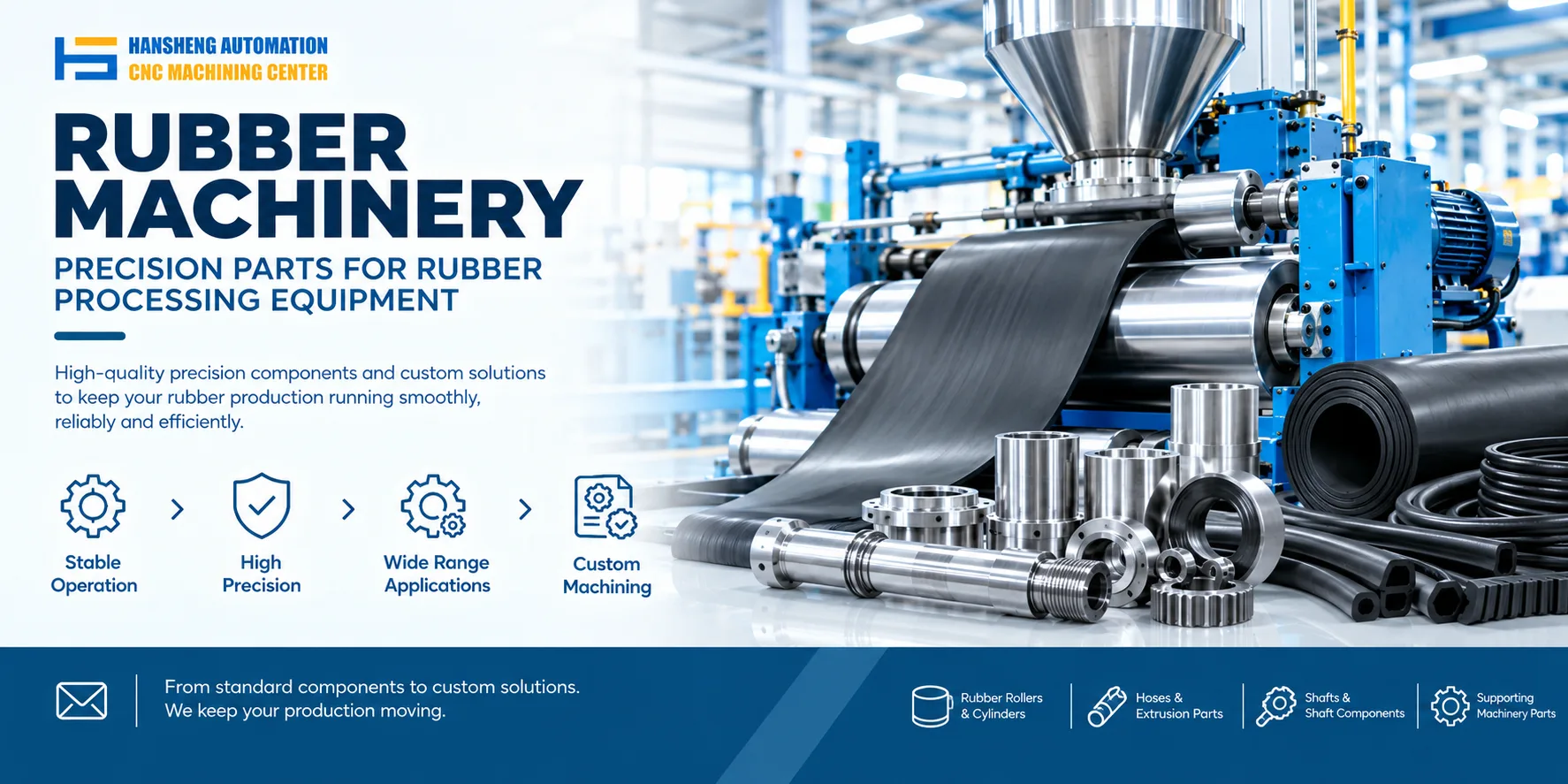
Beyond rubber processing equipment applications, Hansheng Automation provides custom machining of precision components according to customer supplied drawings. Our services cover precision components for yachts and RC racing cars, as well as nonstandard parts for tobacco packaging and filling machinery. We manufacture components to specified drawing dimensions and requirements for a range of mechanical applications.