Rotating mechanisms commonly used in automation can be classified by drive method and application scenario as follows.
1. Direct Motor Drive
This type is suitable for light-load rotation. The motor directly drives the product or fixture to rotate. The structure is simple, the cost is low, and the response speed is fast, but the torque output is limited. Typical applications include small automation equipment, 3C product inspection, and light-load rotating stations. Examples include motor-driven rotating display stands and end-of-arm rotating joints on light manipulators.
2. Motor and Reducer Combination
A reducer lowers speed and increases torque, making this combination suitable for medium and high loads. Common types include planetary reducers, harmonic reducers, and hollow rotary platforms.
Planetary reducers are available in straight-output and 90-degree corner-output configurations. Internal gears may be helical for higher precision and lower noise, or spur for lower cost. They are compact, highly efficient, and have low backlash, making them suitable for high-precision applications such as industrial robot joints, CNC machine rotary axes, and automated assembly lines.
Harmonic reducers use elastic deformation of a flexible gear to achieve meshing transmission and can provide large reduction ratios such as 50:1 or 80:1. They offer very high precision and smooth transmission, but installation requirements are strict and cost is relatively high. Applications include robot arm joints, semiconductor equipment, and high-precision rotary tables.
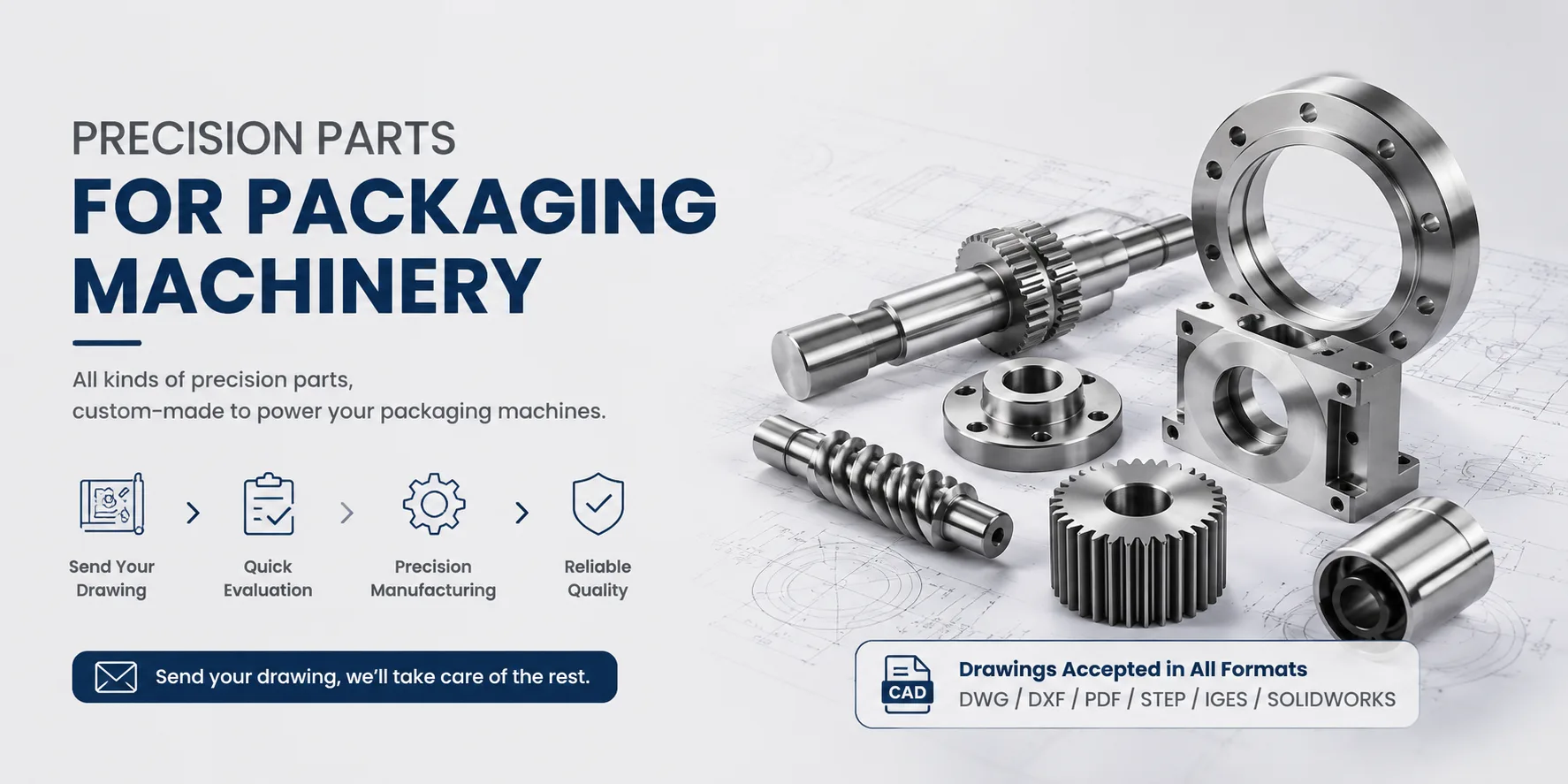
Hollow rotary platforms are driven by a side pinion on the motor and output through a hollow boss flange. The hollow center allows air tubes or cables to pass through. They combine a large reduction ratio with efficient use of space and are suitable for stacked rotating structures. Applications include multi-station dial machines, vacuum-suction rotating stations, and sensor-integrated rotary tables. For these rotary platforms and reducer housings, Hansheng Automation can provide custom precision machining of key non-standard components according to customer drawings.
3. Intermittent Motion Mechanisms
These are used where precise start-stop motion is required. Common types include DD motors and cam indexers.
DD motors drive the load directly without reducer backlash, offering extremely high positioning accuracy, high torque, high response, and low maintenance, but at higher cost. They are used in semiconductor equipment, high-precision indexing plates, and laser processing rotary axes.
Cam indexers achieve intermittent indexing through mechanical engagement between a cam and rollers. They provide high positioning accuracy, long service life, and low cost, but the design is relatively complex. Applications include multi-station dial machines, automated assembly lines, and packaging machinery.
4. Fixed-Angle Rotation Mechanisms
These are used for fixed-angle rotation where precision requirements are not high. Common types include rotary cylinders and start motors.
Rotary cylinders are pneumatically driven and achieve fixed angles such as 90° or 180°. The structure is simple, but vibration is relatively large. Applications include pneumatic fixtures, simple indexing devices, and valve control.
Start motors achieve fixed-angle rotation through brief motor operation. Stopping accuracy is relatively low. They are used in low-cost rotating stations and simple display equipment.
5. Selection Suggestions for Non-Standard Design
Load and torque should determine the drive method. Light loads favor direct motor drive, while heavy loads require a reducer or DD motor. For high-precision applications such as robot arms, harmonic reducers or DD motors should be selected. For general precision, planetary reducers or cam indexers are suitable. When wiring or air passages need to pass through the center, a hollow rotary platform is preferred; for compact designs, a planetary reducer is a better choice. In terms of cost, harmonic reducers and hollow rotary platforms are more expensive, while cam indexers and rotary cylinders are more economical.
6. Obsolescence and Replacement Trends
The Geneva mechanism, traditionally found in mechanical design textbooks, has gradually been replaced by cam indexers and DD motors due to low precision and short service life. In non-standard design, there is also a clear trend toward using standardized components such as reducers and rotary platforms to avoid repeated design work and improve efficiency.
Through proper selection and combination, rotating mechanisms can meet diverse requirements ranging from light to heavy loads and from low to high precision. They are indispensable core components in automation equipment.