A strapping machine can stop in the middle of a cycle for several reasons. Most faults trace back to a jam, a wrong setting, a worn cutter, or a dirty feed path. Check the simple causes first before you open the machine.
Strap jam
Symptoms: The strap is stuck between the rollers and will not move. In some cases, debris blocks the strap and it cannot be removed.
Causes: Foreign material has entered the roller gap, or the strap has wrapped incorrectly.
Solution:
Remove the washer on the hex nut. Loosen the two M5 countersunk screws on the middle connecting shaft. Turn the screws upward. Take off the connecting shaft and the upper wheel assembly. Clear the jammed material. Reassemble the machine and run a test. Follow the steps in order so you do not damage parts.
Strap is not cut after strapping
Symptoms: The machine completes the strap cycle but does not cut the strap.
Cause: Strap tension is too high. The cutter cannot work normally.
Solution:
Set strap tension to the correct range. Use the control panel or the tension adjustment knob. Check the cutter for wear or binding. Replace the cutter or clean the cutting edge if needed.
Machine does not feed strap
Symptoms: The machine receives the feed command but no strap comes out.
Causes:
The strap length adjustment knob has been turned to the "0" position.
The strap is threaded wrong. It may not pass through the rollers or guide groove correctly.
Debris such as strap fragments or dust is stuck near the feed rollers.
Solution:
Turn the strap length adjustment knob away from "0" and set the length you need.
Thread the strap again as shown in the manual. Make sure the path is correct.
Clear debris around the feed rollers. Check that the rollers turn freely.
Other notes
Operation rules. If a fault occurs, do not take apart core parts such as the circuit board or motor on your own. Wrong handling can cause a second fault. Contact a trained service technician for complex problems, especially electrical faults.
Daily maintenance. Clean dust and strap fragments from inside the machine at regular intervals. Lubricate rollers, shafts, and other moving parts. Do not strap loads that exceed the machine rating. Follow the manual for periodic checks, including screw tightness and belt tension.
Most strapping machine faults come from operation, debris, or poor maintenance. Correct use and regular service lower the fault rate. For complex problems such as electrical faults or cutter failure, contact the manufacturer or a service team to protect equipment safety and service life.
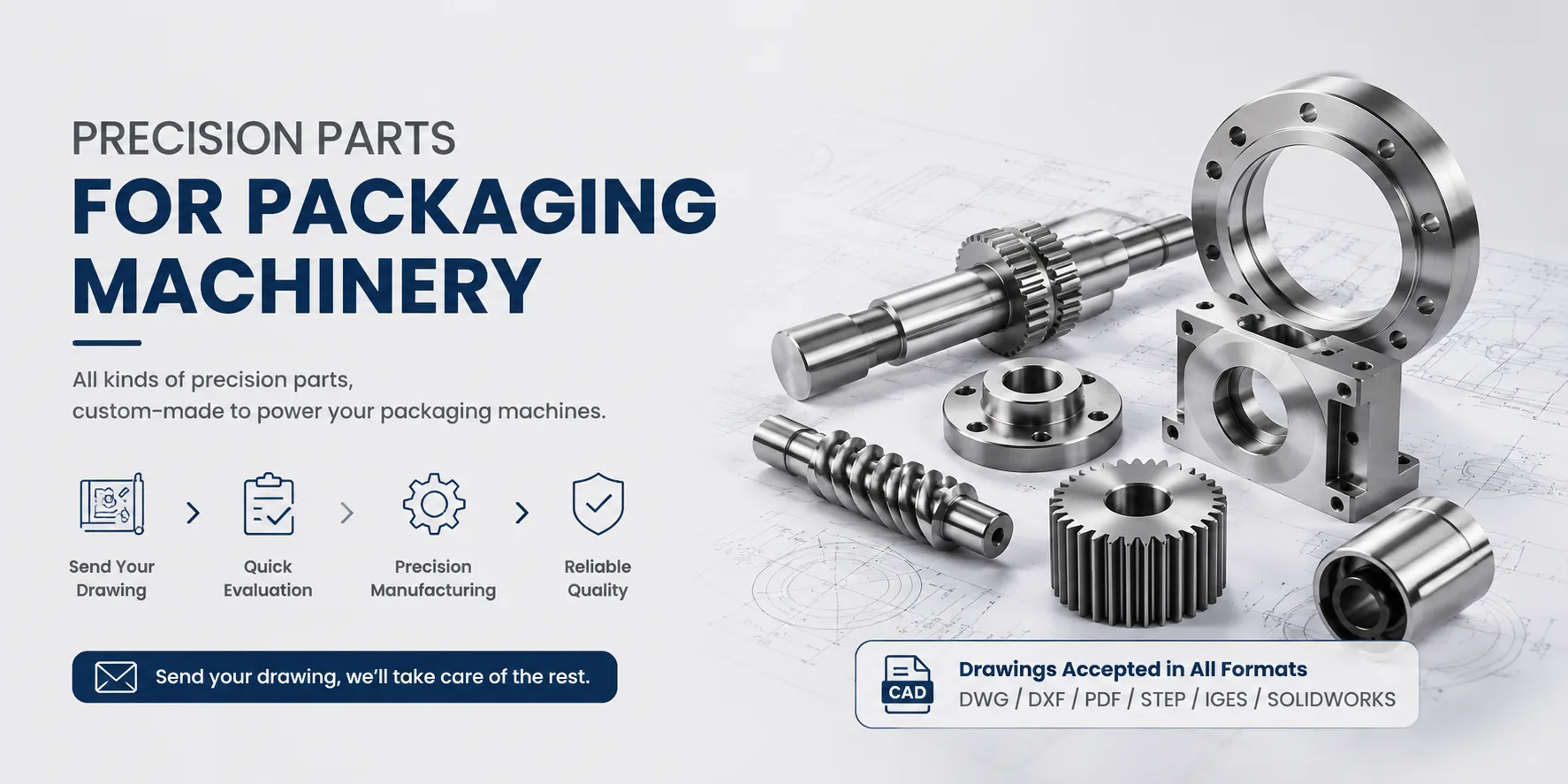
When a cutter, roller, guide, or drive part reaches its wear limit, Hansheng Automation can machine a replacement from customer drawings. We match material, tolerance, and surface treatment to the machine and working conditions.
Hansheng Automation also takes on drawing-based machining for other equipment. Our work covers filling machinery, tobacco packaging machinery, yacht components, and RC car components, plus non-standard parts for food, printing, and medical equipment. We handle single pieces and small batches.