When an automatic strapping machine leaves the strap loose, work through the problem in order: tension setting, mechanical parts, strap fit, and the drive system. Most cases come down to one of these four areas.
Adjust the tension
Find the tension adjustment knob on the machine head or below the panel. It usually has a 0 to 9 scale. Turn it clockwise to increase the value. Start around 4 to 5. A higher value gives more tension, but too much can break the strap or cause a bad seal.
If a higher tension causes strap breakage or a weak seal, extend the cooling time. This lets the strap bond fully. A trained technician should make this change.
Check mechanical parts
Clean the feed and retract rollers. Pull the strap out of the strap path and watch how the rollers turn. Remove broken strap fragments or debris stuck in the path. The path must be clear.
Adjust retract force and time. Use the screw rod behind the panel to increase retract force. Too little retract force leaves the strap loose. Adjust the retract time on the circuit board. Extend it a little, but do not overdo it, or strap feeding will suffer.
Check the strap clamp and spring. Look for debris in the clamp teeth. Check whether the pull rod spring is broken. Check the swing arm bearing and torsion spring for damage. Replace badly worn parts.
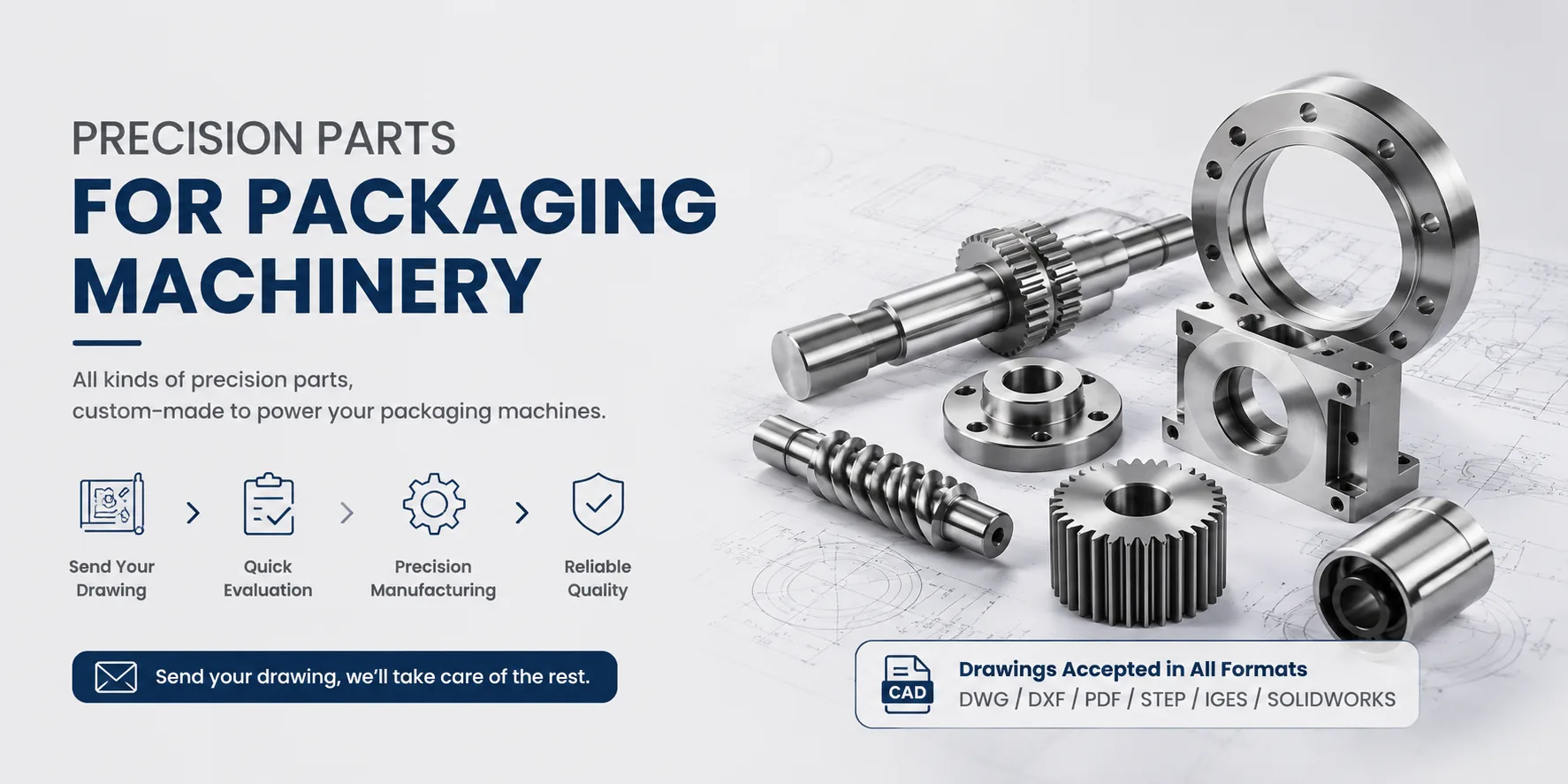
When a roller, clamp, spring, or guide part reaches its wear limit, Hansheng Automation can machine a replacement from customer drawings. We match material, tolerance, and surface treatment to the machine and working conditions.
Confirm strap fit
Check strap thickness. The gap at the retract roller should be only 0.05 to 0.1 mm larger than the strap thickness. If the gap is too wide or the strap is too thin, the strap will not tighten. Change to the correct strap size.
Rule out strap quality problems. Low-quality strap or strap with a very smooth surface can reduce tension. Use strap that matches the machine requirements for material, thickness, and surface friction.
Check other causes
Lubrication and maintenance. Lubricate bearings, gears, and other parts at regular intervals. This reduces friction loss and keeps the mechanism running smoothly.
Motor and drive system. Check whether the belt is loose or slipping. Adjust the motor position or replace the belt. A motor that lacks power can also lower tension.
When to call a technician
If the steps above do not solve the problem, the cause may be inside the machine, such as a damaged circuit board or a failed sensor. Contact a trained service technician. Do not open complex electrical parts on your own, or you may cause a second fault.
Most loose-strap problems come from tension settings, worn mechanical parts, wrong strap size, or poor maintenance. A systematic check solves most cases. For complex faults, get professional support.
Hansheng Automation also machines custom precision parts beyond strapping equipment. Our drawing-based service covers filling machinery, tobacco packaging machinery, yacht components, and RC car components, plus non-standard parts for food, printing, and medical equipment. We handle single pieces and small batches.