Carton strapping machine faults fall into three groups: mechanical, electrical, and hydraulic or pneumatic. Check the group that matches the symptom, then work through the likely causes in order.
1. Mechanical faults
Strap feed problems or strap sticking
This often comes from worn feed rollers or paper dust built up in the guide track. Stop the machine and cut power. Clean paper dust and debris from the guide track. If the feed roller is worn by more than 1 mm, replace it. If the feed roller spring tension is low, adjust the spring to the correct value.
Weak tension or loose strapping
Common causes include a slipping rubber layer on the tension roller, low hydraulic pressure, or the wrong strap size. Check the rubber layer on the tension roller first. Replace it if wear is heavy. On a hydraulic machine, check the hydraulic oil level. Add the same type of oil if the level is low. Set the relief valve pressure to the rated value, usually 10 to 15 MPa, but follow the machine manual. Confirm the strap width and thickness match the machine.
Cutting faults or failure to cut the strap
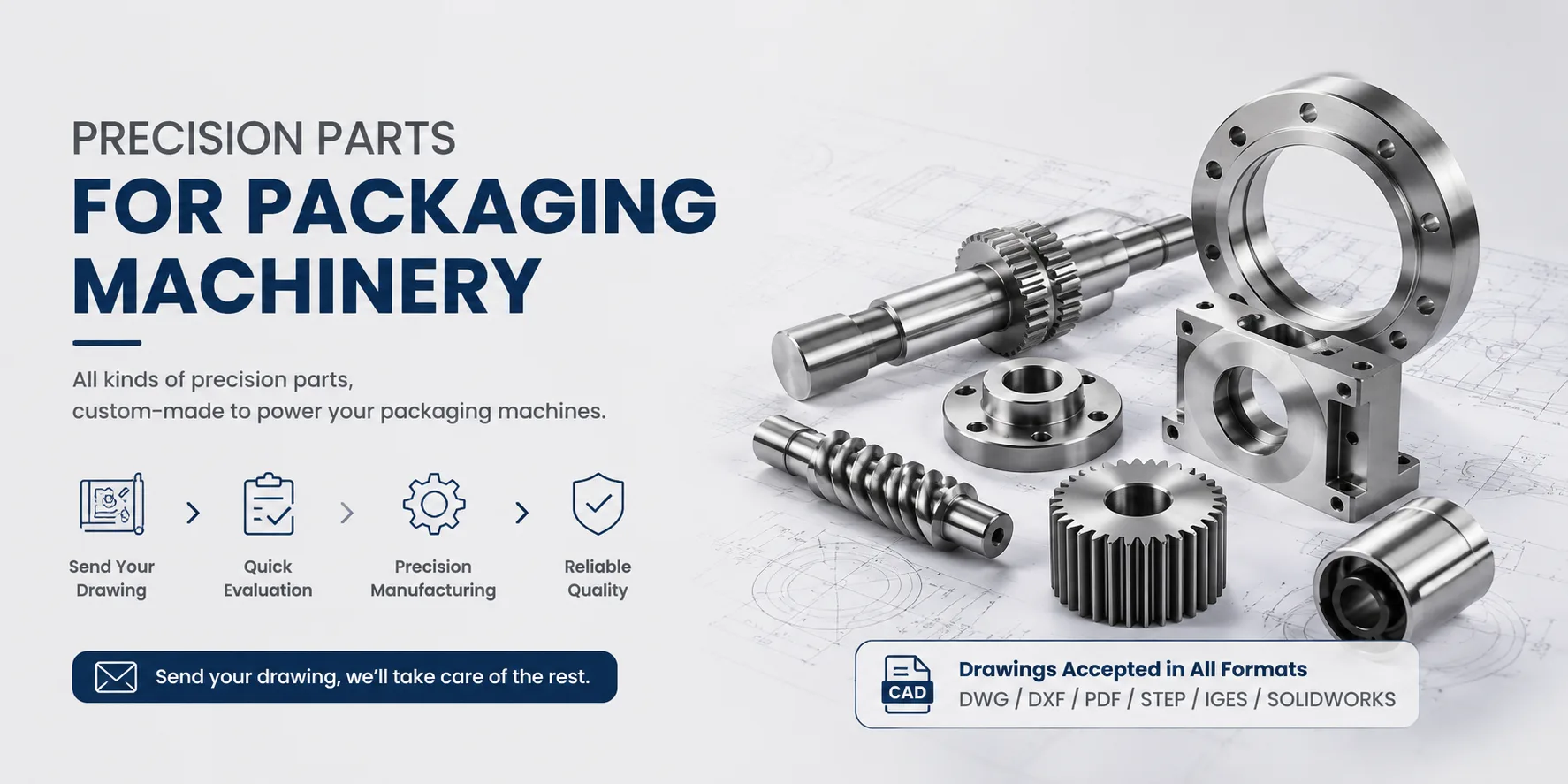
This usually comes from too much clearance between the moving and fixed blades, a dull edge, or a shifted cutter holder. Stop the machine and set the cutter holder clearance to 0.1 to 0.2 mm. Sand a dull edge with abrasive paper. Replace the blade if wear is heavy. Check the cutter holder bolts and tighten them if they are loose. When a feed roller, cutter, or sealing part wears past its limit, Hansheng Automation can machine a replacement from customer drawings. We match material, tolerance, and surface treatment to the machine and working conditions.
2. Electrical faults
No response or failure to start
Check the power plug for looseness and the main breaker for a trip. Replace a damaged power cord. Confirm the emergency stop button has not been pressed. Reset the emergency stop switch. If the machine uses a PLC control system, check the input and output module indicators. Replace a damaged module or contact the manufacturer to reset the program.
Automatic stop or frequent stops during strapping
Most cases come from a photoelectric sensor blocked by dust or a failed limit switch. Clean the sensor lens. Set the sensor to the correct detection position. Replace a failed limit switch and check the wiring for an open circuit.
Heating faults, including weak seals or burned strap
If the temperature is wrong, set the temperature controller to the value that matches the strap. PP strap usually runs at 180 to 220 C. PET strap usually runs at 250 to 300 C. Check the heating wire for a break and replace it with one of the same power rating. Confirm the temperature probe has not shifted and fix it in place.
3. Hydraulic or pneumatic faults
These apply only to hydraulic or pneumatic strapping machines.
Hydraulic oil leaks
Check pipe joints for looseness and seals for aging. Tighten loose joints and replace worn seals. If the cylinder body is badly worn, replace the whole cylinder assembly.
Cylinder sticking or lack of force
Clean dust and debris from inside the cylinder. Replace aged cylinder seals. Check whether air supply pressure is too low. Set the compressor output to the value the machine requires, usually 0.6 to 0.8 MPa.
Safety note
All repair work must start with power off and the machine stopped. For high-pressure hydraulic or pneumatic systems, release pressure first. This prevents accidents during service.
Hansheng Automation also machines custom precision parts beyond carton strapping equipment. Our drawing-based service covers filling machinery, tobacco packaging machinery, yacht components, and RC car components, plus non-standard parts for food, printing, and medical equipment. We handle single pieces and small batches.