Laser cutting machines offer high cutting accuracy, good edge quality, narrow kerf, small heat-affected zone, less material contamination and waste, lower maintenance cost, and higher operating safety. Disadvantages include limited material range, inconsistent productivity, metal hardening, high energy consumption, and high equipment cost.
Advantages
- High cutting precision and accuracy. Laser cutting machines can be fully CNC controlled and repeatedly produce complex parts with tight tolerances.
- Good edge quality. Cut edges usually need no further cleaning, treatment, or finishing, which reduces the need for other finishing processes.
- Narrow kerf width. The focused beam creates a narrow kerf, which minimizes the amount of material removed.
- Small heat-affected zone and less material deformation. Local heating keeps heat input to most of the material low. A small heat-affected zone (HAZ) reduces thermal deformation. The non-contact process also lowers the risk of mechanical deformation, especially for flexible or thin materials, and reduces the risk of material contamination.
- Less material contamination and waste. Tight tolerances, narrow kerf, small heat-affected zone, and less deformation allow parts to be nested more closely on the sheet. This reduces material waste and lowers material cost over time.
- Lower maintenance cost. One laser cutting machine can perform many operations and applications without buying or replacing separate custom tools. This lowers total equipment cost and shortens lead time between different processes and applications. The non-contact process causes less fatigue on laser components, gives longer service life, and replacement is relatively inexpensive.
- Higher operating safety. Laser cutting uses few mechanical components, and the operation takes place inside an enclosure, so operator injury risk is low. It also produces less noise and improves the work environment.
- We can machine custom nozzles, protective lens holders, fixtures, and other precision parts for laser cutting machines from customer drawings, for single-piece or low-volume production.
Disadvantages
- Limited material range. Laser cutting works with various metals and non-metals, but the material and its properties often limit the cutting mechanism, assist gas, and laser type. Material thickness plays a major role in determining the best laser power, assist gas pressure, and focus position. Different batches or thicknesses of the same material also require adjusting cutting speed and depth during the process.
- Inconsistent productivity. Material-related adjustments cause inconsistent production times and increase turnaround time, especially in high-volume production.
- Metal hardening. The final work hardening at the laser cut edge can be a problem for some applications. For example, parts that need further processing, such as powder coating or painting, must first undergo surface treatment after laser cutting. This adds a step, increases turnaround time, and raises total processing cost.
- High energy and power consumption. Laser cutting equipment usually consumes more power and energy than other cutting processes, which increases operating cost.
- High equipment cost. The initial investment in laser cutting equipment is usually higher than other cutting processes. For some manufacturing applications, other cutting processes may be more cost-effective. For example, laser cutting plastics releases potentially harmful and toxic gases, which requires air pollution control equipment and adds necessary equipment cost.
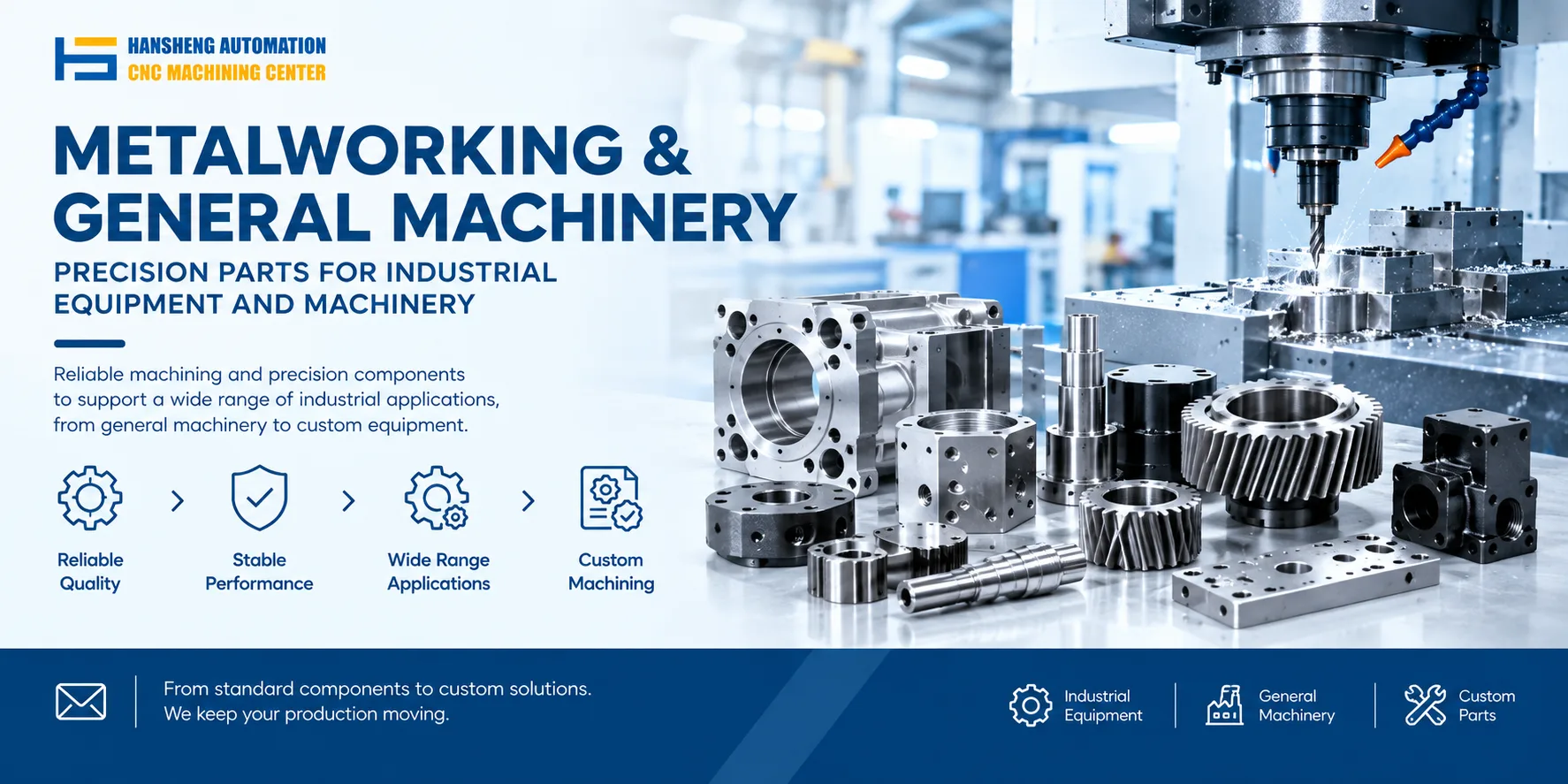
Our custom precision component machining capability is not limited to laser cutting equipment. Beyond cutting nozzles, protective lens holders, and fixtures, we also machine yacht precision components, RC car structural parts, medical device parts, and non-standard parts for food machinery and textile machinery. Hansheng Automation works from customer drawings and production quantities to deliver single-piece or low-volume precision machining.