An automatic premade pouch filling and capping machine completes the packaging process through automatic pouch feeding, pouch loading, filling, cap sorting, cap placement, capping, pouch release, and finished-product discharge. The filling and capping parameters can be adjusted according to the pouch type, material characteristics, and production requirements.
1. Automatic Pouch Feeding
The machine uses a robotic arm or conveying mechanism to pick up premade pouches one by one from the pouch storage unit and transfer them to the designated station. Sensors detect the pouch position to ensure accurate positioning for subsequent operations.
2. Pouch Loading and Positioning
After entering the filling station, the pouch is secured by a fixture. Vacuum suction or mechanical clamping can be used to keep the pouch stable and prevent movement or tipping during filling.
For pouches with different sizes and structures, we can manufacture customized fixtures, positioning blocks, support components, and other non-standard parts according to customer drawings.
3. Two-Stage Filling
During the first filling stage, the machine uses a pump or gravity filling system to introduce liquid or semi-liquid materials into the pouch. The filling volume is controlled by preset parameters.
Some products require two-stage filling. For example, when different materials need to be filled in separate layers, the machine can adjust the filling-head position or switch the material after the first filling stage before completing the second filling process.
4. Automatic Cap Sorting
Caps are automatically sorted and oriented by a vibrating bowl, centrifugal cap sorter, or similar mechanism. Correctly oriented caps are conveyed to the pickup position, while damaged or deformed caps can be screened out.
5. Automatic Cap Placement
A robotic arm or suction device picks up the cap from the sorting system and accurately places it onto the pouch spout or opening. The positioning mechanism needs to maintain good repeatability to prevent cap misalignment from affecting the subsequent capping process.
6. Screw Capping
The capping head applies a preset torque to tighten the cap and complete the seal. Capping parameters can be adjusted according to the cap material and structure to prevent insufficient or excessive tightening.
For specific packaging requirements, some machines can also incorporate heat sealing or ultrasonic welding.
7. Pouch Release and Finished-Product Discharge
After capping, the fixture releases the pouch, and a conveyor or robotic mechanism transfers the finished product to the discharge area.
Additional inspection functions, such as leak detection and seal-integrity inspection, can be integrated to automatically reject defective products.
Qualified products can then proceed to subsequent packaging processes such as case packing and palletizing. A counting function can also be added to record production output.
8. Customization and Precision Machining
Pouch dimensions, spout structures, material viscosity, and filling volumes can vary significantly. As a result, components such as fixtures, filling heads, guide parts, and capping mechanisms often require application-specific adjustments.
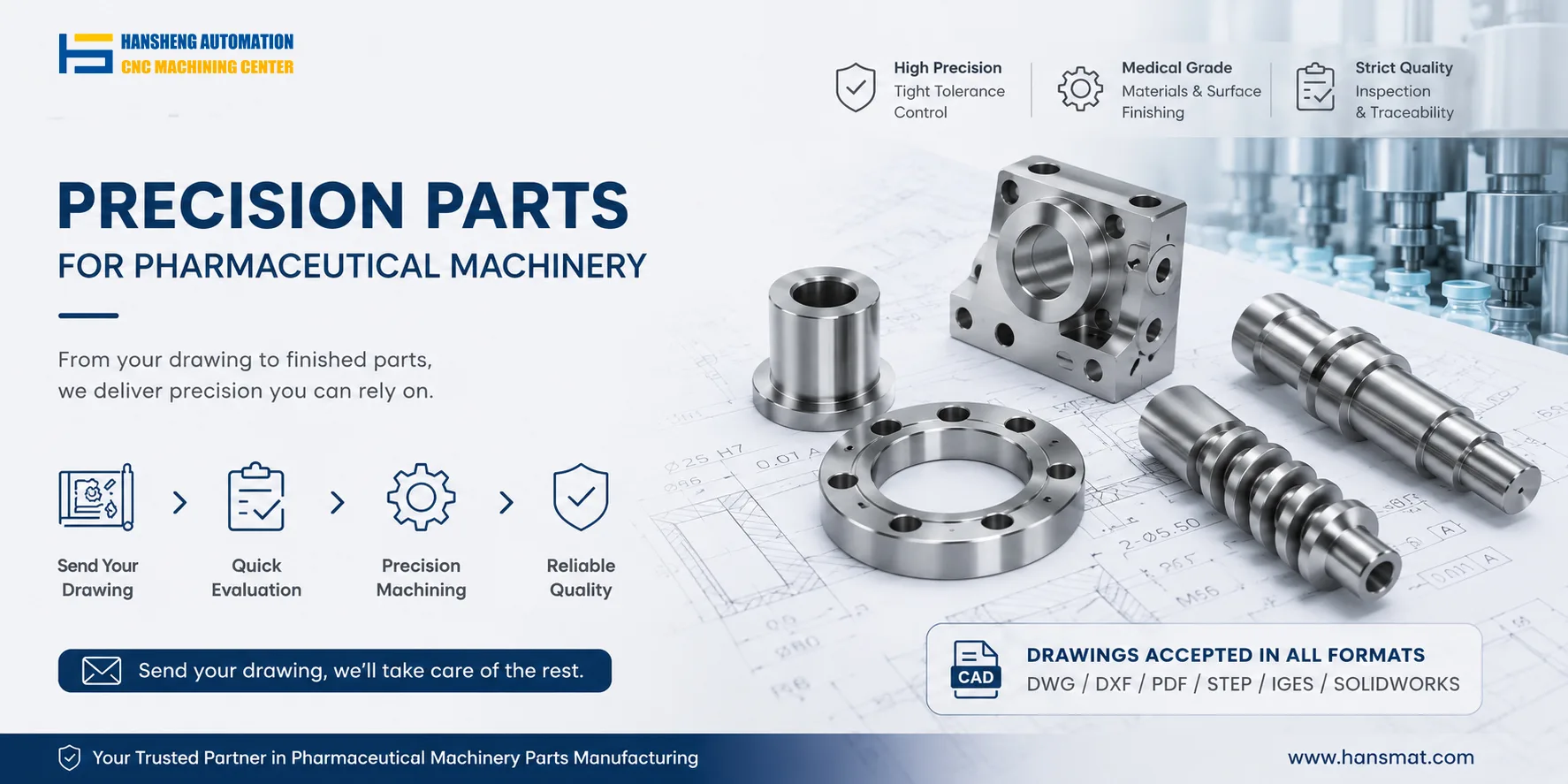
Hansheng Automation can provide precision machining of custom components based on customer 2D or 3D drawings, including fixtures, positioning components, shafts, bushings, mounting brackets, and guide components. We can select suitable processes such as CNC turning, CNC milling, or precision grinding according to the component requirements.
Premade pouch filling and capping machines are commonly used for products such as fruit juice, sauces, paints, adhesives, and certain nutritional liquids. The equipment can also be configured for spouted pouches and other special-shaped packaging formats.