Craft beer filling machines typically adopt a rotary design, and their working principle centers on bottle conveying, positioning, filling, and capping.
Bottle Conveying and Positioning
Bottles enter the filling machine through an infeed conveyor. They are first separated at fixed intervals by an infeed screw and then guided by an infeed star wheel to a liftable bottle support plate. The support plate positions the bottle precisely below the filling valve, providing stable support for the subsequent filling operation.
Filling Operation Process
Lifting and positioning: The bottle support plate rises so that the bottle mouth fits tightly against the filling valve.
Vacuum evacuation: Air inside the bottle is removed through one or two vacuum evacuation steps to prevent beer oxidation.
Counterpressure operation: Carbon dioxide or another gas is introduced into the bottle to create a pressure equal to that in the filling system, preventing excessive foaming caused by pressure differences.
Isobaric filling: Under balanced pressure, beer flows smoothly from the filling valve into the bottle, ensuring stable filling and accurate liquid level.
Level correction: The liquid level in the bottle is adjusted by mechanical devices or sensors to ensure consistent fill volume.
Pressure release: The pressure inside the bottle is released to balance with the outside atmosphere.
Bottle lowering and discharge: The support plate lowers, and the filled bottle is discharged from the filling machine.
Production Capacity Optimization
The filling process is one of the most time-consuming stages in the production line, accounting for about half of the total time. To improve efficiency, the equipment usually increases the number of filling valves or enlarges the rotary diameter. Small filling machines may have a turntable diameter of only about 1.4 meters, while large equipment can exceed 5 meters. Modern large-scale filling machines can achieve a capacity of 40,000 to 60,000 bottles per hour.
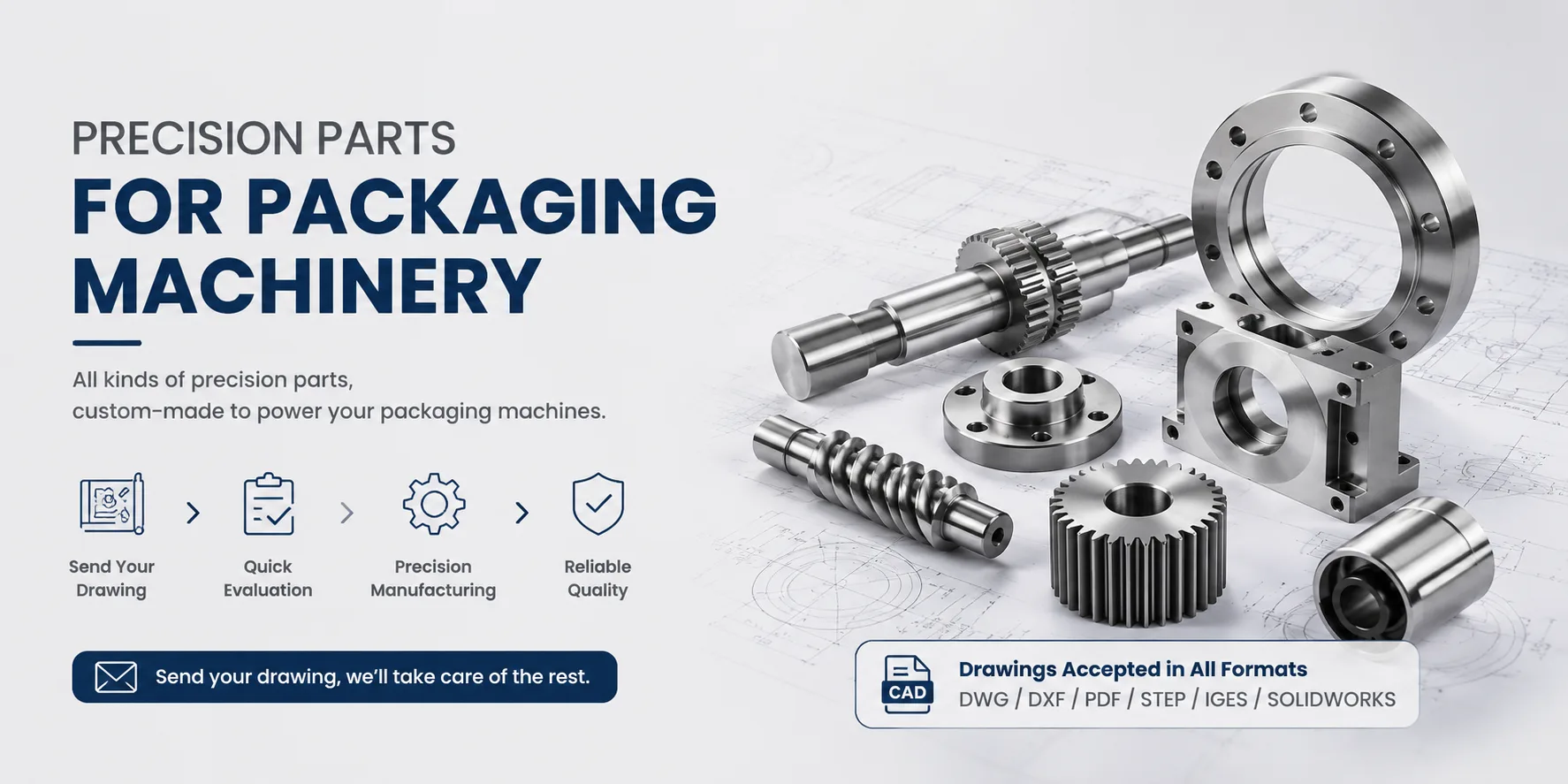
For non-standard structural components in rotary filling machines, such as bottle support plates, filling valves, star wheels, and positioning parts, Hansheng Automation provides custom machining based on customer drawings, supporting material selection and tolerance control to accommodate different bottle types and production capacity requirements.
Capping and Quality Assurance
After filling is completed, beer must be capped immediately to prevent contact with oxygen and loss of carbon dioxide. Carbon dioxide loss can significantly impair beer quality, so the filling machine is usually combined with a capping machine to form a continuous production line.
Hygiene and Cleaning Requirements
Craft beer production has high hygiene requirements. The filling machine needs regular cleaning, and some workshops even require a sterile environment to ensure beer quality and safety.