If the pusher stops but the machine keeps running, the cause is often in the electrical control or mechanical drive system. Check in this order: electrical, mechanical, parameters, and emergency response. Keep safety first.
Electrical system checks
Sensor fault: Check whether the pusher stroke limit switch is damaged. Use a multimeter to test continuity.
Solenoid valve status: Watch the solenoid valve indicator for the pusher cylinder. Measure the coil resistance. The normal value is usually 20 to 30 Ω.
PLC output signal: Use a programmer to monitor the corresponding output point, such as Y3, and see whether it outputs a signal when the pusher should act.
Mechanical system checks
Cylinder sealing: Disconnect the air hose and push the piston rod by hand. Check for internal leakage. Normal operation should show clear damping.
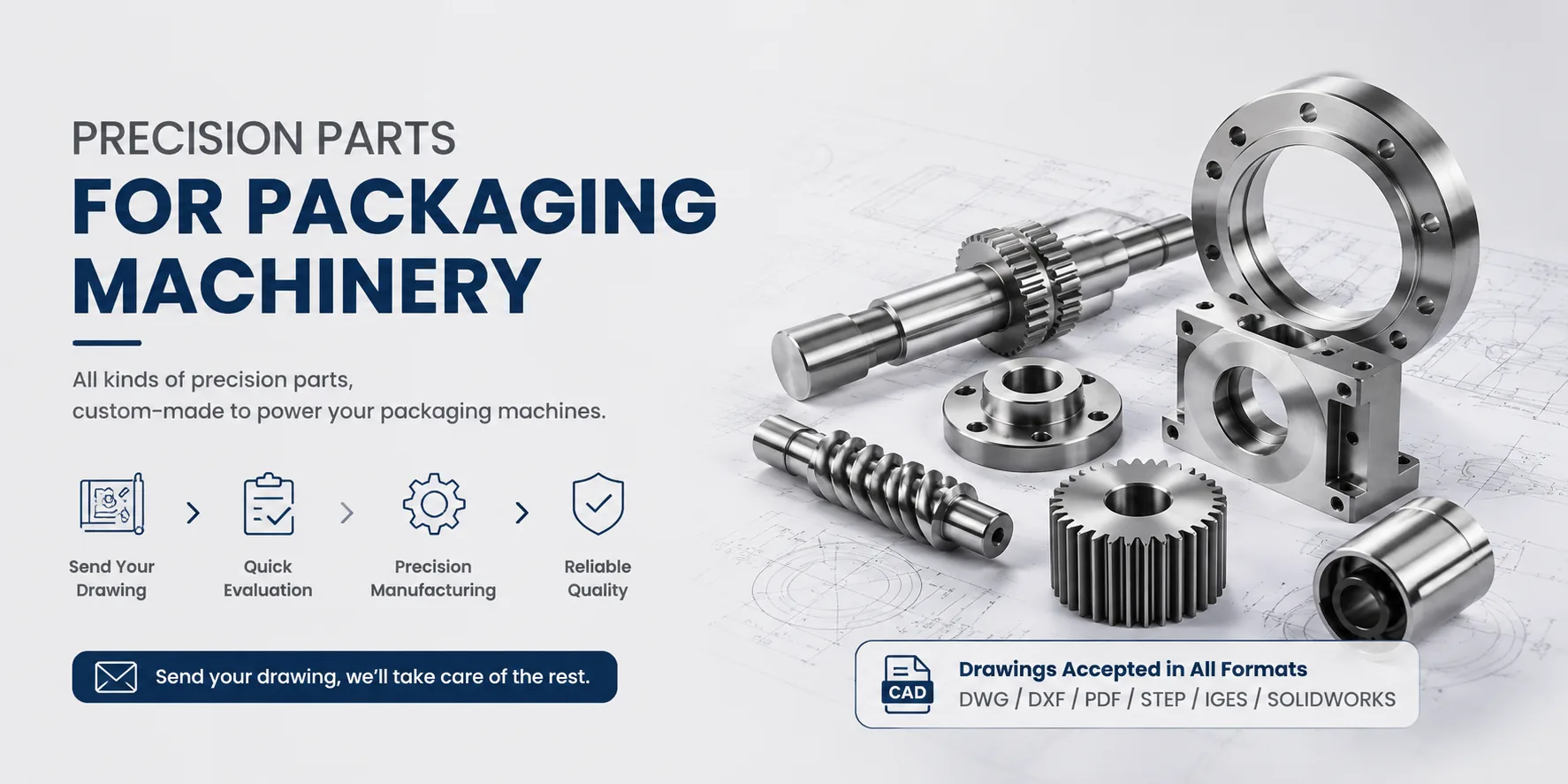
Guide rail jamming: Remove the pusher connecting rod and test guide rail movement by hand. Apply no more than 5 kg of force. If the pusher, pusher seat, guide rail, or connecting rod is worn, we can machine replacements from customer drawings. Hansheng Automation supports single-piece and small-batch custom work, with material and tolerances controlled by the drawing. We focus on precision machined parts, not complete machines.
Drive mechanism: Check the tension of the timing belt or chain. Deflection should be less than 1/100 of the center distance.
Machine parameter checks
Check the pusher action delay parameter in the PLC program. The standard value is usually 0.3 to 0.5 seconds.
Check whether the air pressure gauge reads at least 0.4 MPa. Below this value, thrust may be insufficient.
Confirm whether the torque limit value of the pusher servo motor, if fitted, has been set incorrectly.
Emergency response
Press the emergency stop immediately to prevent material buildup.
Check for foreign objects jamming the pusher mechanism.
If the machine has a fault self-check function, retrieve the last 10 alarm records.
Beyond case packer pusher parts, our drawing-based custom machining also covers pharmaceutical equipment, automated assembly lines, textile machinery, filling machinery, tobacco packaging machinery, yacht hardware, and RC car structural parts. We machine single pieces and small batches to drawing for equipment builders and production lines. We focus on precision machined parts, not complete machines.