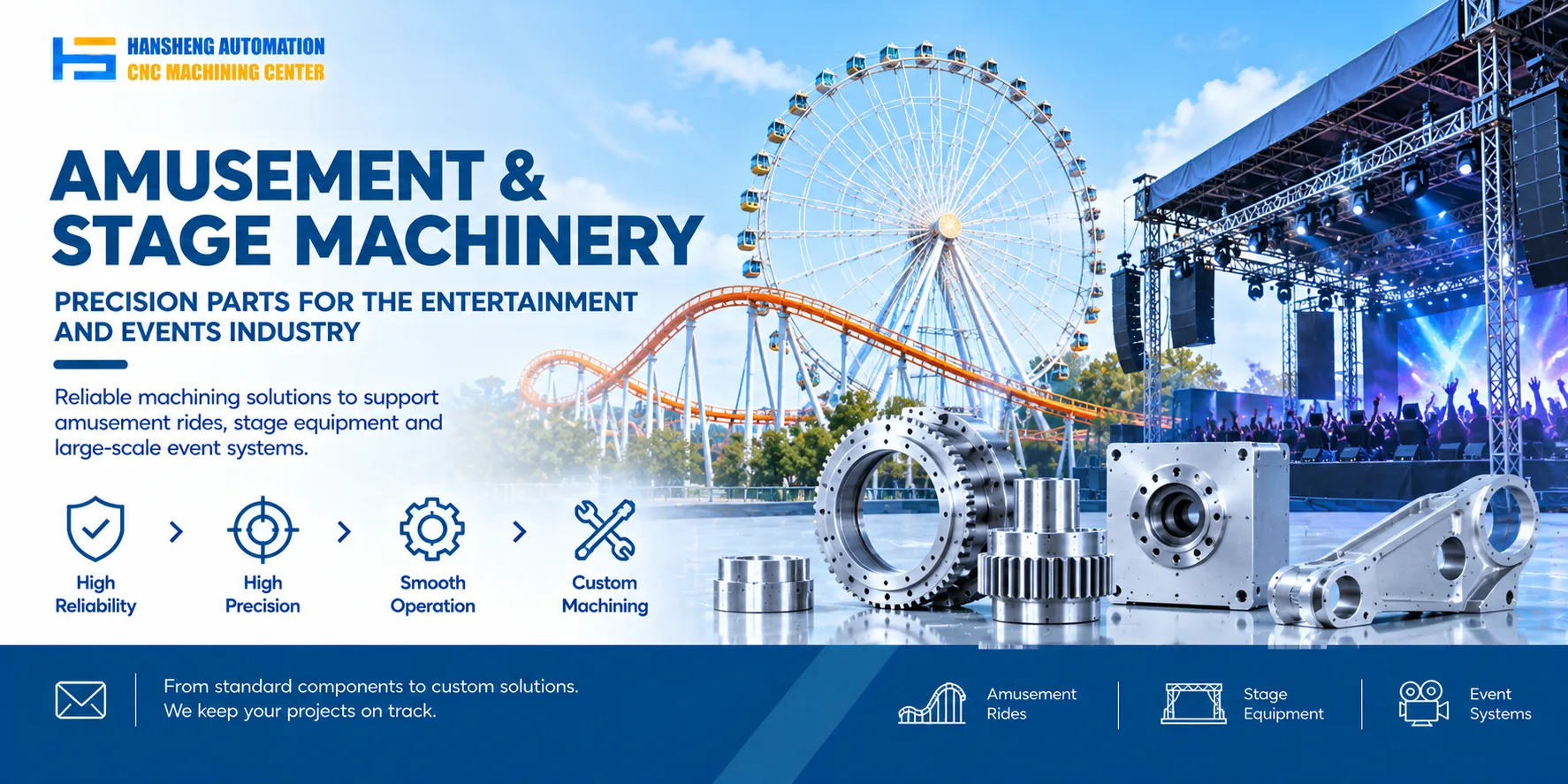
A Ferris wheel rotates because its drive system transfers mechanical power to the wheel structure. A common arrangement uses an electric motor, a gearbox, and friction wheels to turn the wheel at a low speed. Drive configurations vary between Ferris wheels, but each system must provide enough torque to rotate the wheel smoothly under passenger loads and operating conditions.
How the Motor and Gearbox Provide Power
An electric motor converts electrical energy into mechanical rotation and is a common power source for Ferris wheels. Since the motor generally runs faster than the required wheel speed, a gearbox is usually installed in the drive system.
The gearbox reduces the output speed while increasing the output torque. This allows the drive unit to produce the torque required to rotate a large wheel structure. The actual drive capacity must be selected according to the wheel design, passenger load, starting requirements, and operating conditions.
How Power Is Transmitted to the Wheel
In a Ferris wheel that uses friction drive, the electric motor and gearbox rotate one or more friction wheels. These wheels usually have resilient, wear-resistant contact surfaces and are pressed against the wheel rim or a dedicated drive track.
As the friction wheels rotate, friction at the contact surfaces transfers torque to the wheel structure, causing it to turn slowly. The drive wheels must maintain suitable contact pressure to ensure stable power transmission. Some large Ferris wheels use multiple drive units to share the load and maintain smooth operation.
Not all Ferris wheels use tire-based friction drives. Depending on the design, power may also be transmitted through steel cables, gears, or other mechanical arrangements. The choice depends on the wheel's size, structural configuration, and engineering requirements.
How the Wheel Structure and Passenger Gondolas Move
A Ferris wheel generally consists of a large rotating wheel, a supporting structure, a central shaft or bearing system, and passenger gondolas arranged around the rim. The drive system rotates the wheel about its central axis, while the gondolas are suspended from the rim.
In a common suspended-gondola arrangement, gravity helps the gondolas maintain a relatively stable riding position as the wheel turns. They travel along a circular path, gradually rising and descending as the wheel rotates. This allows passengers to view the surrounding area from different heights.
Although a Ferris wheel operates at a relatively low speed, its drive system must account for passenger load distribution, starting and braking, wind loads, and the forces acting on the transmission components. The drive units, supporting structure, and braking system must work together to keep the wheel operating as designed.
Precision Machined Components for Ferris Wheel Equipment
Ferris wheel drive and support systems contain various mechanical components, some of which require precision machining to meet dimensional and assembly requirements. At Hansheng Automation, we provide custom precision machining based on customer drawings, with support for single-piece and small-batch production. Our machining work covers components for yacht equipment, RC racing car structures, tobacco packaging machinery, and filling equipment. Parts can be manufactured according to the specified drawings, dimensions, and technical requirements.