Heavy-duty automotive assembly includes engine blocks, transmission assemblies, chassis parts, new energy battery packs, and axle press-fitting. The core requirements are high load capacity, resistance to offset loads, resistance to assembly impact, resistance to iron chips and dust, and no deformation under long-term heavy loads. The preferred choice is a V-roller double-rail ring rail with chain drive. Select by load in three levels.
Rail type: choose only V-roller rails, not ball rails
V-roller ring rail (the only mainstream choice for heavy-duty automotive assembly)
Structure: roller line contact on V-shaped hardened rail, hardness HRC 58 to 62, self-cleaning for iron chips.
Load advantages: impact resistance, resistance to eccentric press-fitting force, no jamming in dusty environments. The carriage allows large offset loads.
Accuracy: repeat positioning ±0.03 to ±0.05 mm, meeting positioning requirements for bolt tightening and bearing press-fitting.
Applications: all heavy-duty automotive component assembly, welding, and air tightness testing lines.
We can machine custom V-rollers, hardened rails, carriages, and other precision components from customer drawings, for single-piece or low-volume production.
Do not choose ball ring rails
Balls are point contact. They cannot handle overload or iron chips. They chip easily under assembly press-fitting impact. They only suit light-load precision assembly in 3C, not heavy automotive work.
T-type rails excluded
T-type rails only handle medium loads and tight spaces. They lack rigidity and deform easily in large component assembly.
Single rail or double rail: use double V-rails for heavy loads
Single rail: one-side support, poor offset load resistance, maximum single carriage within 50 kg, only for small plastic parts.
Double V-rail heavy-duty rail (recommended)
Two-sided synchronous support doubles rigidity. It cancels lateral assembly pressure and press-fitting torque. A single carriage stably carries 100 to 300 kg. Long ring lines with multiple stations show no accuracy drift. It is standard for engines, transmissions, and chassis assemblies.
Drive type: choose chain or timing belt by load
Chain drive (first choice for ≥80 kg heavy loads, mainstay of automotive final assembly)
Single carriage load 80 kg to 3 tons, with press-fitting or impact conditions (cylinder blocks, transmissions, axles).
Advantages: high torque, impact resistance, no slipping on long ring lines, high load capacity ceiling.
Speed: 0.1 to 1.2 m/s, stable low-speed operation for assembly lines.
Typical applications: engine assembly, battery pack lines, rear axle press-fitting lines.
Reinforced timing belt drive (50 to 80 kg medium-heavy small parts)
Suitable for motor housings, wheels, brake assemblies, and other medium weights. Low noise, speed up to 2 m/s.
Weakness: long-term press-fitting impact stretches the belt. Not recommended for large heavy parts.
Gear rack drive (super heavy, high synchronization)
Single carriage above 300 kg, multi-station synchronous press-fitting. High cost. Mostly used for vehicle chassis sub-assembly lines.
Selection by workpiece weight (automotive industry standard)
Level 1: light to medium load (single station total weight 30 to 80 kg: motors, wheels, transmission housing small parts)
Rail: 44 mm wide V-roller, single rail or simple double rail
Drive: reinforced timing belt
Carriage: 4-roller standard heavy-duty carriage
Safety factor: load × 1.5
Level 2: standard heavy load (80 to 200 kg: engine cylinder heads, transmission assemblies, subframes) [most common]
Rail: 76 mm wide V double rail (heavy-duty standard)
Drive: industrial roller chain drive
Carriage: 6-roller widened heavy-duty carriage, with side locking positioning blocks
Accessories: fully enclosed dust cover plus automatic grease lubrication (resists cutting fluid and iron chips)
Safety factor: load × 2 (margin for assembly impact)
Level 3: super heavy (200 kg to 3 tons: complete cylinder blocks, battery packs, axles)
Rail: custom widened 88 mm V double rail, thickened hardened rail base
Drive: heavy-duty conveyor chain plus auxiliary support rollers
Carriage: 8-roller heavy-duty widened base, with buffer damping to offset press-fitting impact
Structure: add auxiliary support beams at the bottom of the ring line to prevent rail sag and deformation
Special reinforced configuration for heavy-duty automotive conditions (required)
Roller eccentric preload mechanism: adjustable clearance after long-term heavy-load wear, no accuracy loss.
Fully sealed dust cover: blocks grinding and machining iron chips, prevents V-groove jamming.
Station mechanical locking positioning pin: locks the carriage during tightening and press-fitting, eliminates sliding.
Automatic central lubrication: no manual maintenance for 24-hour continuous production lines.
Rail material: GCr15 bearing steel, vacuum hardened, prevents long-term load bending.
Quick selection summary
- Engine / transmission / chassis large parts (≥80 kg): 76 mm V double-rail roller ring rail plus chain drive.
- Motors, wheels, and other 50 to 80 kg medium-heavy parts: 44 mm V double rail plus reinforced timing belt.
- Super heavy assemblies above 200 kg: custom 88 mm widened V double rail plus heavy-duty chain plus bottom auxiliary support.
- In environments with many iron chips and press-fitting impact, do not use ball rails, single rails, or standard timing belts.
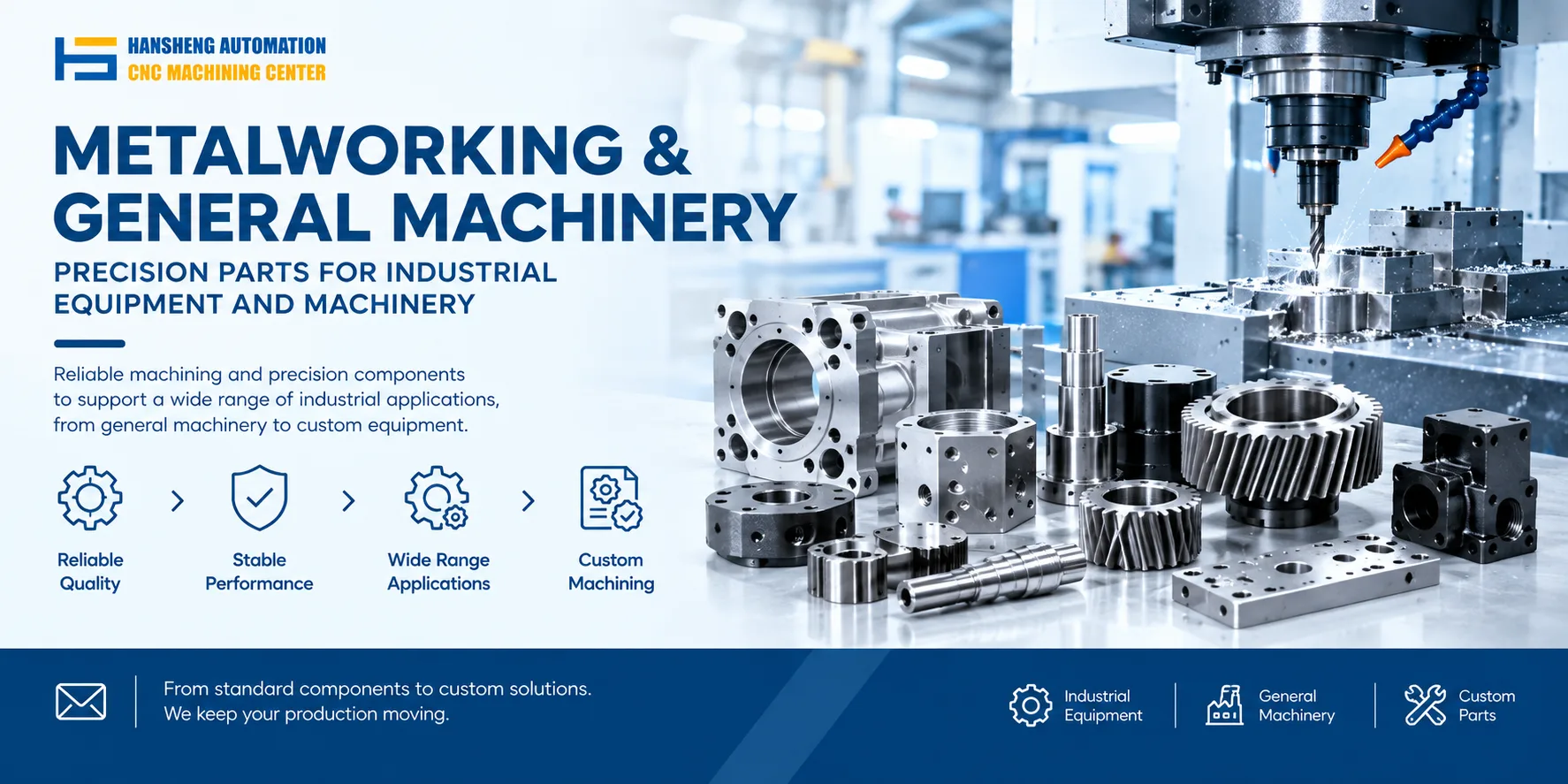
Our custom precision component machining capability is not limited to ring rail related parts. Beyond V-rollers, hardened rails, carriages, and positioning pins, we also machine precision parts for yachts and RC cars, medical device components, and non-standard parts for tobacco packaging machinery, filling machinery, and printing machinery. Hansheng Automation works from customer drawings and production quantities to deliver single-piece or low-volume precision machining.