The main difference between mechanical shaft and electronic shaft gravure printing machines lies in the color units.
In a mechanical shaft machine, registration is accomplished by precision ball screws. Each color unit is mechanically linked, and registration correction depends on the accuracy and wear condition of the entire transmission chain.
In an electronic shaft machine, each color unit is driven by an independent servo motor, and registration is completed by the servo system. This design eliminates the long mechanical drive shaft and allows faster and more precise register control.
Between the two, the electronic shaft system is generally recommended. Because each color unit has its own servo motor, the machine also supports secondary registration. In addition, electronic shaft machines typically run at higher speeds with better dynamic response.
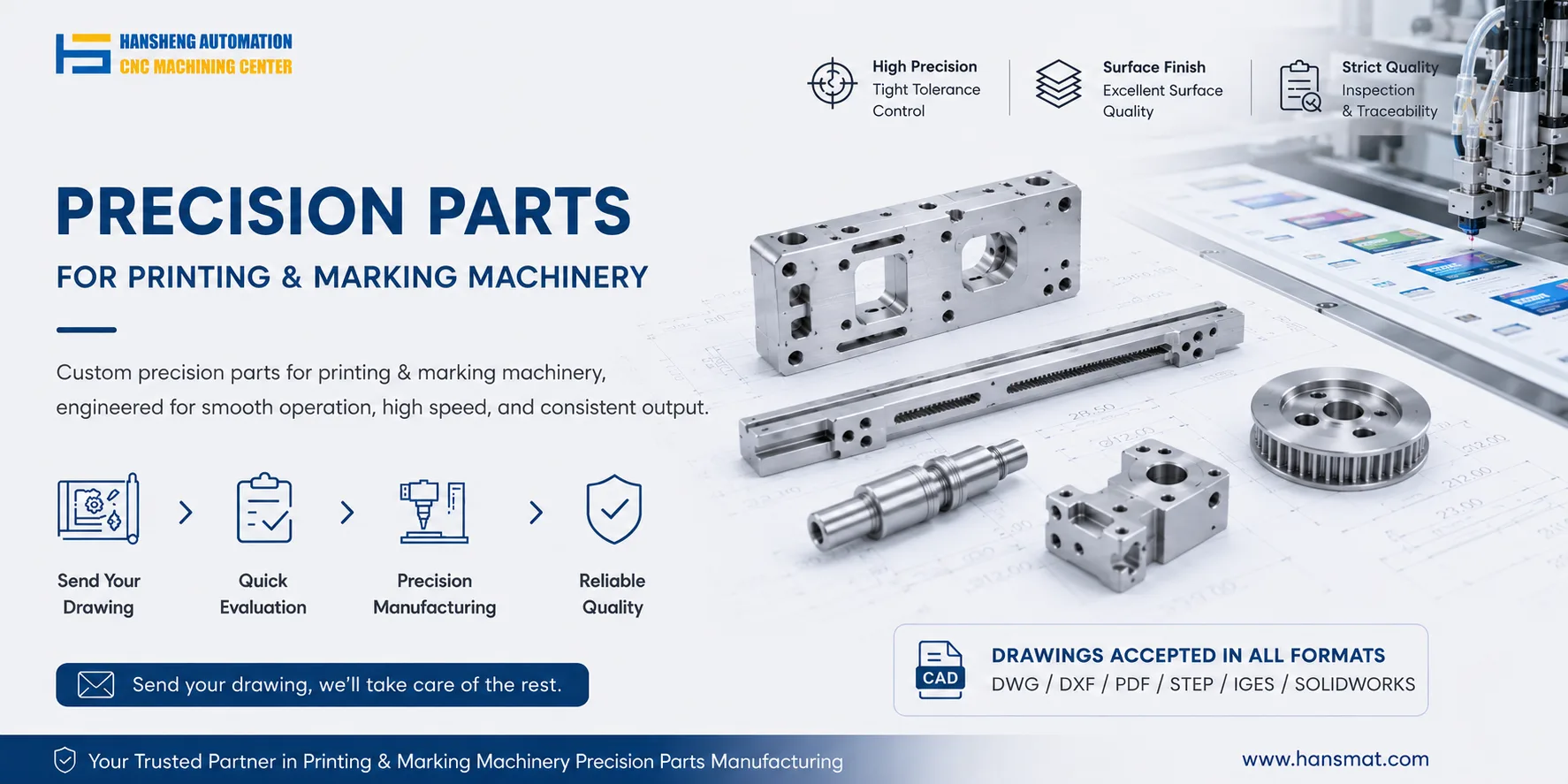
For high-speed electronic shaft gravure presses, the precision of non-standard parts such as servo motor mounting seats, register adjustment brackets, and drive couplings directly affects long-term registration stability. Hansheng Automation supports custom machining of these components from customer drawings or samples, including single-piece and small-batch orders.