Current mainstream aluminum and aluminum-plastic laminated toothpaste tubes go through six stages: raw material preparation, tube forming, sealing and tail sealing, surface treatment and printing, filling and capping, and finished product inspection and packaging.
1. Raw material preparation
Choose the substrate by tube type. Pure aluminum tubes use 8011 series aluminum alloy coil, 0.18 to 0.3 mm thick. Aluminum-plastic laminated tubes use aluminum foil combined with polyethylene (PE) coil. An uncoiler unwinds the coil, trims the edge burrs, and slits it into narrow strips sized to the tube diameter. Ultrasonic cleaning removes surface oil and oxide. Some substrates need preheating to 40 to 60°C to improve adhesion in later forming.
2. Tube forming
Continuous tube forming: the slit strip feeds into a tube forming machine and is gradually bent into a cylinder through 7 to 9 sets of progressive rollers. Aluminum tubes use high-frequency induction welding on the overlap seam, while aluminum-plastic tubes use hot-melt bonding of the PE layer on the overlap seam, producing a continuous tubular blank.
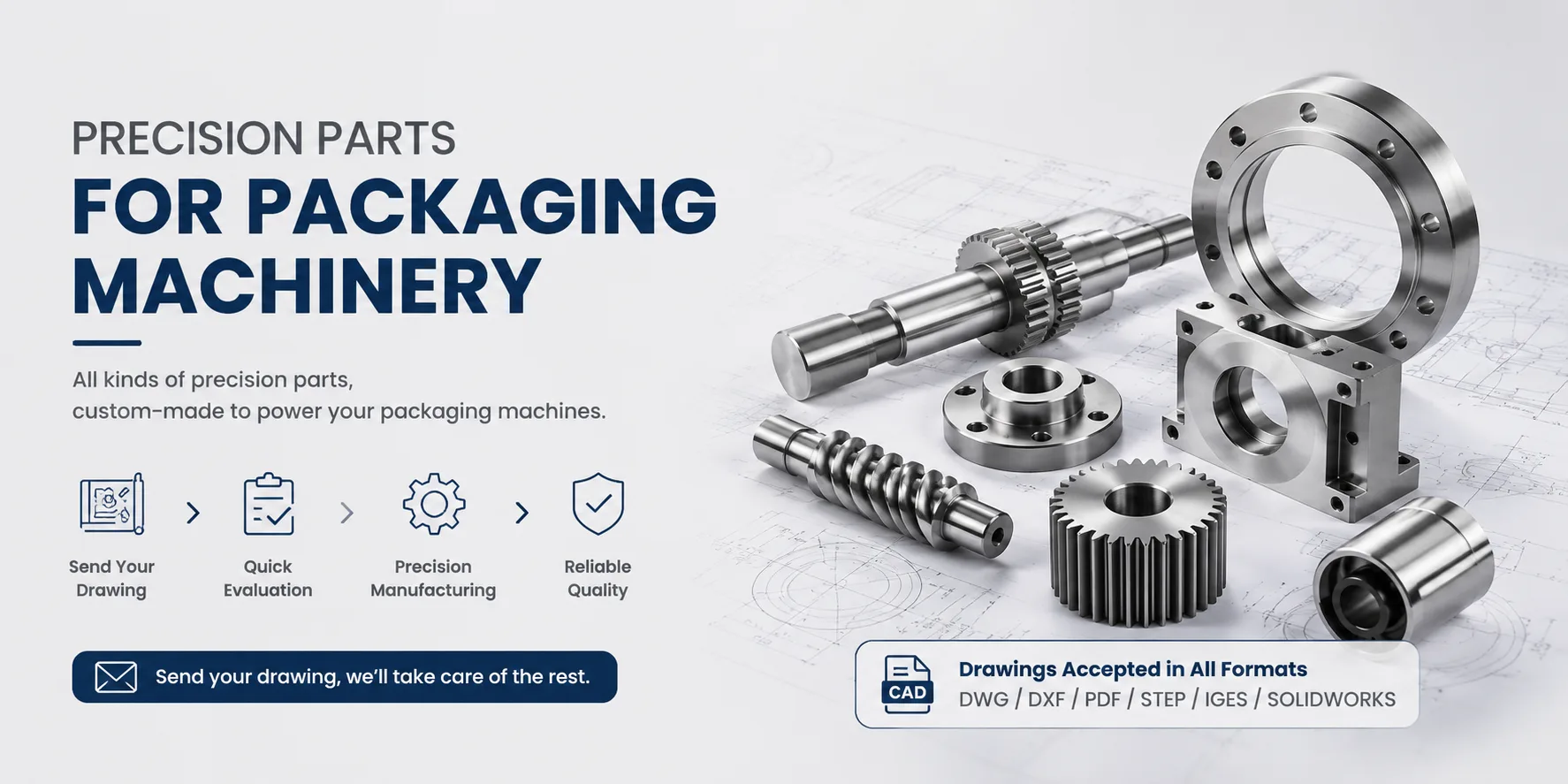
Sizing and cutting: the continuous tube blank goes into a sizing die to adjust the inner diameter to standard size, generally φ15 to φ25 mm, then is cut to the specified single-tube length. For forming rollers, sizing dies, and cutting blade seats, we can machine to customer drawings, for single pieces or small batches.
3. Sealing and tail sealing
Tail sealing: one end of the single tube blank goes into a tail sealer, where heat pressing seals the tail. Pure aluminum tubes use high-frequency heat sealing, and aluminum-plastic tubes directly hot-melt the PE layer. Some machines simultaneously press a tail hanging groove or brand mark pattern.
Tube mouth trimming: cut off excess overlap burrs at the tube mouth and chamfer to prevent scratches during assembly.
4. Surface treatment and printing
Surface pretreatment: pure aluminum tubes undergo chemical polishing or anodizing to remove surface scratches and improve gloss and corrosion resistance. Aluminum-plastic laminated tubes use corona treatment to raise the surface tension of the PE layer and enhance printing adhesion.
Printing and coating: flexo, gravure, or heat transfer printing applies brand marks, product descriptions, and color patterns to the tube body. Some high-end products receive a clear lacquer coat for better abrasion and scratch resistance.
5. Filling and capping
Quantitative filling: a piston-type quantitative filler injects the prepared toothpaste paste into the tube body, with filling accuracy held within ±2%.
Cap sealing: the matching plastic flip-top or screw cap is installed on the tube mouth and tightened by a capping machine. Some products add an aluminum foil seal film for further leak protection.
6. Finished product inspection and packaging
Inline inspection: an air tightness tester samples tube sealing, and printing accuracy and dimensional error are checked. Defective units are automatically rejected.
Final packaging: qualified toothpaste tubes are packed into outer boxes by specification, then palletized into transfer cartons for warehousing.
Beyond parts for toothpaste tube manufacturing, our precision component machining capability also covers non-standard parts for pharmaceutical packaging machinery, food filling equipment, and daily chemical packaging lines, as well as precision structural parts for yachts and RC race cars. Hansheng Automation machines single pieces or small batches to customer drawings, with material, tolerance, and surface finish specified by the drawing.