A vacuum packaging machine for meat plants is broadly divided into five categories: vacuum chamber body, vacuum system, heat sealing system, control and sensing system, and auxiliary components.
1. Vacuum chamber body
The chamber shell is welded from food-grade 304 stainless steel with rounded, polished internal corners to prevent buildup. It is the core space that holds the product and creates a sealed vacuum environment.
The product carrier tray is food-grade stainless steel, placed at the bottom of the chamber to support the meat packaging bag. Some models allow height adjustment to fit different package sizes.
The chamber seal is mainly a food-grade silicone gasket, installed where the chamber edge meets the door, to maintain airtightness during vacuum and prevent outside air from entering.
2. Vacuum system
Vacuum pump: meat plants commonly use water ring vacuum pumps, which carry no oil contamination risk and suit food processing. They draw air from the chamber through the suction line to build a vacuum quickly.
Vacuum control piping: includes the main suction pipe, intake bypass pipe, and solenoid vacuum valves, used to control the on-off sequence of suction, holding, and venting. The piping is food-grade stainless steel.
Vacuum level sensor: a pressure transmitter that continuously reads chamber pressure and feeds it back to the control system for precise vacuum control.
3. Heat sealing system
Heating element: usually a silicone heating plate or nickel-chromium alloy heating wire, embedded in the sealing bar base. It heats on power-up to seal the bag. Sealing temperature is typically 120°C to 180°C, suited to the PE and PA laminate films common in food packaging.
Sealing pressure bar: a high-temperature bar with PTFE coating or a food-grade silicone bar, working with the heating element to press the bag seal edge, prevent sticking, and ensure even sealing.
Pressing mechanism: includes a pneumatic pressure rod or spring-loaded pressing structure that applies stable pressure during sealing, preventing bag movement that would affect seal quality. It suits the heavy bags used in meat packaging.
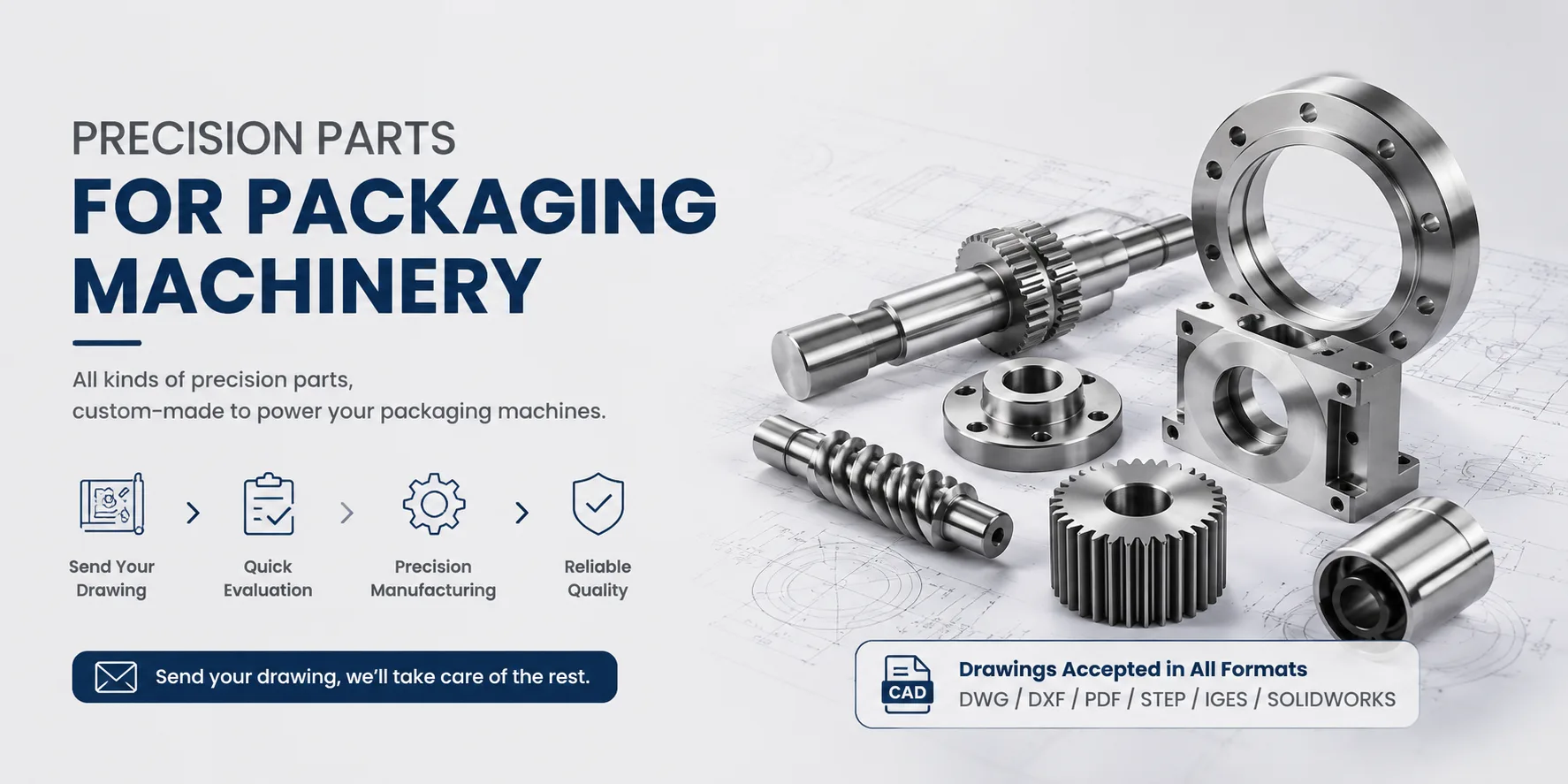
For sealing bar bases, PTFE pressure bars, and chamber seals, we can machine to customer drawings, for single pieces or small batches.
4. Control and sensing
Touch control system: built-in PLC and touchscreen, allowing custom settings for vacuum time, sealing time, and cooling time to suit different meat packaging needs.
Temperature sensor: continuously monitors the heating element surface temperature to prevent overheating that would damage the film or affect seal quality.
Door limit switch: detects whether the door is fully closed, preventing vacuum leakage or safety hazards from improper operation.
5. Auxiliary components
Drip tray: a removable tray at the bottom of the chamber that catches meat juice and blood overflow during packaging. It is easy to remove and clean, meeting food factory hygiene requirements.
Intake filter: installed in the intake line to filter dust and particles from outside air and prevent contamination of the packaged product in the chamber.
Manual or automatic pressure relief valve: after vacuum packaging, it admits filtered air into the chamber to equalize pressure and allow the door to open for removing the packed meat.
Beyond vacuum packaging machine parts, our precision component machining capability also covers non-standard parts for food processing equipment, pharmaceutical packaging machinery, and daily chemical filling equipment, as well as precision structural parts for yachts and RC race cars. Hansheng Automation machines single pieces or small batches to customer drawings, with material, tolerance, and surface finish specified by the drawing.