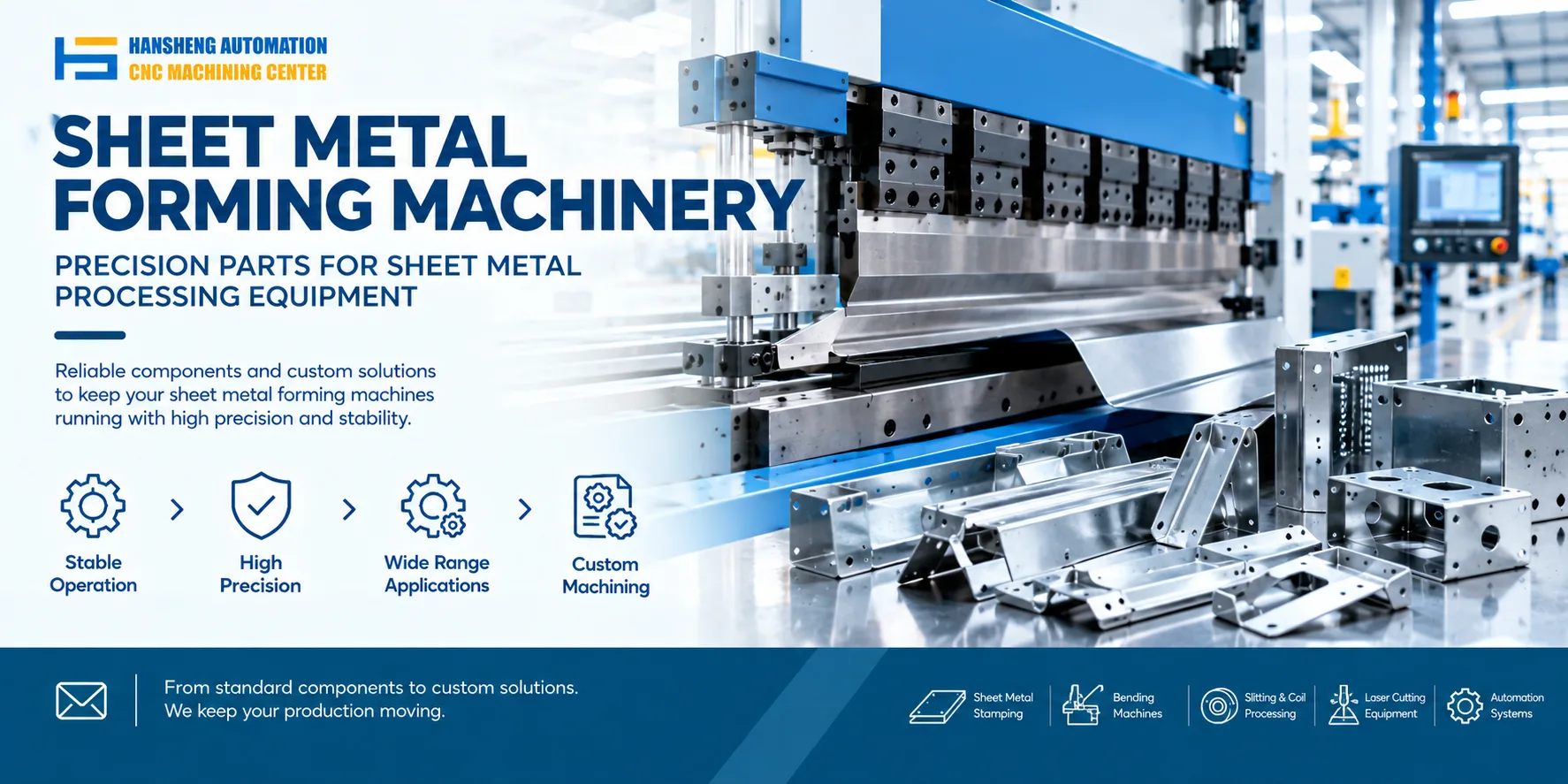
CNC press brake punches and dies are made from materials selected for their strength, toughness, wear resistance, and dimensional stability. The appropriate material depends on the sheet metal being formed, the required bending force, tooling geometry, production volume, and heat treatment.
Tool steels are widely used for press brake tooling. Other options include cemented carbide, steel bonded carbide, and specialized tool steels developed to balance wear resistance and toughness.
Steel materials for CNC press brake tooling
Carbon tool steels
Carbon tool steels such as T8A and T10A are relatively easy to machine and economical. However, they have limited hardenability and can undergo significant distortion during heat treatment. Their load carrying capacity is also lower than that of many alloy tool steels.
These limitations must be considered when selecting carbon tool steel for tooling subjected to repeated bending loads.
Low alloy tool steels
Common examples include CrWMn, 9Mn2V, 7CrSiMnMoV (CH-1), and 6CrNiSiMnMoV (GD).
Compared with carbon tool steels, these materials generally offer better hardenability and wear resistance, with a lower tendency toward quenching distortion and cracking. Their properties make them useful for tooling that requires a balance of dimensional stability, hardness, and resistance to wear.
The exact performance depends on the material grade and heat treatment.
High carbon, high chromium tool steels
This group includes Cr12, Cr12MoV, and Cr12Mo1V1, the last of which is commonly compared with D2 grade tool steel.
These steels provide good hardenability and wear resistance. With suitable heat treatment, they can achieve high hardness and good dimensional stability, making them candidates for cold work dies and other tooling exposed to repeated contact and wear.
Their high carbide content contributes to wear resistance, but the balance between hardness and toughness must be considered when selecting a grade for press brake punches and dies.
High carbon, medium chromium tool steels
Examples include Cr4W2MoV, Cr6WV, and Cr5MoV.
Compared with high carbon, high chromium tool steels, these grades generally contain less chromium and can have a lower amount of eutectic carbides. A more uniform carbide distribution can help reduce heat treatment distortion and improve dimensional stability.
Selection still depends on the required hardness, toughness, wear resistance, and working conditions of the tooling.
High speed tool steels
High speed tool steels include W18Cr4V (8-4-1) and W6Mo5Cr4V2 (6-5-4-2, commonly identified as M2).
These materials offer high hardness, wear resistance, and compressive strength. They can carry substantial loads and are used in demanding cutting and forming applications.
However, high speed steel is not automatically the best choice for every press brake tool. Its suitability depends on the tooling design, loading conditions, required service life, and material cost.
Matrix tool steels
Representative grades include 6Cr4W3Mo2VNb (65Nb), 7Cr7Mo2V2Si (LD), and 5Cr4Mo3SiMnVAL (012AL).
Matrix tool steels are designed to balance hardness and wear resistance with toughness. Depending on the grade, they can provide better fatigue resistance and toughness than conventional high speed steels while retaining useful wear resistance.
They may be considered for specialized tooling where resistance to repeated loading and dimensional stability are important.
42CrMo alloy structural steel
42CrMo is a chromium molybdenum alloy structural steel that is commonly used in machinery components and press brake tooling. It provides a useful balance of strength and toughness, particularly when supplied in an appropriate quenched and tempered condition.
Its suitability depends on the tooling design, required surface hardness, core toughness, and heat treatment. It is a practical option for many applications involving repeated bending loads. <Cite refs={["turn976794search1","turn976794search5"]}/>
Cemented carbide and steel bonded carbide
Cemented carbide offers very high hardness and wear resistance compared with many conventional tool steels. Its main limitation is lower toughness and bending strength, which can increase the risk of fracture under impact or unsuitable loading conditions.
Steel bonded carbide combines hard carbide particles with a steel matrix. This structure can provide a different balance of wear resistance, toughness, and machinability compared with conventional cemented carbide.
Depending on the material grade and manufacturing process, steel bonded carbide may support machining and heat treatment. Welding and forging require specific material and process approval rather than being assumed suitable for every grade.
These materials are generally considered when ordinary tool steels cannot provide the required wear performance or service life.
Specialized and newer tool steel grades
Tool steel development has focused on improving the balance between wear resistance, hardness, toughness, and dimensional stability.
The original material list includes 8CrMo2V2Si, attributed to the U.S. Vanadium Alloy Steel Company, and DC53 from Daido Special Steel of Japan. DC53 is an 8Cr-2Mo type cold work die steel developed to provide high hardness and toughness.
These materials use alloy composition and carbide control to improve performance in demanding tooling applications. Their suitability for a particular press brake tool should be determined from the supplier's technical data, heat treatment requirements, and working conditions.
Heat treatment and tooling service life
Heat treatment has a direct effect on tooling hardness, toughness, wear resistance, and dimensional stability. The process must match the material grade and the intended working conditions.
Through hardening can improve hardness throughout the tool, while other hardening methods can provide a harder working surface with a tougher supporting core. The appropriate method depends on the material and tooling design.
Salt bath heat treatment is one possible process for heating tool steel. However, uniform hardness is not guaranteed by the furnace type alone. The result also depends on temperature control, holding time, quenching, tempering, component geometry, and process consistency.
Material selection and heat treatment should therefore be considered together. Choosing a harder steel without accounting for toughness or heat treatment can increase the risk of chipping, cracking, or premature tool failure.
Custom precision machining for industrial equipment
Hansheng Automation provides custom precision machining based on customer drawings for a range of industrial applications. Our work includes precision components for yacht equipment and RC racing cars, as well as nonstandard parts for tobacco packaging machinery and filling machinery. Each component is manufactured according to the supplied drawings and the specific dimensional and structural requirements.