Aluminum tubes offer high sealing performance, oxidation resistance, and corrosion resistance. They block oxygen, odors, sunlight, and UV light, and they are non-toxic and odorless. They are widely used in cosmetic, pharmaceutical, and chemical paste packaging, for hand cream, hair dye, glue, ointment, and pigment.
After stamping, the tube still goes through inner coating, primer, printing, tail glue, tail sealing, and cap installation. Not every tube needs all steps. The actual process depends on the contents and the product design. Each step has to be done properly so the filled product holds up.
Step 1: Stamping, trimming, and annealing
The raw material is aluminum sheet with 99.7% purity. A stamping press forms the sheet into a tube shape. Then it is trimmed: the mouth and tail are cut square, and the thread is cut into the nozzle. After stamping, the tube is too hard, so it must be annealed in a furnace at about 3,500°C to soften it. For stamping dies, trimming cutters, and thread forming parts, we can machine to customer drawings, for single pieces or small batches.
Step 2: Inner coating
If the contents may react with the aluminum, a protective coating is applied to the inner wall, usually epoxy phenolic resin. Whether to apply inner coating, and whether to apply a double layer, depends on the corrosiveness of the contents and their sensitivity to metal.
Step 3: Primer and printing
The outer wall is often coated with a protective polyester resin, usually white, called primer. It forms a protective film on the surface, providing cushioning against light impact and reducing scratches, dents, and damage. After the primer cures and cools, the tube goes to an offset printer for text and graphics, printing the brand logo, instructions, and warnings on the body. Hot stamping in gold and silver is also common.
Step 4: Cap installation
After printing, the cap is installed. Caps are usually PP or PS plastic, in many colors and styles. They are chosen based on product properties and customer design, balancing function and appearance.
Step 5: Tail glue
If the contents react easily with air or moisture, or if leakage is a concern and better sealing is needed, tail glue is applied to the inner wall at the tail of the tube. Applying tail glue before tail sealing improves sealing, blocks air and moisture more effectively, and helps ensure shelf life. The width of the tail glue can be adjusted to need. A wider bead gives better sealing.
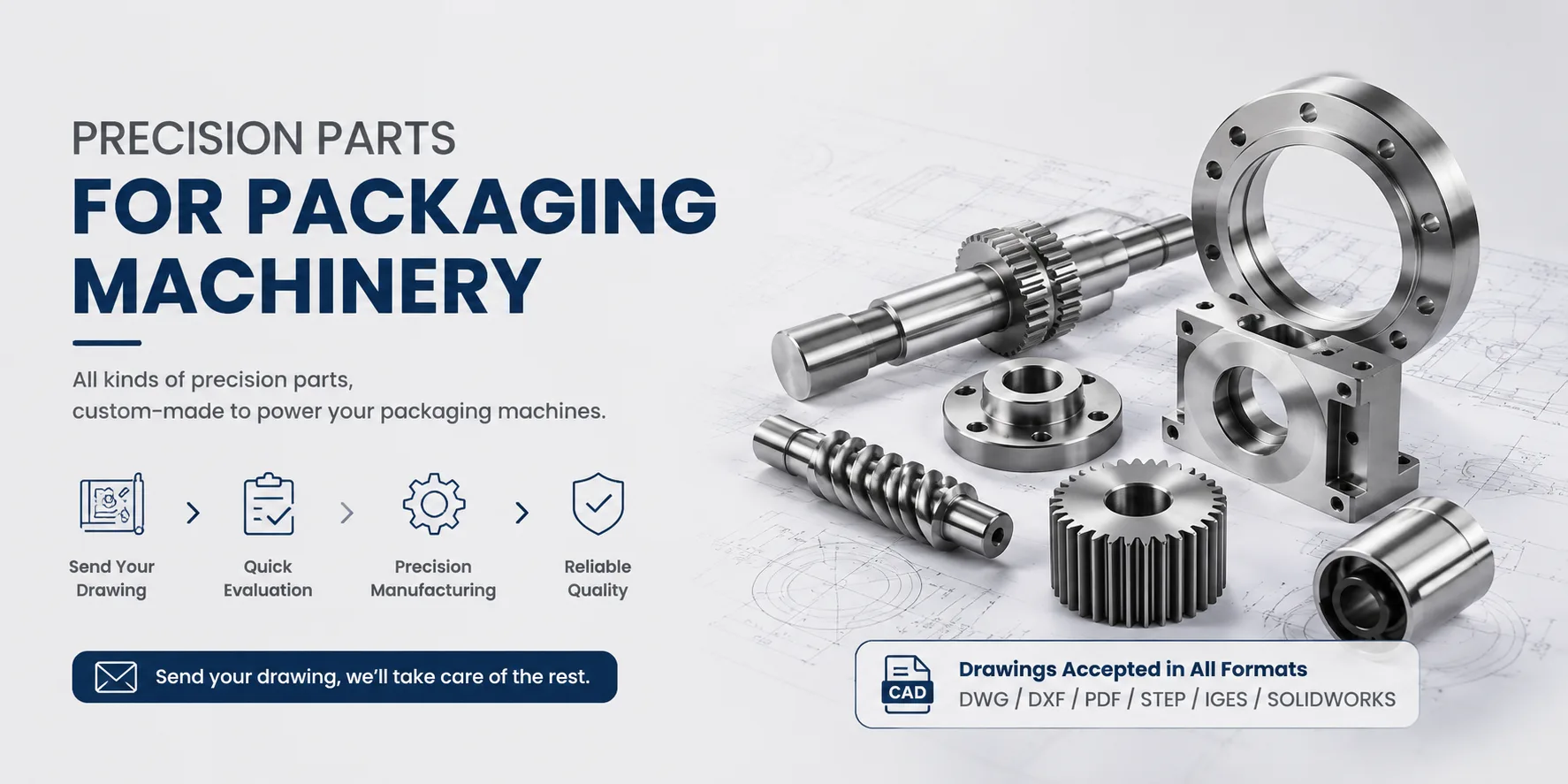
Beyond parts for aluminum tube stamping, our precision component machining capability also covers non-standard parts for pharmaceutical packaging machinery, cosmetic filling equipment, and chemical paste packaging lines, as well as precision structural parts for yachts and RC race cars. Hansheng Automation machines single pieces or small batches to customer drawings, with material, tolerance, and surface finish specified by the drawing.