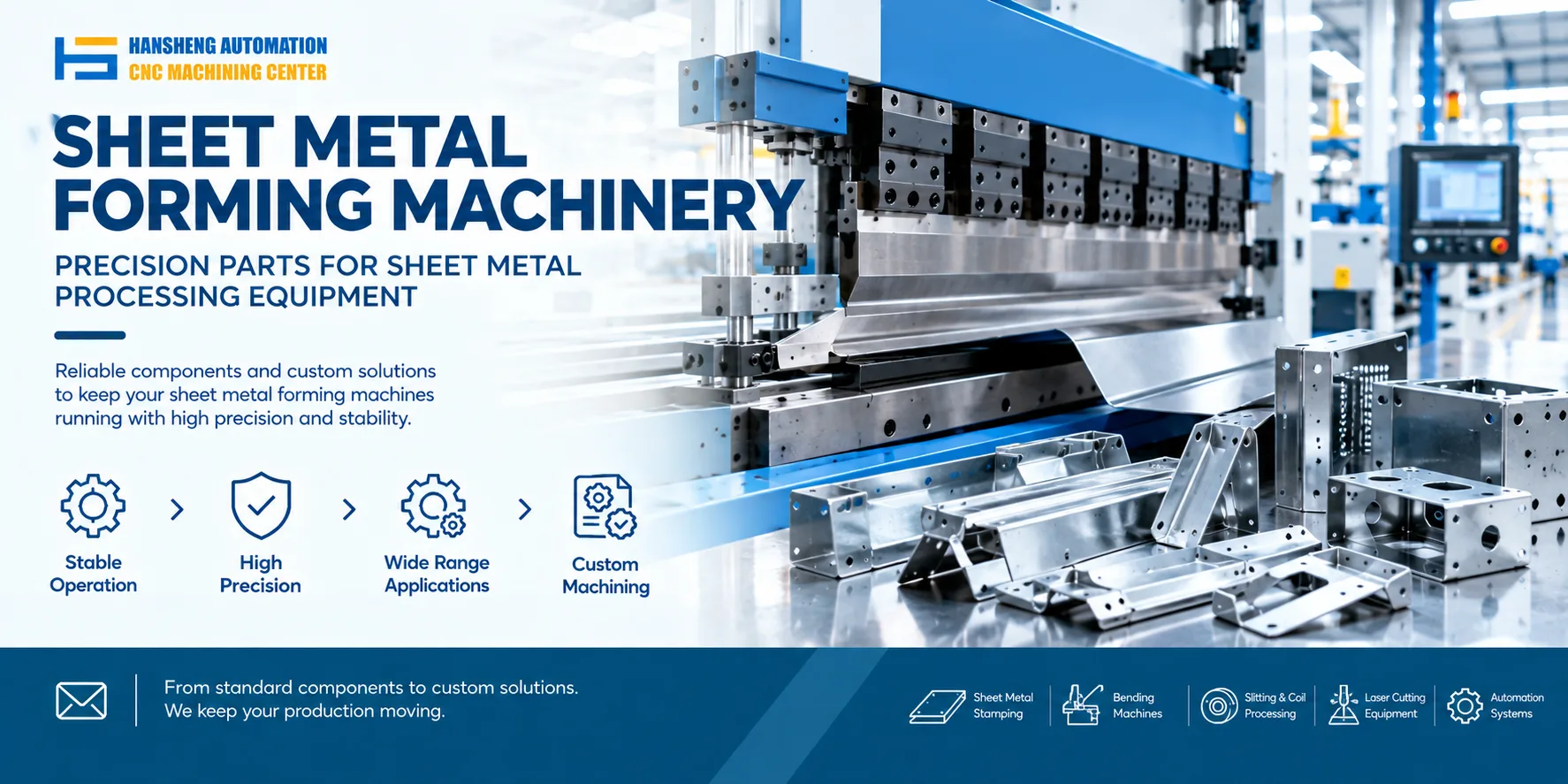
CNC press brake tooling consists primarily of an upper punch and a lower die. Under the force generated by the machine, the tooling forms sheet metal into the specified shape according to the programmed bending sequence. The tooling geometry, material, and installation position directly affect the bending angle, dimensions, and final shape of the workpiece.
How Press Brake Tooling Works
A typical die system consists of two mating components, commonly referred to as the punch and die. The components can move apart to allow the workpiece to be positioned or removed, then come together during forming.
On a CNC press brake, the upper punch moves toward the lower die and applies force to the sheet metal. The shape of the tooling and the depth of the punch determine how the material deforms during bending.
The tooling must be selected according to the material, sheet thickness, required bend angle, and workpiece geometry. Correct installation and alignment help maintain dimensional accuracy and prevent damage to the tooling or machine.
The Role of Dies and Molds in Other Forming Processes
Dies and molds are also used in a wide range of manufacturing processes to transform raw materials or blanks into parts with specified shapes and dimensions.
These processes include blanking, stamping and forming, die forging, cold heading, extrusion, powder metallurgy compaction, and pressure die casting. Dies and molds are also used in the compression molding and injection molding of engineering plastics, rubber, and ceramic products.
In these applications, the tooling guides or constrains the material during forming. Depending on the process, the required force may be applied directly through the die or punch, or through a pressure source, plunger, or other forming mechanism.
During blanking, stamping, forging, cold heading, compaction, and compression molding, the tooling applies or transmits the force required to separate or form the material. In extrusion, pressure die casting, and injection molding, the external force is applied by the corresponding processing mechanism, while the mold withstands the pressure exerted by the material.
Although tooling designs vary across these processes, their purpose is to control material deformation and produce parts with the required geometry and dimensions.
Custom Precision Machining for Industrial Equipment
Hansheng Automation provides custom precision machining based on customer drawings for a range of industrial applications. Our work includes precision components for yacht equipment and RC racing cars, as well as nonstandard parts for tobacco packaging machinery and filling machinery. Each component is manufactured according to the supplied drawings and the specific dimensional and structural requirements.