Engraving machines and precision engraving machines differ mainly in application scenarios, accuracy requirements, and operational complexity.
Application Scenarios
Engraving machines are typically used in applications where accuracy requirements are not high. They are commonly employed for two-dimensional surface engraving, such as general jade carving tasks that do not demand extremely fine detail. Precision engraving machines, by contrast, are used in environments that require higher control accuracy, three-dimensional engraving, or digital control. Typical applications include precision part manufacturing, mold engraving, and model making.
Accuracy Requirements
Engraving machines have relatively lower accuracy requirements and are suitable for large-scale production and fast processing. Precision engraving machines offer higher accuracy and better digital control capability, allowing them to handle complex shapes and fine details.
Operational Complexity
Engraving machines usually have a simpler structure and are easier to operate. Precision engraving machines are more complex and require a higher level of technical skill and professional knowledge.
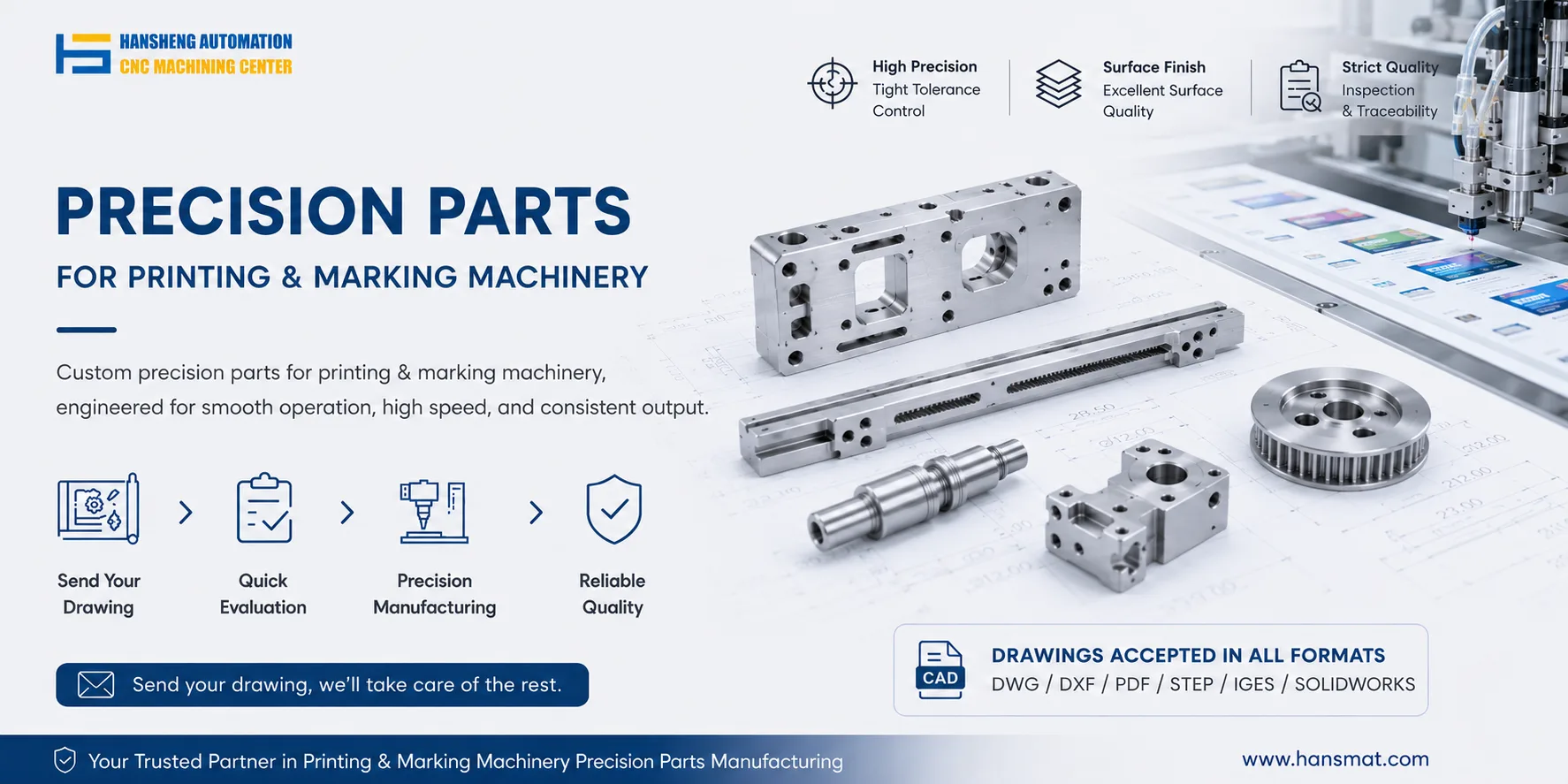
In summary, although engraving machines and precision engraving machines share the same basic working principle, they differ significantly in application, precision, and ease of use. For production environments that require stable workpiece positioning or custom spindle mounting plates to support precision engraving, Hansheng Automation can provide machined components according to specific equipment models.