

Introduction
Honing is a highly precise abrasive finishing process aimed at optimizing the geometric accuracy and surface texture of internal holes. If the teeth of a gear become rough due to quenching or if the accuracy is reduced due to heat treatment, honing systematically corrects roundness, taper, and straightness errors by using a grinding stone to perform rotational and reciprocating movements simultaneously within the hole.
The core value of this process lies in its unique self-repairing feature. The grinding stone and the surface of the workpiece wear out together during the friction process, ultimately achieving an extremely high degree of shape matching and realizing products with ultra-high precision.
Grinding not only ensures strict dimensional tolerances, but also produces a unique cross-patterned surface. This pattern is crucial for high-performance mechanical components as it effectively stores lubricating oil and reduces friction, thereby ensuring the reliability and service life of the equipment during long-term high-pressure operation.
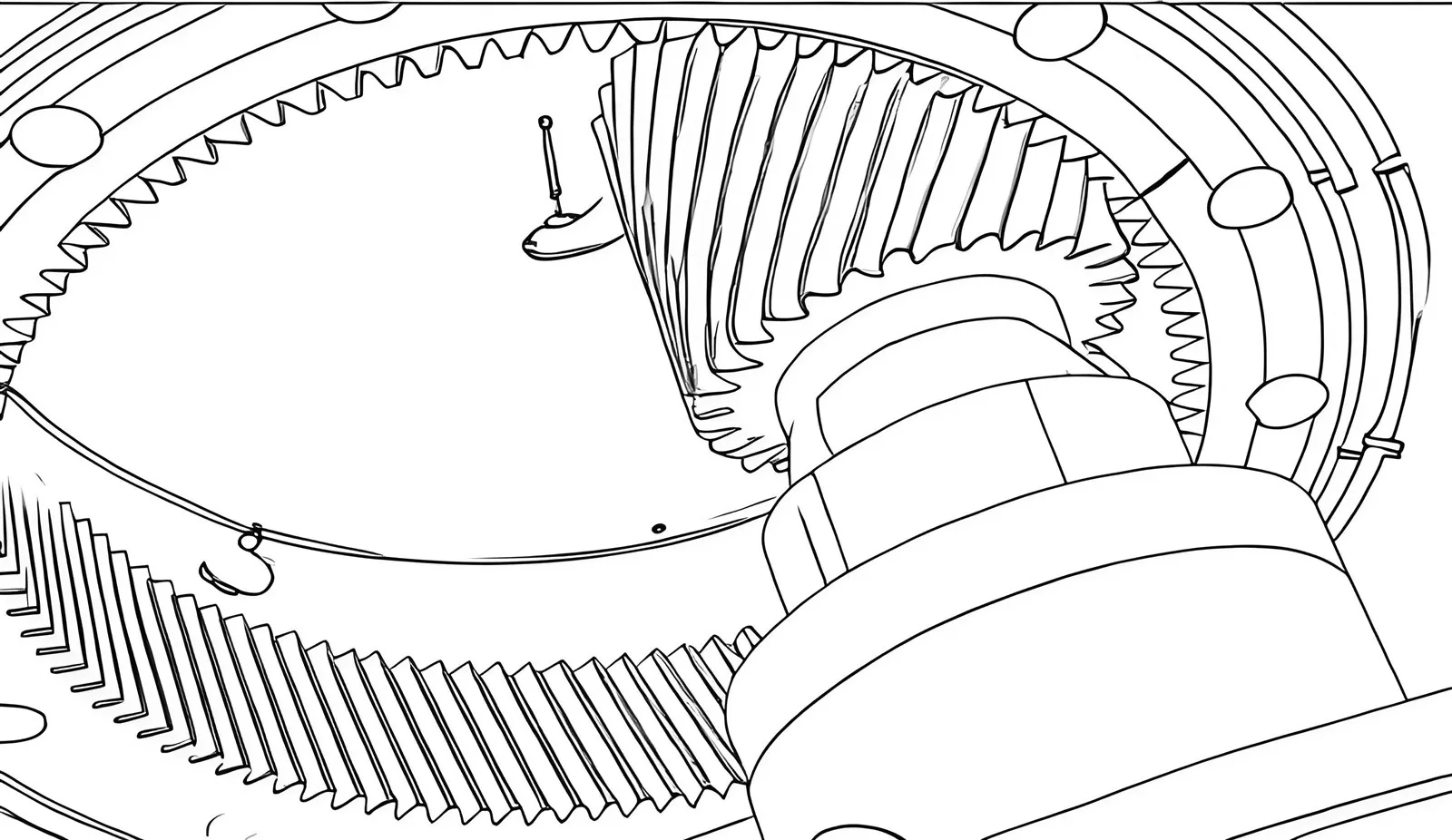
How Honing Works
The physics of honing rely on a controlled interaction between an abrasive mandrel and the workpiece surface. During the process, the machine inserts a tool equipped with abrasive stones into the bore and initiates a dual-motion cycle. This involves low-speed rotation combined with simultaneous axial reciprocation. As the stones expand radially under constant pressure, sharp abrasive grains shear away microscopic layers of material to achieve final dimensions.

The synchronized rotary and linear movement creates a specific surface texture known as the crosshatch pattern. Engineers specify the crosshatch angle between 30° and 45° to satisfy distinct functional requirements. A steeper angle assists in active oil scraping while a shallower angle facilitates superior lubricant retention. For components like engine cylinders, this precise geometry is vital for piston ring seating and effective oil consumption management over the life of the engine.
Honing differs fundamentally from grinding in terms of surface velocity and thermal impact. While grinding operations typically exceed 5,000 sfm, honing functions at approximately 65 sfm. This low-velocity approach prevents the excessive heat generation that often compromises the metallurgical integrity of a workpiece. By maintaining low process temperatures, honing avoids the surface phase changes and micro-fissuring associated with high-speed machining. This ensures the material retains its engineered physical properties and structural consistency.
Honing Tools and Equipment Specifications
Efficient grinding operations depend on the precise matching of tools and application scenarios. The following are the core elements that constitute modern precision grinding systems.
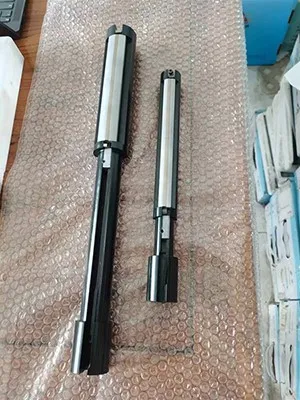
Selection of honing stone
The honing stone, as the core cutting element, is composed of abrasive particles bonded together. Engineers select the particle size based on the process stage. Coarse particle size is used for rapid removal of excess material, while fine particle size is used to achieve a specific Ra surface roughness value.
Common abrasive materials include alumina for steel, silicon carbide for cast iron and soft materials, CBN abrasive blocks for hardened steel, and diamond abrasive stones for ceramics and hard alloys.
The configuration types of honing machines
Honing machines are typically classified into three main structures.
The vertical machine has high rigidity and utilizes gravity to assist the flow of coolant, suitable for processing heavy components such as engine cylinder blocks.
The horizontal machine is specifically designed for long-axis workpieces like hydraulic cylinders and tubular parts.
Modern CNC honing machines integrate servo motors, enabling precise control of the spindle speed, reciprocating frequency, and the radial expansion of the grinding wheel.
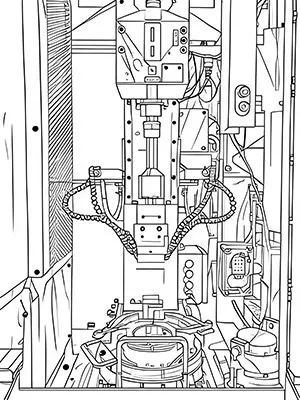

Honing Fluid and measuring instruments
The honing fluid plays a crucial role in the processing cycle, as it removes chips and abrasive residues, controls the processing temperature, and ensures the continuity of the cutting action.
The final inner hole quality is verified by precise instruments, such as using an inner diameter micrometer and a surface roughness tester to detect dimensional tolerances and key surface parameters, such as Ra, Rpk, and Rvk.
Critical Applications of Precision Honing
Automotive Engineering and Engine Cylinders
The most recognizable application of honing is the internal combustion engine block. Cylinder walls must feature a specific crosshatch geometry to facilitate a consistent lubricant film. This oil retention is necessary to protect piston rings through millions of cycles while minimizing friction and heat. In high-performance racing, CBN Honing Stones are often utilized to achieve the extreme surface consistency required for maximum compression.
High-Pressure Hydraulic Systems
Honed surfaces in hydraulic cylinders and pump housings allow for reliable operation at pressures exceeding 5,000 psi. By achieving superior roundness and straightness, honing ensures a perfect interface between the bore and the seal. This prevents internal leakage and significantly extends the service life of industrial actuators.
Aerospace and Defense Components
Aerospace manufacturing relies on honed bores for critical flight control systems and landing gear actuators. In these applications, dimensional errors are measured in microns, and failure is not an option. Honing provides the precise geometry needed for jet engine fuel components and hydraulic manifolds where metallurgical integrity is a primary safety requirement.
Specialized Medical and Gear Production
In the medical field, surgical instruments and implantable devices require the ultra-smooth, sterilizable surfaces that precision honing can deliver. This process ensures both the dimensional accuracy and the surface cleanliness necessary for medical-grade components.
Honing vs. Grinding vs. Boring
This is where many engineers need clarity. The three processes are related but serve fundamentally different purposes.
|
Honing |
Grinding |
Boring |
|
|
Primary purpose |
Refine bore geometry & surface finish |
Shape/size via material removal |
Enlarge or true a bore |
|
Material removal |
Micro (2–50 µm) |
Medium |
Large |
|
Typical tolerance |
±0.002–0.005 mm |
±0.005–0.01 mm |
±0.02–0.05 mm |
|
Surface finish (Ra) |
0.1–1.6 µm |
0.4–3.2 µm |
1.6–6.3µm |
|
Heat generation |
Very low |
High |
Medium |
|
Best for |
Final finishing of bores |
External surfaces, sizing |
Initial bore sizing |
Conclusion
Honing occupies a definitive position in the precision manufacturing workflow. It does not replace primary operations like boring or grinding but instead serves as the essential finishing stage. When mechanical components must operate under extreme pressures or high-frequency cycles, the final performance is dictated by the quality of the honed bore.
By integrating controlled abrasive expansion and low-velocity cutting, honing ensures that workpieces maintain their metallurgical integrity while gaining the specific crosshatch angles required for lubricant retention.
Whether the application involves automotive engine blocks, high-pressure hydraulic manifolds, or aerospace actuators, honing is the critical step that bridges the gap between a part that merely meets dimensional tolerances and a part that excels in field performance. Utilizing high-performance tools like Diamond Honing Stones or CBN Abrasives allows manufacturers to guarantee the reliability and longevity of their most critical internal surfaces.