An ultrafine pulverizer is a processing machine designed to reduce dry materials to very fine particle sizes through a combination of air classification, grinding, impact, and shearing. Depending on the machine type and material characteristics, different grinding mechanisms can be used to achieve the required fineness.
How Does an Ultrafine Pulverizer Work?
A typical grinding system consists of a grinding chamber, grinding components, an airflow system, a material collection unit, and a dust removal system.
The material enters the grinding chamber through the feeding inlet. In mechanical grinding systems, rotating grinding wheels or other grinding elements move along a designated grinding track, applying compression, impact, and shearing forces to progressively reduce the material size.
In airflow pulverizers, compressed air is filtered and dried before entering the grinding chamber through Laval nozzles at high speed. Multiple high-pressure air streams create intense turbulence, causing particles to repeatedly collide, rub, and shear against each other. This process allows the machine to achieve fine and ultrafine particle sizes without relying on conventional mechanical grinding surfaces.
Air Classification and Material Collection
After pulverization, the airflow carries the particles toward the classification zone. A high-speed rotating classifier generates centrifugal force to separate particles according to size.
Fine particles that meet the required specifications pass through the classifier and enter the cyclone separator and dust collector for collection. Coarse particles are redirected to the grinding chamber for further pulverization. This closed-loop process allows the machine to continuously grind and classify materials while improving particle size consistency.
Typical Applications
Ultrafine pulverizers are widely used for dry-material processing in industries such as:
- Pharmaceuticals and traditional Chinese medicine
- Food and feed processing
- Agricultural chemicals
- Biotechnology
- Cosmetics
- Chemical processing
- Ceramics
They can also process materials that are difficult to grind, including fibrous or tough materials such as cordyceps, tea leaves, and Ganoderma lucidum.
Airflow pulverizers are particularly suitable for applications requiring very fine particle sizes or controlled processing conditions. Typical materials include hard materials such as diamond and silicon carbide, high-purity ceramic and pharmaceutical materials, and temperature-sensitive materials such as PVC.
For materials that are flammable, explosive, or prone to oxidation, the conventional air supply can be replaced with inert gases such as nitrogen or carbon dioxide to create a protected grinding and classification environment.
Complete Grinding System
An airflow pulverizer is normally integrated with a cyclone separator, dust collector, and induced-draft fan to form a complete pulverizing system. The coordinated operation of these components supports continuous grinding, classification, separation, and collection.
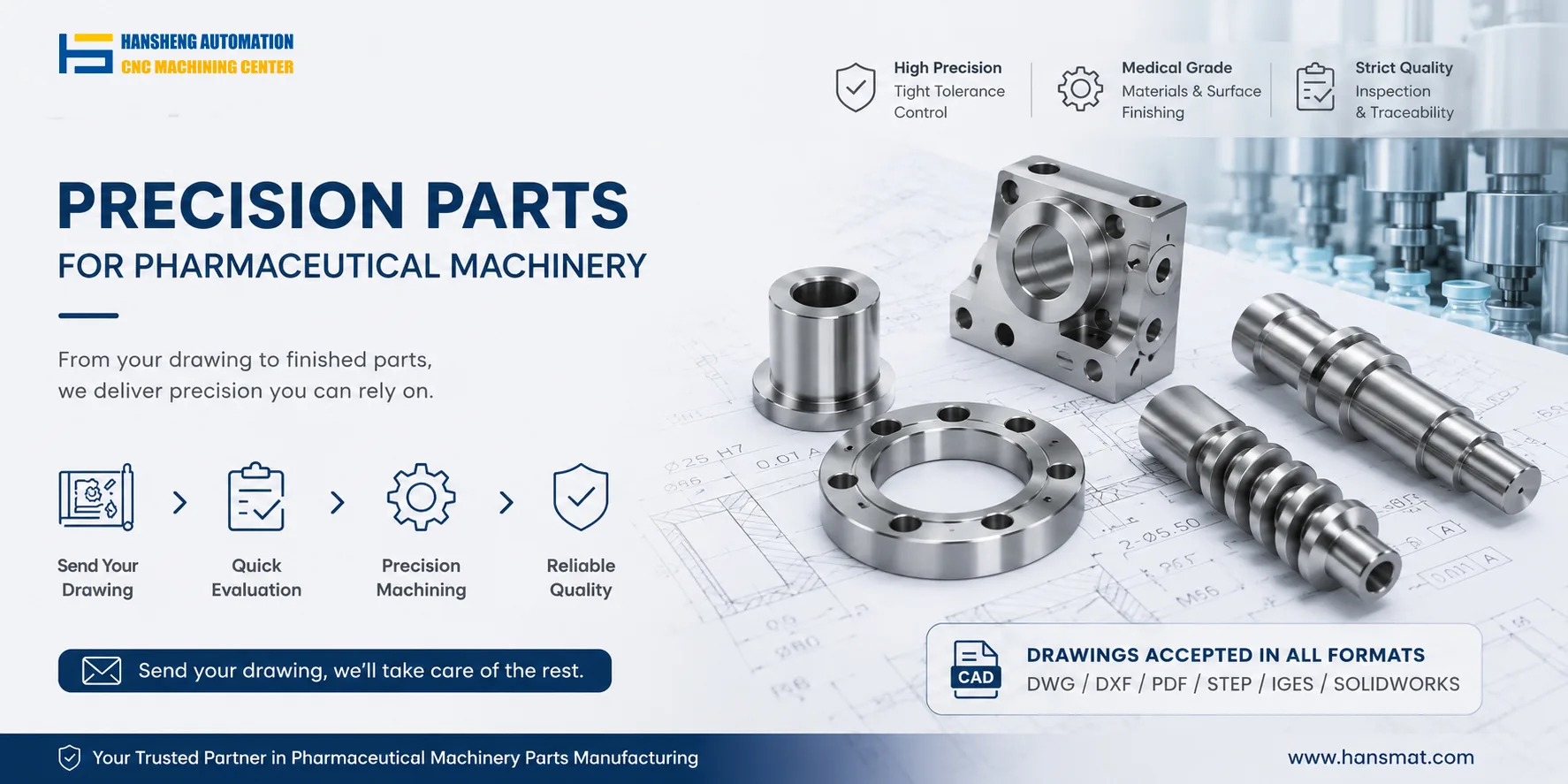
For customers requiring replacement or customized components for pulverizing equipment, Hansheng Automation can manufacture precision mechanical parts according to customer drawings and technical specifications, providing machining solutions for non-standard components used in grinding and powder-processing systems.