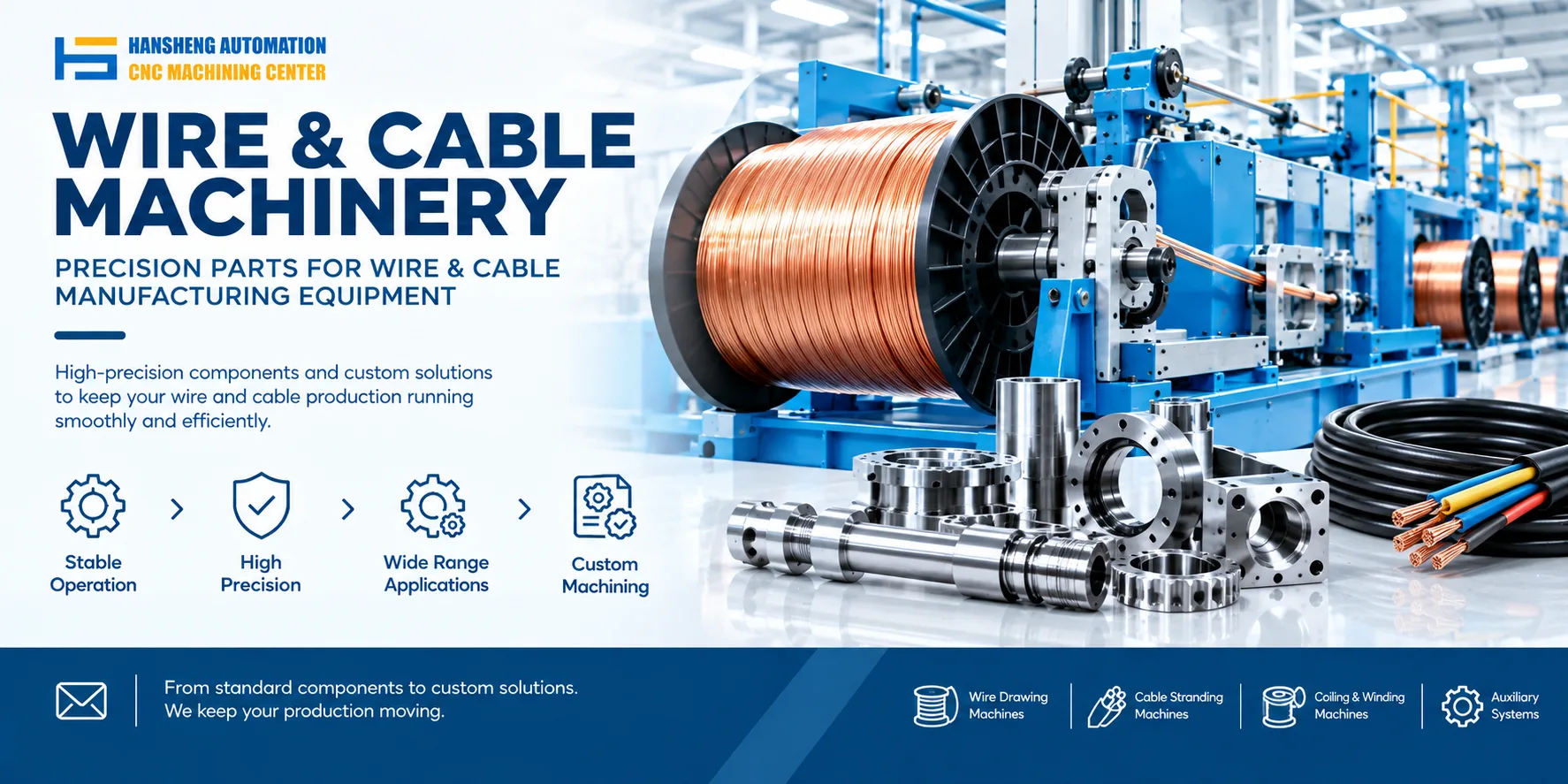
A wire drawing machine, often called a drawing machine, reduces the diameter of metal wire such as steel, copper, or aluminum. It pulls the wire through a die, which makes the wire longer and brings it to the required dimensional accuracy and surface quality.
Main types and features
In the domestic market, older pulley-type machines still hold a large share, while several other types run alongside them.
Double capstan wire drawing machine: developed to address the twisting that pulley-type machines can cause. The double capstan design reduces twisting and improves drawing stability.
Straight-line wire drawing machine: uses straight-line feeding. It has a compact structure, suits continuous drawing, and offers high efficiency.
Loop-type wire drawing machine: a loop device adjusts wire tension. It adapts to different wire specifications and offers good flexibility.
Tuning bar straight-line wire drawing machine: combines tuning bar technology to improve vibration control during drawing and raise wire surface quality.
Combination wire drawing machine: integrates several drawing modules. It supports multi-pass continuous drawing for complex processes.
Water tank wire drawing machine: a water cooling system controls drawing temperature. It reduces property changes caused by friction heat and suits production that needs high precision and high surface quality.
When drawing capstans, dies, tension wheels, or other parts need replacement, we can machine these precision components from customer drawings in single pieces or small batches.
Core function and applications
The core function of a wire drawing machine is to change the geometric dimensions and physical properties of metal wire through mechanical drawing. It is widely used in these fields:
Metal pressure processing: a key machine for wire production, used to make steel wire, copper wire, aluminum wire, and other basic materials.
Construction: produces rebar, wire rope, and other building materials that must meet structural strength and durability requirements.
Electronics and electrical: makes high-precision conductors and cable core wires, supporting stable conductivity and signal transmission.
Automotive: produces spring wire, tire reinforcement wire, and other parts that improve vehicle safety and reliability.
Aerospace: processes special alloy wire for high-temperature, high-pressure, and other extreme environments.
Technology trends
With industrial automation and smart manufacturing, wire drawing technology is moving in several directions.
High-precision control: CNC systems adjust drawing speed, tension, temperature, and other parameters to improve product consistency.
Energy saving and environmental protection: optimized drive systems and cooling processes lower energy use and wastewater discharge, which supports green manufacturing.
Modular design: standard module combinations shorten equipment commissioning time and fit multi-variety, small-batch production.
Intelligent integration: combined with IoT and big data, the machine can monitor production in real time, warn of faults, and improve equipment utilization.
A wire drawing machine is a core machine for metal wire processing. Its many types and functions meet production needs across different industries. As technology advances, it continues to move toward higher precision, higher efficiency, and greater intelligence.
Our precision custom machining is not limited to wire drawing machine parts. Hansheng Automation also produces non-standard components for yacht hardware, RC car components, tobacco packaging machinery parts, filling machinery parts, printing equipment, food machinery, and medical device production equipment. We work from customer drawings for single pieces or small batches. The focus stays on precision parts machining and delivery, which keeps maintenance and replacement flexible across different industries.