A linear module, also called a linear motion module, is a mechanical component used to produce linear motion.
Components
A linear module usually consists of the following compact parts:
Guide rail: provides the track for linear motion and helps ensure stability and accuracy.
Slider: slides along the guide rail, carries the load, and transmits motion. It is the key part that produces linear movement.
Lead screw or timing belt: acts as the transmission mechanism and converts rotary motion into linear motion. A lead screw drive offers high precision and high rigidity. A timing belt drive offers high speed and smooth operation.
Drive unit: a motor, pneumatic cylinder, or other power source. It drives the lead screw or timing belt to rotate, which moves the slider along the guide rail.
Main function
The main job of a linear module is to convert rotary motion into linear motion or to control and position an object along a straight line. This conversion and positioning capability gives linear modules wide use in industrial automation, CNC machine tools, printing machinery, medical equipment, and other fields.
Core principle
The core principle is to select the right transmission method, such as lead screw drive or belt drive, and the right drive method, such as a motor or pneumatic cylinder, for the application. This achieves accurate linear motion and positioning. That accuracy and controllability make the linear module a key part of automated systems and can improve production efficiency and quality.
Lead screw drive: the rotation of the screw converts rotary force into linear thrust and pushes the slider along the guide rail. Lead screw drive offers high precision, high rigidity, and high load capacity. It suits applications that need accurate control and positioning.
Belt drive: the rotation of the timing belt transfers rotary force to the slider and moves it along the guide rail. Belt drive offers high speed, smooth motion, and low noise. It suits applications that need high-speed movement.
Applications
Linear modules are used in many fields:
Industrial automation: on automated production lines, linear modules control and position workpieces for automated machining and assembly.
CNC machine tools: linear modules drive tools and workpieces for accurate machining.
Printing machinery: linear modules control the movement of print heads and paper to maintain print quality and accuracy.
Medical equipment: linear modules position medical devices such as surgical robots and CT scanners.
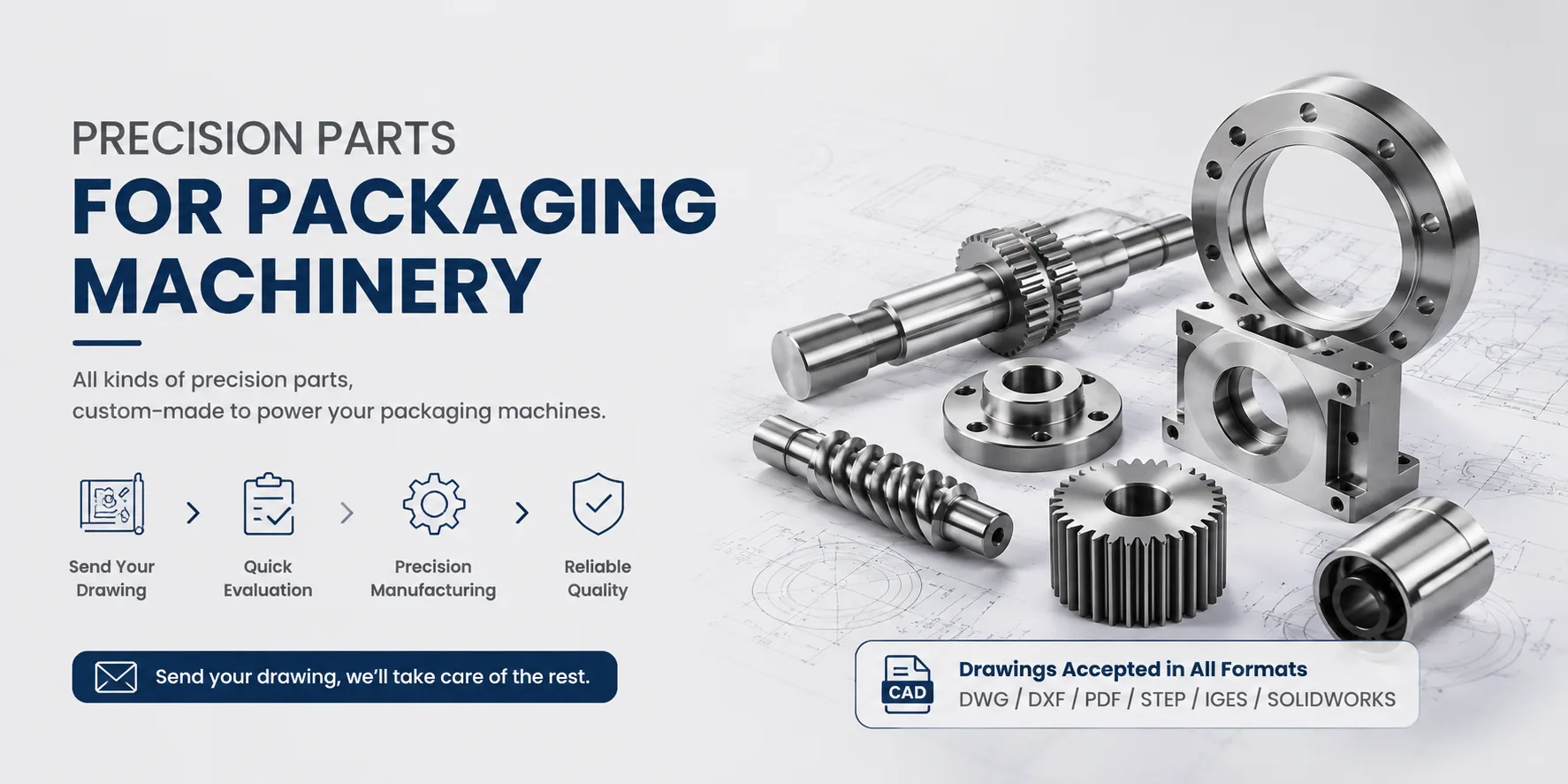
Hansheng Automation can also manufacture linear modules and machine their precision parts from customer drawings, including guide rail mounts, slider components, screw supports, and belt drive parts. Single-piece and small-batch orders are supported.