A modern cigarette production line is a highly automated continuous process. The core stages include leaf processing, primary tobacco preparation, cigarette making and tipping, and packaging. The entire line is precisely controlled by computer systems.
Leaf Processing and Primary Preparation
Production begins with raw material handling. Purchased tobacco leaves are first conditioned by adding moisture to restore flexibility. They then pass through threshing and air separation to remove stems from the lamina. The lamina is cut into tobacco strands approximately 0.8–1.2 mm wide by rotary cutters. After drying and conditioning in a tobacco dryer, the cut tobacco enters the flavoring and casing stage, where sugar solutions, flavors, and humectants are sprayed in a rotating cylinder to improve taste and burning characteristics.
Cigarette Making and Tipping
The prepared cut tobacco is delivered by pneumatic conveying to the cigarette making and tipping combination. High-speed machines, capable of producing more than ten thousand cigarettes per minute, form the tobacco into a continuous rod, wrap it with cigarette paper, and simultaneously attach filters. Finished cigarettes pass through quality inspection systems that automatically reject defective products such as loose ends, air leaks, or missing filters.
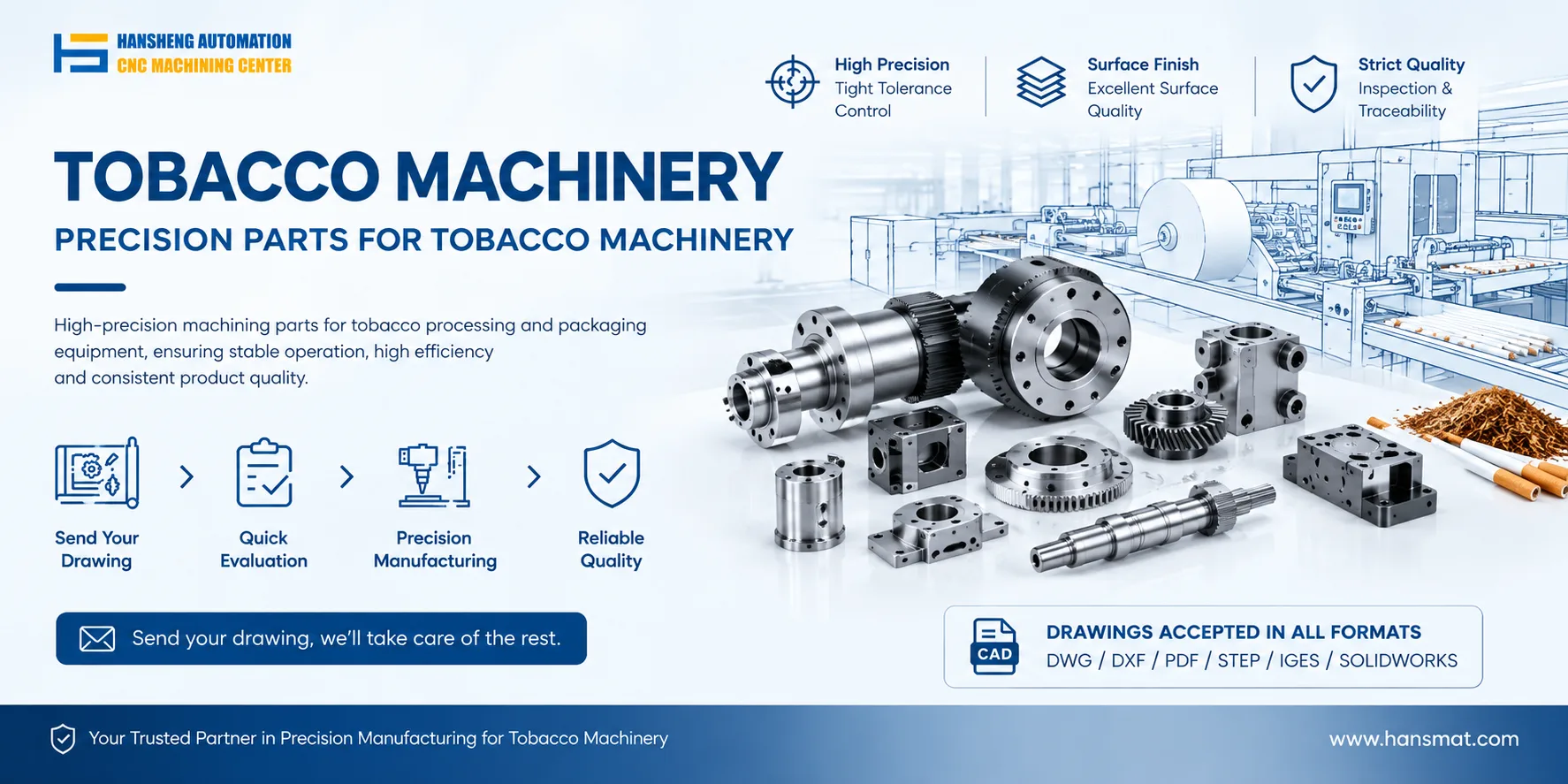
In high-speed cigarette makers, suction tapes, garniture tapes, cutters, and tipping drums operate under continuous wear and require high dimensional consistency. Hansheng Automation provides custom machining of these components according to customer drawings, helping maintain precision and service life in production lines.
Packaging
The packaging stage uses fully automatic soft-pack or hard-pack machines. Cigarettes are wrapped with inner foil, then label paper, followed by transparent film sealing. Finally, they are packed into cartons and cases before entering the warehouse.
Production Environment and Operation
The entire line operates in a temperature- and humidity-controlled environment. Modern cigarette production lines require only a small number of operators per shift to monitor equipment status and manage process control systems.