Cosmetic production, from raw material handling to finished product release, usually involves five stages: pretreatment, mixing and emulsification, filling, packaging, and auxiliary systems. The equipment mix depends on the product type. Creams, lotions, toners, and powder color cosmetics each place different demands on the line.
Pretreatment equipment
Pretreatment equipment prepares raw materials to ensure purity and a suitable form for production.
Crushing and dispersing
Common equipment includes universal crushers, jet mills, and colloid mills. They are used to refine solid powder raw materials or pre-disperse paste materials. Parts in contact with materials are usually stainless steel, while wear-prone areas may use wear-resistant alloys.
Dissolving and extraction
Ingredient dissolving tanks and plant extraction kettles belong to this category. They are used to dissolve solid ingredients into liquid bases or extract active components from natural raw materials.
Purification and filtration
Plate-and-frame filters, bag filters, and ultrafiltration units remove impurities and microorganisms from raw materials to improve product safety.
Mixing and emulsification equipment
Mixing and emulsification equipment is the core of skin care and cream production. It directly affects product fineness and stability.
Vacuum emulsifier
The vacuum emulsifier is the mainstream production equipment. It mixes, emulsifies, and homogenizes materials in a vacuum-sealed environment to prevent air entrapment, oxidation, and bubbles. It is suitable for creams and lotions.
High-speed mixing tank
High-speed mixing tanks are used for rapid mixing of low-viscosity liquids such as toners and astringents.
Powder mixer
Double cone mixers and V-type mixers are used for uniform mixing of loose powder, eye shadow, blush, and other powder makeup raw materials.
High-pressure homogenizer
A high-pressure homogenizer uses high-pressure shear to refine emulsion particles and improve product stability. It is often used for serums and high-moisture skin care products.
Filling equipment
Filling solutions need to match the product form. The process also places high demands on dimensional consistency, corrosion resistance, and wear resistance.
Liquid filling machines
Piston fillers and atmospheric filling machines are used for quantitative filling of toners, serums, shampoos, and other liquid products.
Cream filling machines
Vacuum fillers and rotary fillers prevent air from entering during filling and help keep the paste appearance smooth and uniform.
Makeup-specific filling machines
Lipstick casting machines, powder compact presses, and eye shadow pressing machines complete the forming and quantitative filling of color cosmetics.
Packaging equipment
Packaging equipment is used to seal and label finished products.
Container pretreatment
Bottle washers and dryers automatically clean and dry cosmetic bottles and jars.
Sealing and labeling
Capping machines, press capping machines, and automatic labeling machines complete container sealing and product label application.
Outer packaging
Shrink film wrapping machines and cartoning machines handle outer packaging and warehouse transfer.
Auxiliary equipment
Auxiliary equipment supports stable operation of the production line.
Purified water equipment
Reverse osmosis systems and EDI ultrapure water systems are essential water supply systems for cosmetic production. They help ensure water meets cosmetic hygiene standards.
Material handling
Belt conveyors and bucket elevators transfer raw materials and semi-finished products within the workshop.
Inline inspection
Inline viscometers and pH meters monitor product parameters in real time to support batch consistency.
Safety points for production operations
Equipment involving pressure vessels and heating systems requires regular inspection of protective devices and seals to avoid burns and leaks.
Wear protective gloves and goggles when handling chemical raw materials to prevent skin and mucous membrane irritation.
High-speed equipment must be operated according to procedures to avoid mechanical pinching accidents.
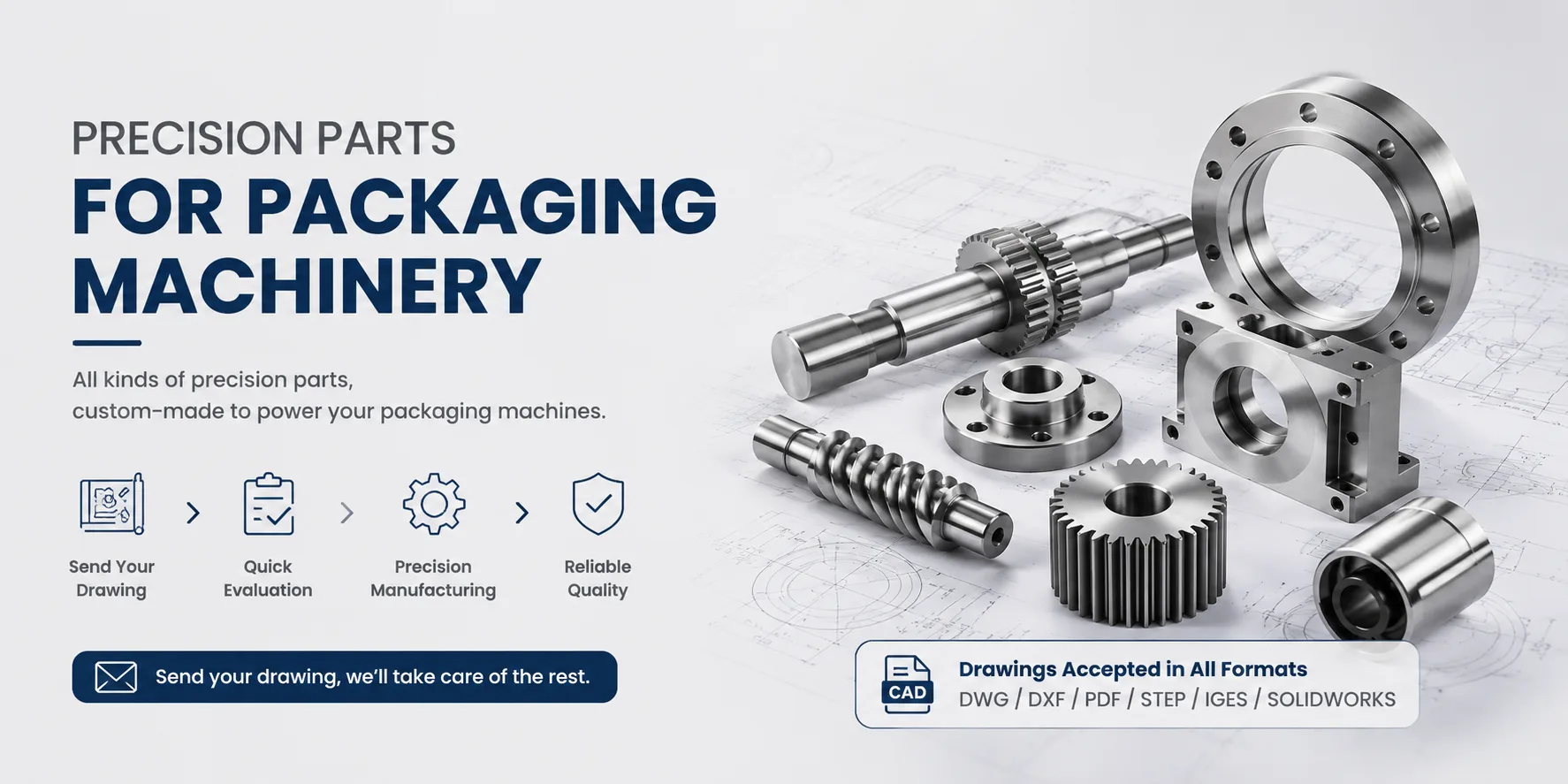
For equipment builders and production lines that need non-standard parts, Hansheng Automation provides drawing-based precision machining for filling machinery, packaging machinery, and related industrial equipment, with single-piece and small-batch capability. The same service also covers yacht components, RC car components, tobacco packaging machinery parts, and other custom parts outside the cosmetic equipment sector.