Cigarette factory equipment is mainly divided into four categories: primary processing, cigarette making and filter assembling, packaging, and inspection. The following is a detailed equipment list.
1. Primary Processing Equipment
Vacuum pre-conditioner: increases the moisture content and temperature of tobacco leaves by drawing a vacuum and injecting steam, improving leaf toughness and reducing breakage during processing.
Tobacco cutter: cuts conditioned leaves into tobacco strands of a specific width. Cutting width and uniformity directly affect combustion and taste.
Tobacco dryer: reduces the moisture content of cut tobacco to the standard range, usually 12%–13%, to improve combustion stability and aroma release.
2. Cigarette Making and Filter Assembling Equipment
Cigarette maker: automatically forms cigarettes from cut tobacco, cigarette paper, and filter rods. Maximum speed can reach 16,000–20,000 cigarettes per minute, as seen in PROTOS and Passim models.
Filter assembling machine: precisely joins the filter to the cigarette rod and wraps it into shape, using hot-melt adhesive technology to ensure a firm connection.
3. Packaging Equipment
Pack packet machine: places 20 cigarettes into a packet and completes sealing, while also applying anti-counterfeiting codes and film shrinking, as in the GDX series.
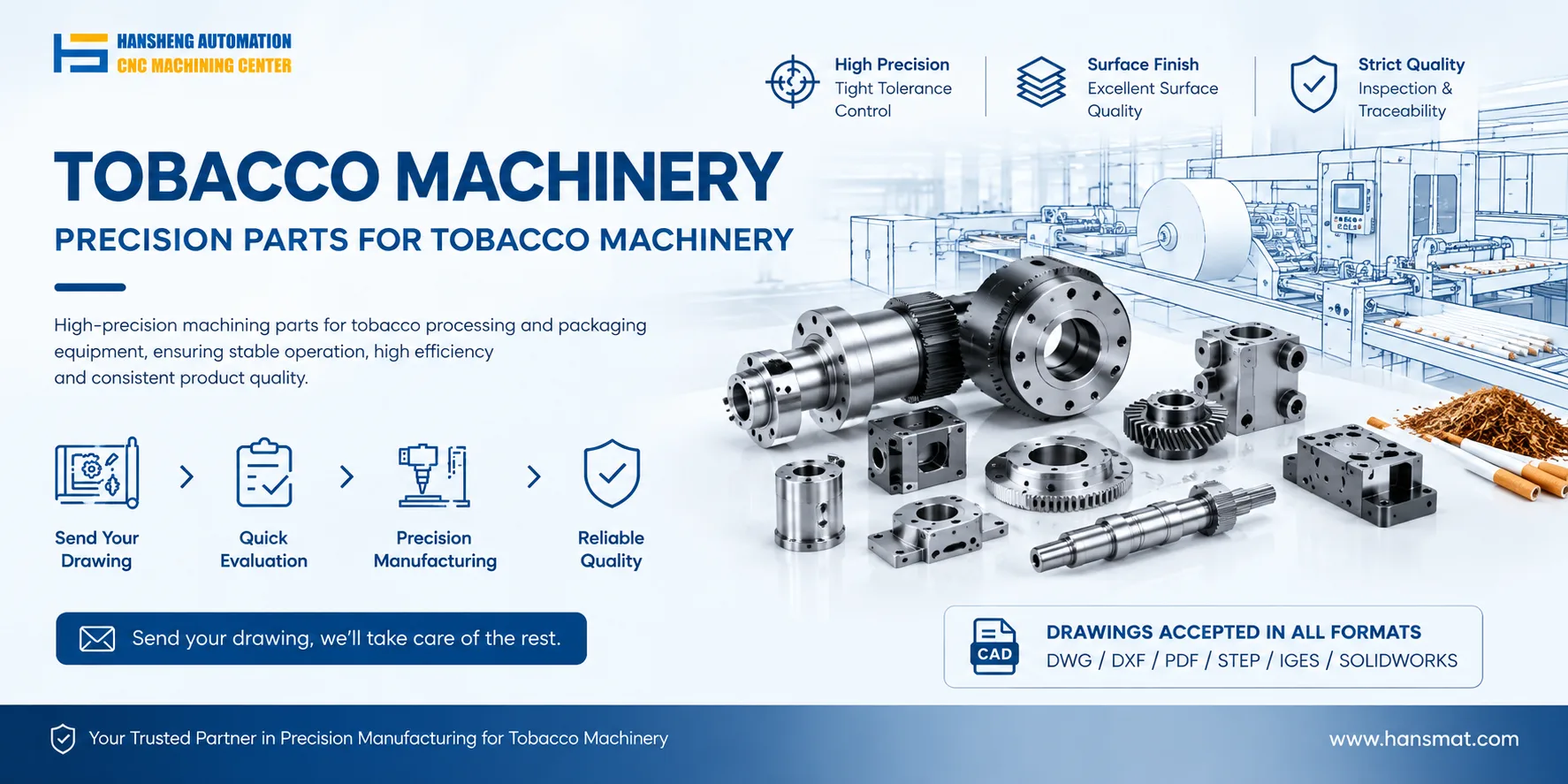
Carton packaging machine: groups 10 packets into one carton, using kraft paper or film for easier transport. For non-standard replacement parts in these packaging machines, such as folding turrets, forming dies, guide rails, and pusher bars, Hansheng Automation provides custom machining services based on customer drawings, supporting both prototype development and small-batch production.
4. Inspection Equipment
Cigarette weight control system: monitors cigarette weight in real time through microwave or nuclear radiation sensors, with an allowable error of ±0.02 g, and feeds back to adjust the tobacco supply amount.
Smoking machine: simulates human smoking behavior according to ISO standard puffing mode, measuring tar, nicotine release, and draw resistance, with a standard range of 800–1200 Pa.
Other auxiliary equipment includes pneumatic tobacco feeding systems, flavor spraying devices, laser perforation machines for controlling filter ventilation rate, and automated logistics stacking equipment.