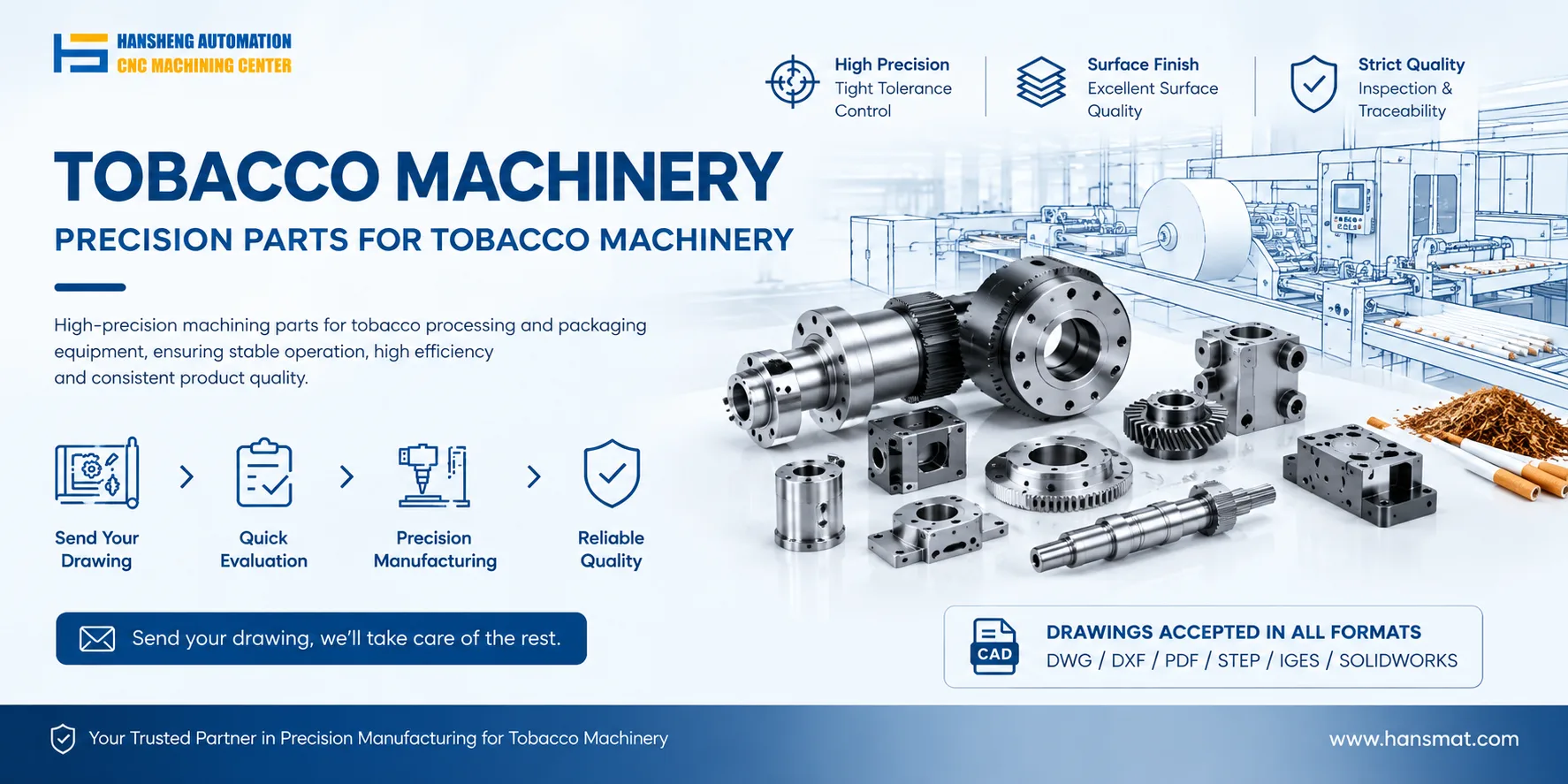
Tobacco monopoly equipment refers to machinery and devices that, in accordance with tobacco monopoly regulations, are specifically designed for tobacco cultivation, primary processing, cigarette making, packaging, and quality inspection. These items are highly specialized, and many critical components require custom manufacturing to meet exact dimensional and material specifications.
1. Tobacco-Specific Machinery
This category covers mechanized equipment used from field operations to initial curing, such as automatic seeding machines, transplanters, leaf harvesters, and bulk curing barn actuators. These machines must handle delicate tobacco leaves without causing damage, so key parts are often made from stainless steel or surface-treated alloys. Components like transplanter sprockets, cutter blades, and conveyor chains typically have tight tolerances and wear-resistant requirements.
2. Tobacco-Specific Apparatus and Tools
These are auxiliary devices and fixtures that support tobacco production, inspection, storage, and transport. Examples include leaf grading tables, moisture meter mounting brackets, flavor kitchen agitators, and tobacco transport trolleys. Many of these items are produced in small batches or as one-off pieces, with a strong need for flexible, drawing-based manufacturing rather than mass production.
3. Cigarette Making and Packaging Equipment
This is the core of tobacco monopoly equipment, including cigarette makers, filter tipping machines, and packers. Modern high-speed units operate at 16,000–20,000 cigarettes per minute, placing extreme demands on components such as suction drums, slitting knives, garniture tapes, heating irons, and packaging pushers. These parts require high dimensional consistency, precise dynamic balance, and specific surface treatments such as hard chrome plating, nitriding, or ceramic coating.
Custom Component Support
Because many of the above machines contain non-standard or wear-prone parts that are not readily available as standard stock items, Hansheng Automation offers precision machining services based on customer drawings or reverse-engineered samples. This includes small-batch production of critical components, material selection advice, and rapid prototyping to support maintenance and continuous improvement of tobacco monopoly equipment.