Pizza production equipment falls into four groups by process: raw material preparation, dough forming, baking, and finishing. The pizza oven is the core unit. It decides crust crispness and how well the toppings melt. Commercial and home setups differ widely in capacity, temperature control, and budget.
Core equipment categories and functions
Raw material preparation equipment
Dough mixing equipment
Dough mixers come in horizontal and vertical designs. Commercial models handle 20 to 50 kg per batch and run at 30 to 60 rpm. They develop the gluten network for pizza dough. Home models handle 1 to 5 kg per batch and are usually tabletop units.
Topping processing equipment
This group includes bowl choppers, slicers, and dicers. A bowl chopper turns cheese, meat, and vegetables into an even topping mix. A slicer gives standard slices for ham and vegetables. Commercial models support continuous batch processing. Home units are mostly manual or small electric tools.
Prep support equipment
A thawing cabinet holds 0 to 4 C for frozen toppings. A holding table keeps prepared ingredients above 60 C. These units prevent ingredients from spoiling during prep.
Dough forming equipment
Dough sheeters
Dough sheeters come in chain-type and tabletop designs. Commercial models adjust thickness from 0.5 to 5 mm and press relaxed dough into an even base. Home models are usually manual and handle one dough piece at a time.
Automatic pizza forming machines
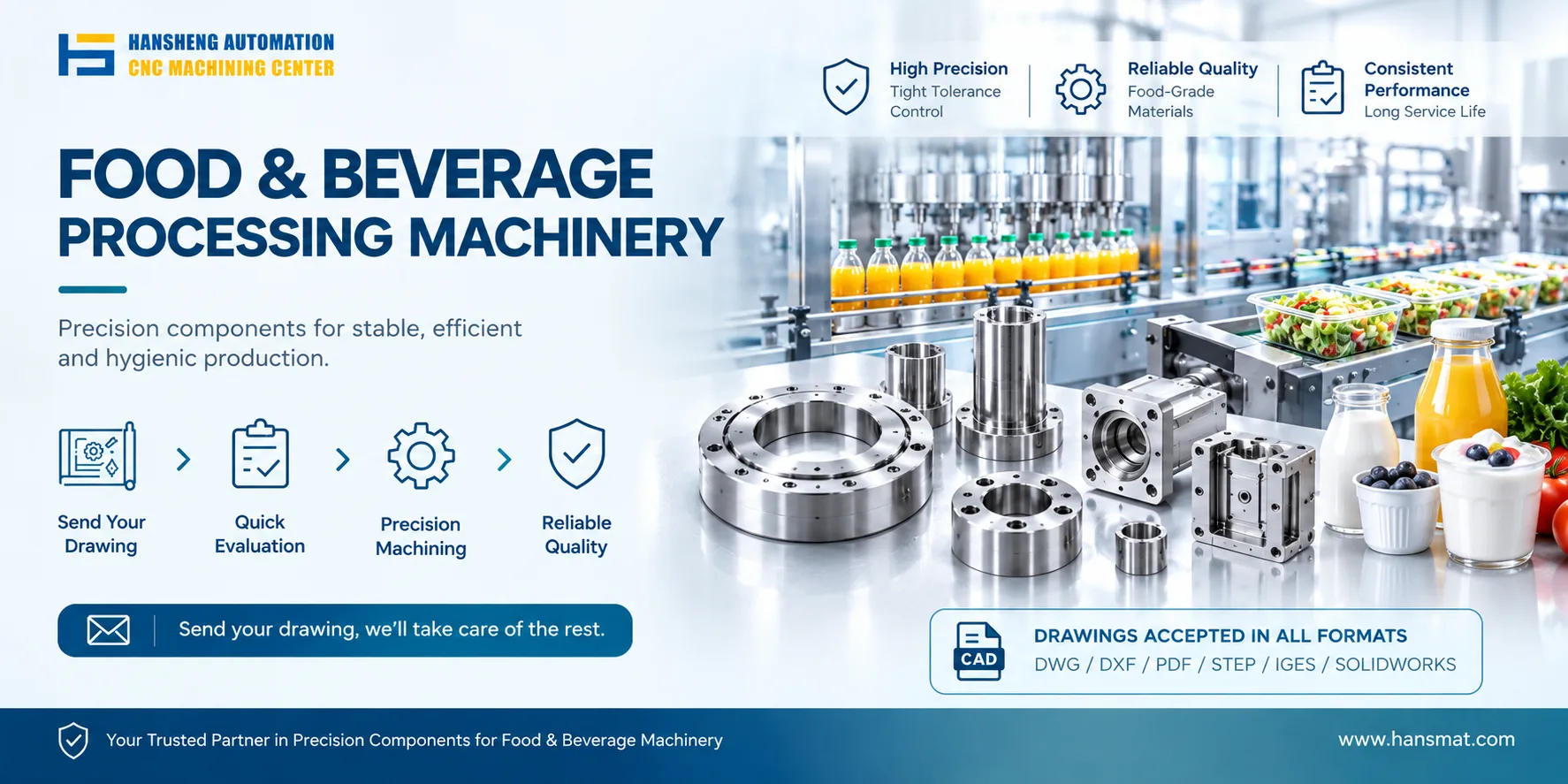
These machines combine dough stretching, pressing, and tray placing. Commercial models can reach 300 to 800 pizzas per hour. They suit chain stores with volume demand. Hansheng Automation can machine custom forming dies, sheeter rollers, and conveyor parts to customer drawings when a standard part does not fit the line.
Baking equipment
Deck ovens
Deck ovens are the mainstream commercial choice. Each deck has independent temperature control. They support gas and electric heating, with a maximum temperature of 300 to 500 C. Output is 80 to 150 pizzas per hour. They suit shops that bake to order. Some models use a 50 mm baking stone to improve heat distribution across the base.
Tunnel ovens
Tunnel ovens are continuous baking equipment. They work with a conveyor for line production. Temperature range is 220 to 350 C. Output can reach 500 to 2,000 pizzas per hour. They suit central kitchens and large chain stores.
Home pizza ovens
Home pizza ovens are tabletop electric or gas units. Maximum temperature is 180 to 280 C. They bake one or two 9-inch pizzas at a time. They fit home use.
Finishing equipment
Pizza cutting equipment
Cutting equipment includes manual roller cutters and electric strip cutters. Electric models give fast, standard cuts. Commercial shops usually prefer electric units.
Holding display cabinets
Holding cabinets use air cooling or direct cooling and hold 40 to 60 C. They keep finished pizza warm for display and short holding. They suit dine-in shops.
Packing equipment
Packing equipment includes manual packers and automatic packaging machines. Commercial models seal finished pizza quickly and raise serving speed.
How to choose equipment by scenario
Home use
Choose a tabletop electric pizza oven, a manual dough sheeter, and a small dough mixer. Total budget is RMB 2,000 to 5,000. The setup makes one or two pizzas per batch.
Small commercial use (stall or small shop)
Choose a deck oven, a semi-automatic forming machine, and a small bowl chopper. Total budget is RMB 30,000 to 100,000. Output covers 100 to 200 pizzas per hour.
Chain stores and central kitchens
Choose a tunnel oven, an automatic forming line, and central kitchen prep equipment. Total budget is above RMB 500,000. The line suits large-scale production.
Key parameters
Temperature control accuracy
Commercial equipment should hold within ±5 C for stable baking. Home equipment at ±10 C is enough for home baking.
Heating method
Gas ovens heat up fast but need an exhaust duct. Electric ovens are easy to clean and suit indoor sites without exhaust ducts.
Baking stone
Commercial models should use a refractory stone 50 mm or thicker for better heat storage. Home models can use a 20 to 30 mm stone.
Safety rules
Baking equipment surfaces can exceed 200 C. Add guards to prevent burns from direct contact.
Gas equipment needs regular checks of the exhaust duct and gas connections. This prevents carbon monoxide and gas leaks. It must meet local fire and exhaust requirements.
Mixers and sheeters have rotating parts. They need safety guards. Do not reach into the drive area while the machine is running.
All electrical equipment needs grounding. Check insulation on a regular schedule to prevent leakage.
Maintenance and replacement parts
Regular maintenance should cover mixer arms, sheeter rollers, divider blades, oven door seals, conveyor belts, and stone surfaces. Worn parts affect crust quality and output. When replacement parts are needed, Hansheng Automation can machine non-standard components such as forming dies, sheeter rollers, and conveyor parts to drawing.
Our precision custom machining capability is not limited to pizza production equipment. Hansheng Automation also produces parts for medical devices, printing machinery, and filling machinery, along with precision components for yachts and RC cars. From single parts to small batch runs, we machine to customer drawings and deliver parts for assembly.