A plastic round monofilament drawing machine processes PA, PE, PP, PVC, PET, and other plastic raw materials into round monofilament in set specifications. Equipment from Qingdao Hualide Plastic Machinery Co., Ltd. is representative in this field. The machine melts and extrudes thermoplastic, then draws and sets it to make monofilament with high toughness, strong tensile strength, and good aging resistance. Applications include craft products, brooms, brush filament, fishing nets, fishing lines, toothbrush filament, whisks, and sweeping brushes.
Typical process, using PET as an example:
Raw material handling: dry PET pellets to remove moisture.
Extrusion and drawing: molten plastic is extruded through a die head into filament.
Cooling and setting: water or air cooling solidifies the filament.
Drawing and strengthening: roller drawing or a hot oven raises filament strength.
Post-processing: electric heat treatment pulling, winding, heat shrink film covering, bundling, automatic cutting, and final round monofilament.
Maintenance points
Regular maintenance extends machine life and improves production efficiency.
Daily checks and cleaning
Before startup: check electrical lines and drive parts for looseness or wear. Confirm compressed air lines have no leaks and air pressure is stable.
Cleaning: blow out the machine interior with purified compressed air, especially the inner surface of the conveyor belt and the worktable. Remove foreign matter from sand pads and sand belts to avoid affecting processing accuracy. Wipe photoelectric tubes and photoelectric switches regularly so dust does not cause signal failure.
Lubrication
Change lubricating oil in each gearbox every six months. Keep oil clean and free of sediment. Add grease to bearings, drive chains, and sprockets every two weeks to reduce wear. Follow the lubrication chart in the equipment manual. Apply lubricant at marked points on schedule and in the right amount. Avoid over-lubrication or missed points.
Key component maintenance
Sand belt swing assembly: check swing mechanism flexibility regularly. Clean dust or oil. Adjust swing amplitude to the process range to prevent filament deviation.
Traction and winding system: check whether the traction roller surface is smooth. Repair scratches or stuck material in time. Keep winding tension stable to avoid loose winding or filament breakage.
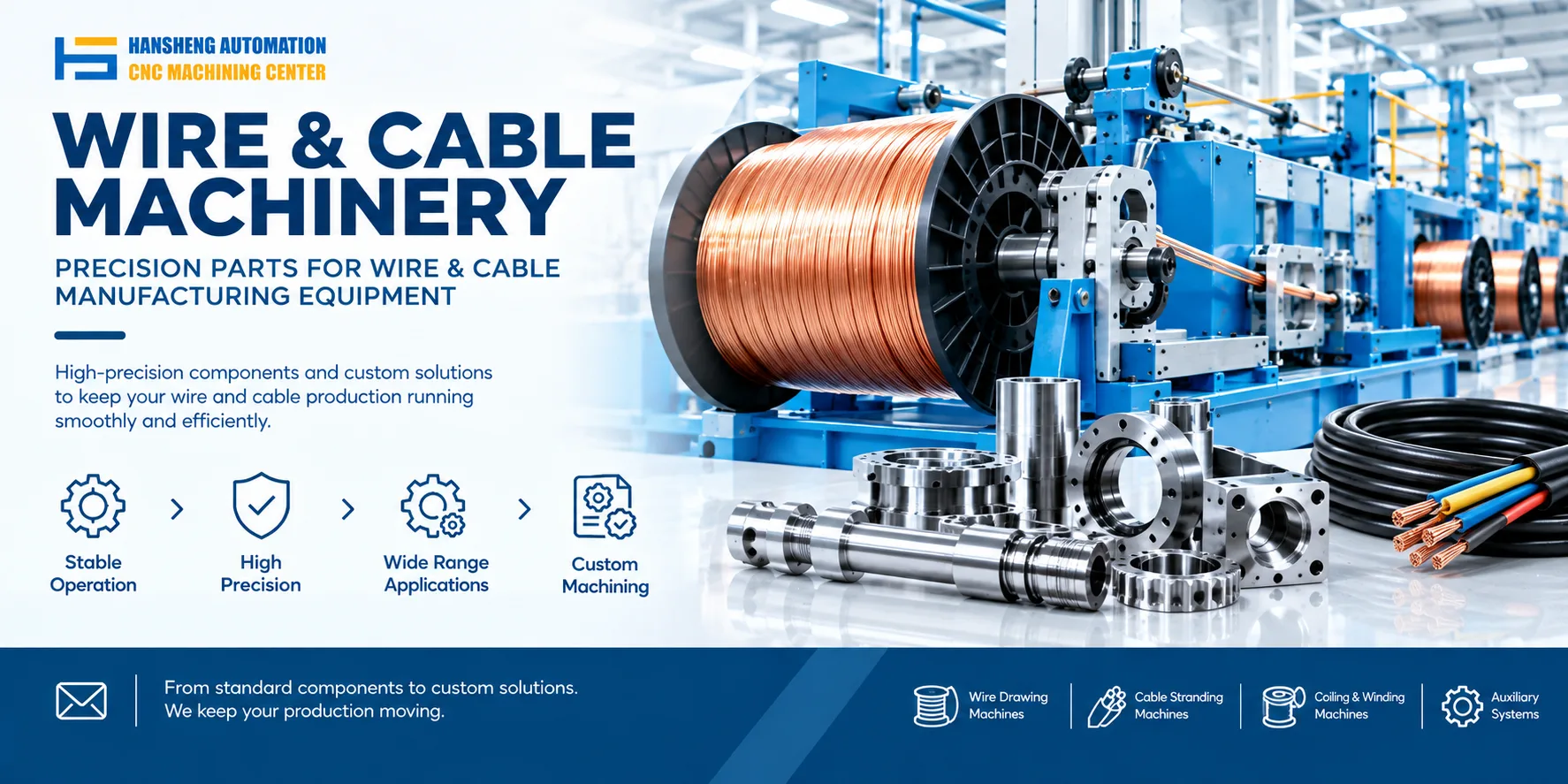
When dies, rollers, or traction parts need replacement, Hansheng Automation can machine these precision components from customer drawings in single pieces or small batches.
Wear part replacement
Sand belt and sand pad: replace regularly based on wear, usually after every 50 to 100 tons of filament. Align the direction during replacement and confirm compatibility with the machine.
Die head and mouth die: clean residual plastic from the die head regularly to prevent blockage or uneven filament. Replace the mouth die when wear exceeds the limit to keep filament diameter accurate.
Electrical system maintenance
Temperature control device: check heater band and thermocouple connections. Confirm temperature display is accurate. Calibrate temperature controller parameters regularly to avoid temperature fluctuation affecting filament quality.
Motor and drive: listen to motor running sound. Stop and check if abnormal. Clean dust from the drive cooling fan to prevent overheat protection.
Why maintenance matters
Longer life: less mechanical wear and electrical faults, lower replacement cost.
Higher efficiency: fewer production interruptions from machine downtime.
Consistent quality: stable process parameters keep filament performance consistent.
Our precision custom machining is not limited to plastic monofilament drawing machine parts. Hansheng Automation also produces non-standard components for fishing net equipment, brush making machinery, packaging lines, filling machinery, tobacco packaging machinery, printing equipment, medical device production equipment, yacht hardware, and RC car components. We work from customer drawings for single pieces or small batches. The focus stays on precision parts machining and delivery, which keeps maintenance and replacement flexible across different industries.