Paper bag machines are packaging equipment designed for the mass production of environmentally friendly paper bags. They aim to replace traditional plastic bags with renewable paper materials, reducing environmental pollution. Through a series of processes including paper feeding, printing, tube forming, bottom gluing, and shaping, they transform rolls or sheets of paper into structurally stable, versatile finished paper bags, widely used in food, clothing, daily chemicals, and industrial powder packaging.
Common models can be broadly categorized by raw material type and functional configuration as follows:
- Sheet-fed paper bag machines use 70-200g/㎡ sheet or roll paper as raw material. They feature stable production, low noise, high yield, and easy operation, making them suitable for small to medium batch production of paper bags. Paper bag forming machines use 120-300g/㎡ rigid paper, and with various auxiliary materials, automatically feed paper, apply glue, glue tubes, and fold. They dry quickly and adhere firmly without glue overflow.
- The paper-yarn composite paper bag machine is specifically designed for producing paper-yarn composite bags, suitable for packaging powder and granular materials. It boasts advantages such as small footprint, low power consumption, easy installation, and quiet operation.
- The roll-type square-bottom paper bag machine uses 70-170g/㎡ roll paper as raw material, forming food bags or tote bags in one process through multiple steps. It is mainly used for grain and food packaging.
- The food paper bag machine also uses roll paper as raw material and can continuously produce shopping bags, garment bags, and snack food bags in various specifications.
The four-color printing roll-making paper bag machine integrates roll making, bottom gluing, and printing functions, employing an advanced control system. It is suitable for industrial paper bags requiring printed labels, such as cement bags and starch bags.
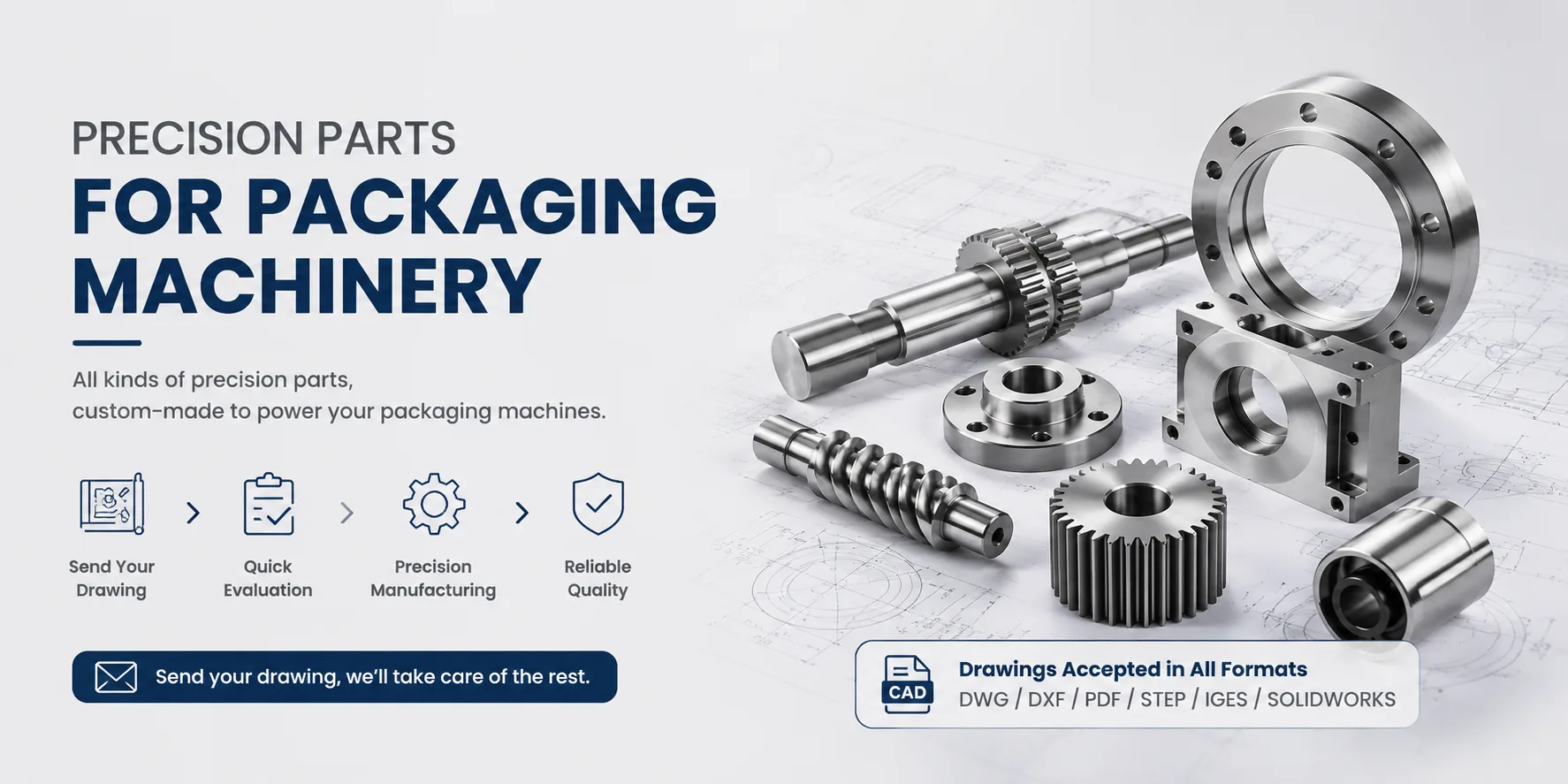
In practical applications, these models often have non-standard requirements for key components such as the paper feeding rollers, forming dies, glue nozzles, pressure roller assemblies, and drive shafts due to differences in bag structure, paper weight, or production speed. Based on customer-provided design drawings, we can perform single-piece or small-batch precision machining, covering material selection, tolerance control, and surface treatment, ensuring component compatibility with the main machine and rapid response to production line adjustment needs.
With the increasing demand for environmentally friendly packaging, the application of paper bag machines in the food, daily consumer goods, and industrial sectors continues to expand. Through flexible component customization support, the equipment can better adapt to the production of multi-variety, small-batch, or specially structured paper bags, improving overall efficiency and finished product quality.