Automatic slitting machines run into a few recurring faults: cutter problems, feed problems, tension control problems, and safety system problems. Most are solved by regular inspection and timely replacement of worn or failed parts.
Cutter faults
Cutter wear: After long use, the blade wears and cut quality drops. Check blade wear on a schedule and replace worn blades.
Cutter loosening: The blade can loosen during operation, which causes inaccurate cuts. Check the mounting screws and tighten them if loose.
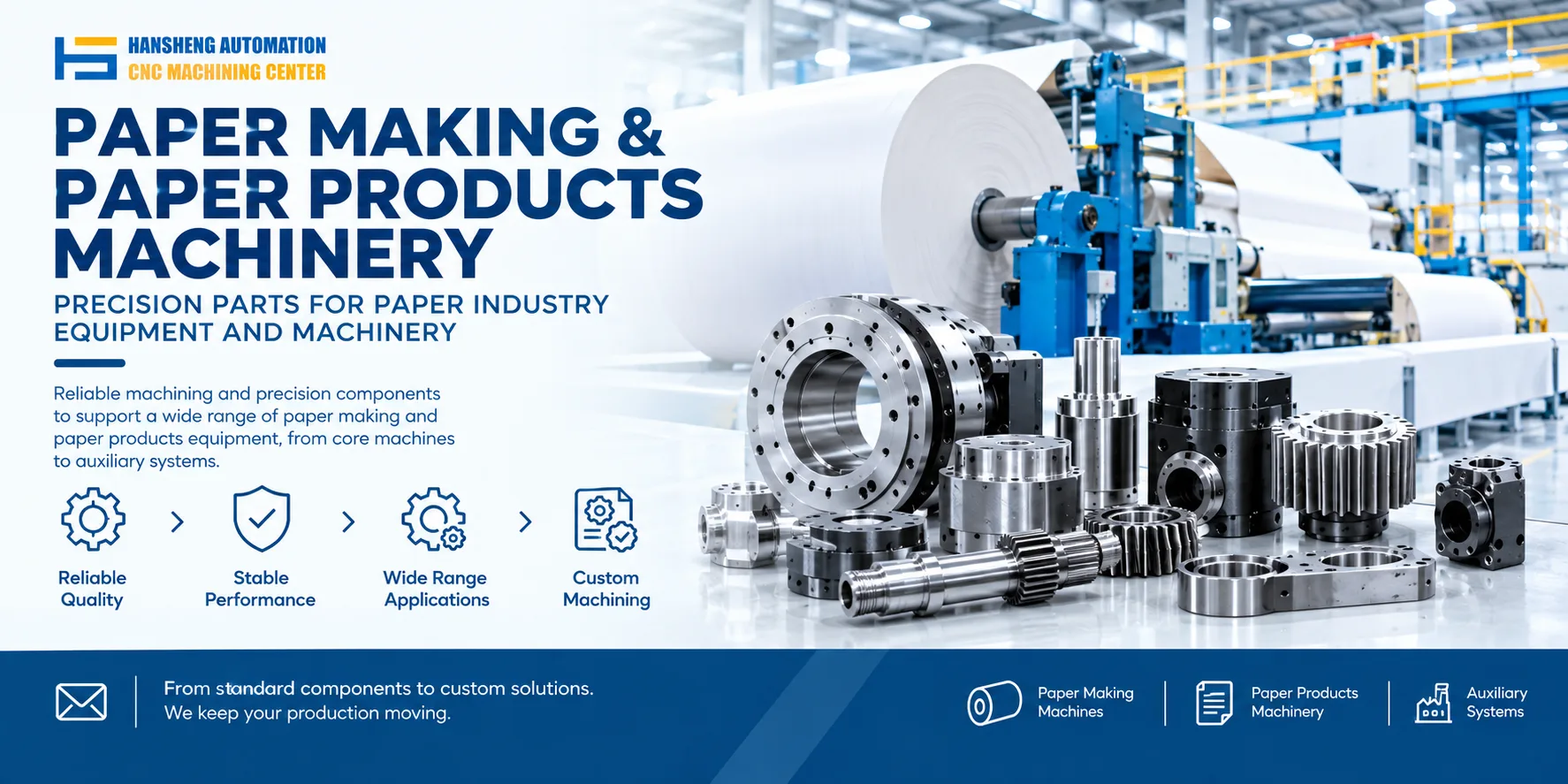
For slitting machine builders, Hansheng Automation can machine custom slitting blades, blade holders, and wear parts from customer drawings, in single pieces or small batches.
Feed faults
Feed wheel wear: Feed wheels wear after long use, and feeding becomes unstable. Inspect feed wheels regularly and replace worn ones.
Feed motor fault: The feed motor can fail and cause abnormal feeding. Check whether the motor runs normally. Repair or replace it if faulty.
Tension control faults
Tension sensor fault: A faulty tension sensor causes inaccurate tension control. Check sensor operation. Repair or replace it if faulty.
Tension adjustment device fault: A faulty adjustment device causes unstable tension control. Check the device. Repair or replace it if faulty.
Safety protection system faults
Emergency stop button fault: A faulty emergency stop button can disable the safety protection system. Check the button. Repair or replace it if faulty.
Photoelectric sensor fault: A faulty photoelectric sensor can also disable the safety protection system. Check the sensor. Repair or replace it if faulty.
Conclusion
Automatic slitting machines can develop cutter, feed, tension control, and safety protection faults. Regular inspection and maintenance, timely replacement of worn parts, and repair or replacement of faulty electronic components keep the machine running normally. Good equipment condition improves production efficiency and meets market demand.
Our custom precision component work also supports packaging machinery, printing equipment, medical devices, yacht systems, RC cars, filling lines, food processing equipment, and tobacco packaging machinery. Hansheng Automation produces one-off or small batch parts from customer drawings to the required material, tolerance, and surface finish. We focus on precision components, not complete machines.