Bubbles on a paper box bottom usually come from glue, paper, or equipment. Work through these three areas in order. Adjusting glue parameters, improving paper condition, and optimizing the pressing process often solves the problem.
Glue checks and adjustments
Adhesive quality: low-quality adhesive easily creates bubbles. Use a dedicated adhesive with strong tack and a drying speed that matches your line. For laminating adhesive, starch adhesive costs less but dries slowly. White latex dries faster but costs more. Choose based on production needs.
Glue amount: too much or too little glue causes bubbles. Adjust the glue roller gap or pressure so the glue layer is even. A common glue amount is 10-15 g/m², adjusted by paper weight.
Drying conditions: drying too fast can skin over the surface and trap bubbles. Drying too slow lets glue flow and form bubbles. Adjust oven temperature, usually 60-80°C, and ventilation so the glue dries at a steady rate.
Paper material handling
Paper moisture: moisture above the recommended 8%-12% evaporates and forms bubbles. Test moisture before production. If needed, pre-dry with drying equipment at 50-60°C.
Paper flatness: curled or uneven paper causes uneven glue distribution. Use paper with good flatness. If it is slightly deformed, pre-flatten it with a pressure roller before it goes on the line.
Equipment adjustment and maintenance
Pressing pressure: low pressure gives a weak bond. Too much pressure crushes the paper. Adjust the pressing device pressure based on box thickness, usually 0.4-0.6 MPa, so the bond is tight and bubble-free.
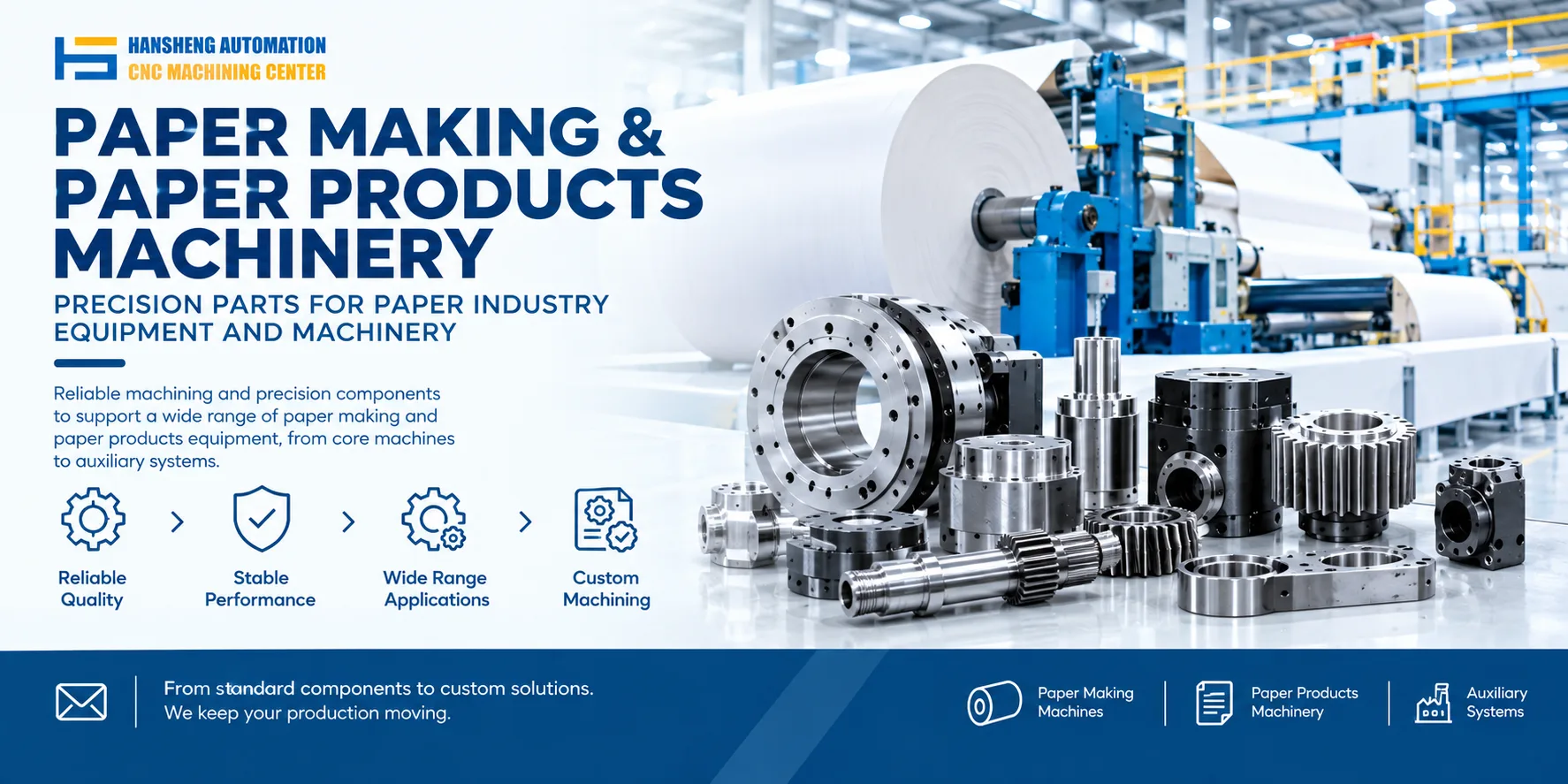
Cleanliness and care: glue residue or dust on the pressing roller or plate affects bonding. Clean pressing parts after daily shutdown. Check roller surface wear regularly. Replace badly worn rollers. When pressing rollers or glue rollers need replacement, we can machine these precision parts from customer drawings in single pieces or small batches.
Machine accuracy calibration: worn or misaligned drive parts cause bonding deviation. Check chain and guide rail accuracy regularly. Keep box feeding and pressing timing synchronized.
Priority order: glue amount (most common), pressing pressure, paper moisture, equipment cleanliness. If the problem continues, check whether the glue has deteriorated or whether parts such as the glue roller or pressing roller need replacement.
Our precision custom machining is not limited to paper box forming machine parts. Hansheng Automation also produces non-standard components for tobacco packaging machinery, filling machinery, medical device production equipment, printing equipment, food machinery, yacht hardware, and RC car parts. We work from customer drawings for single pieces or small batches. The focus stays on precision parts machining and delivery, which keeps maintenance and replacement flexible across different industries.