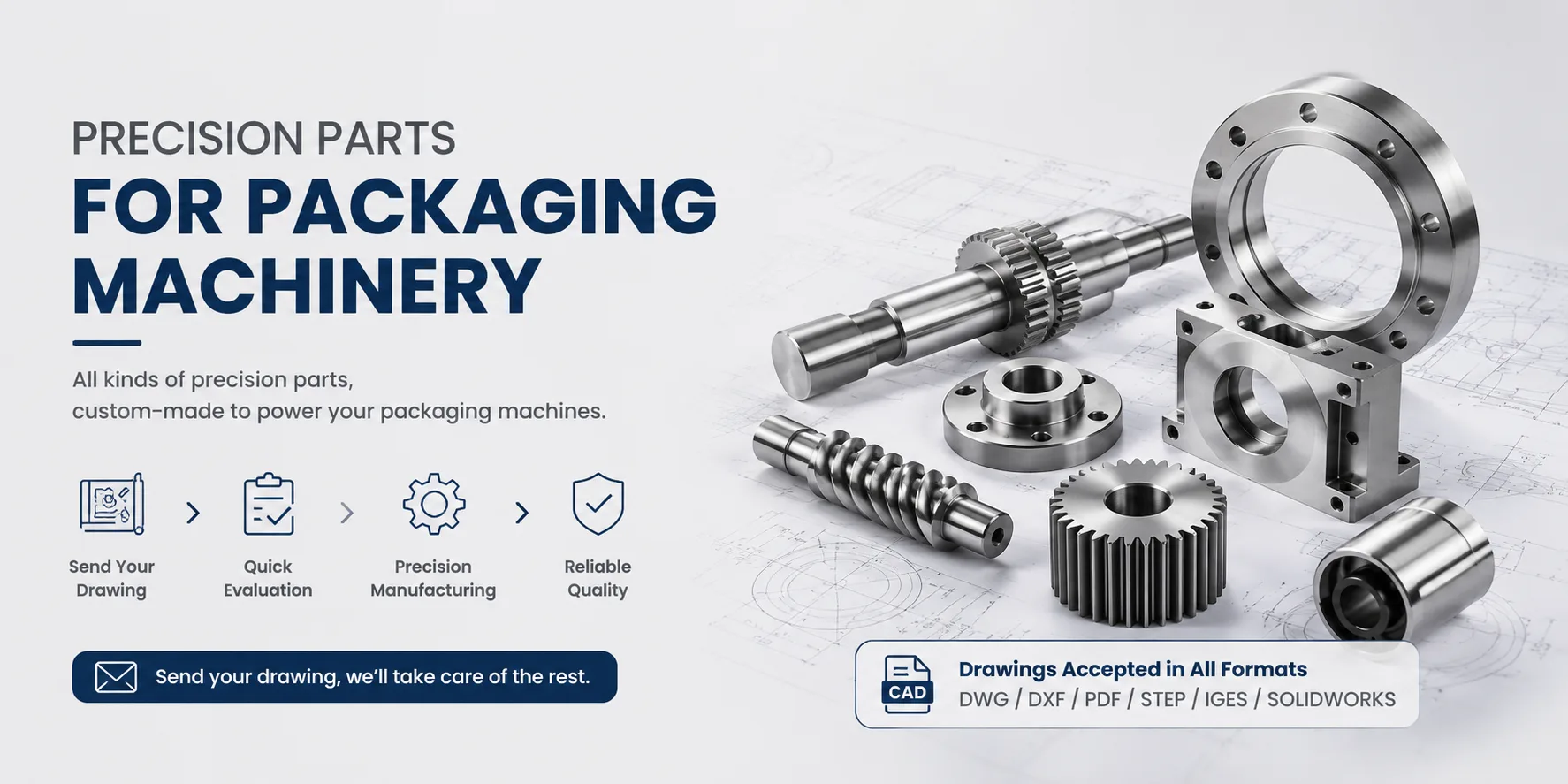
Small automatic powder packaging machines are used for packaging powdered and granular materials across the food, pharmaceutical, cosmetic, and industrial raw material industries. Because the flowability, hygroscopicity, and chemical properties of powders and granules vary widely, using generic feeding and metering parts can easily lead to bridging, sticking, or metering drift. Customizing contact parts such as screw feeders, metering discs, filling nozzles, and forming dies according to the specific material is key to improving packaging accuracy and stability. Hansheng Automation can perform single-piece or small-batch precision machining based on material type and customer-supplied design drawings, providing non-standard custom parts for packaging equipment.
Food Powders
Common items include flour, cinnamon powder, coffee powder, milk powder, powdered sugar, starch, chili powder, and spice powder. These materials require high hygienic standards, and contact parts usually need to comply with food-grade requirements. Contact parts can be made of 304 or 316L stainless steel or food-grade engineering plastics, with mirror polishing or electropolishing to reduce powder adhesion and residue. For packaging processes requiring moisture and oxidation protection, nitrogen flushing nozzles, air line connectors, and sealing caps can also be incorporated to extend shelf life.
Pharmaceutical Powders or Granules
Common items include traditional Chinese medicine powder, western medicine powder, granulated formulations, and vitamin powder. Pharmaceutical production demands strict accuracy and cleanliness, with weighing errors typically controlled within ±0.1%–0.5%. Key parts such as metering screws, dispensing turntables, and filling rods often require dimensional tolerances within ±0.005 mm, along with sanitary surface treatments to minimize cross-contamination risk.
Cosmetic Powders
Cosmetic powders such as loose powder, eyeshadow, foundation, bath salts, and scrub powders often involve different packaging formats like sample packs and travel sizes. To accommodate diverse filling requirements, filling nozzles, vacuum suction cups, heat-sealing molds, and forming cavities can be selected in different diameters, using materials such as aluminum alloy, stainless steel, or corrosion-resistant coatings. For oxidation-prone products, nitrogen filling nozzles and sealing assemblies can also be configured to reduce product degradation.
Industrial Raw Material Powders or Granules
Industrial materials such as chemical pigments, dyes, metal powders, plastic granules, rubber granules, and fertilizers (e.g., phosphate and potash) are often corrosive, abrasive, or used in high-temperature environments. Contact parts can be made from Hastelloy, titanium alloy, high-wear-resistant stainless steel, or special anti-corrosion coatings, including screw feeders, hopper liners, mixing paddles, and seals. For packaging environments requiring explosion-proof design, non-standard antistatic parts can also be adopted to meet industrial safety requirements.
Equipment Adaptability and Operating Points
A small automatic powder packaging machine can adapt to weight ranges from 1 g to 5 kg and packaging forms such as bags and bottles by changing screw feeders, metering discs, or forming dies of different specifications. Screw pitch, metering chamber volume, and sealing mold profile can be adjusted according to bag size, fill volume, and material flowability for quick changeover. During operation, parameters such as weighing accuracy, sealing temperature, and filling gas type should be set according to material properties, and the equipment should be cleaned regularly to avoid cross-contamination and ensure the conveying system remains unobstructed.
Precautions
If powders are prone to moisture absorption or caking, drying or pretreatment steps are usually required before packaging. Contact parts can be treated with anti-stick coatings or mirror finishing to improve material flow. Packaging materials must be compatible with the product, such as aluminum foil bags or antistatic bags, and matched with appropriate sealing molds and cutters to ensure uniform heat-sealing pressure and temperature distribution. Food and pharmaceutical packaging must comply with regulations such as FDA and EU CE. Key parts can be supplied with material traceability documents, surface treatment certification support, and dimensional inspection data. For special materials or non-standard packaging formats, Hansheng Automation can provide custom machining support for contact parts.