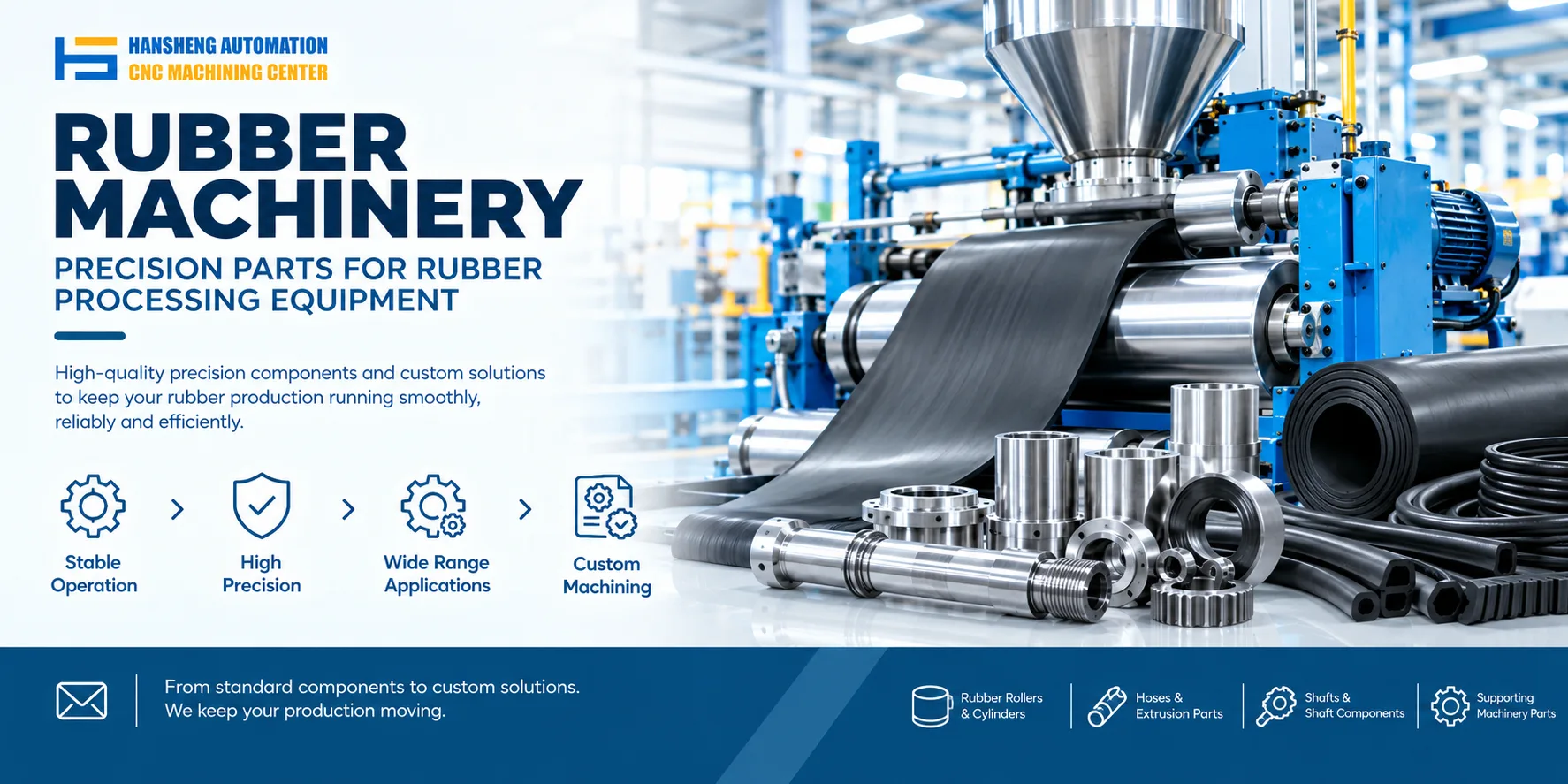
Tire building is the process of assembling prepared rubber components, cord fabric, belt layers, and other semi-finished materials into a complete green tire. The process involves material preparation, component assembly on the building drum, and subsequent vulcanization and quality inspection.
Preparation of raw materials and semi-finished components
Material preparation takes place before the tire building stage. Although these operations are not performed directly by the tire building machine, they supply the components required for tire assembly.
The main raw materials include natural rubber, synthetic rubber, carbon black, silica based additives, and reinforcing materials such as steel wire and polyester cords.
Rubber and additives are mixed in an internal mixer to produce the required rubber compound. The compound then undergoes further processing, including extrusion, calendering, bead forming, cord fabric cutting, apex strip application, and belt layer preparation.
These operations produce the semi-finished components required for tire building, including the tread, sidewalls, inner liner, beads, cord fabric, and belt layers.
Assembly on the tire building drum
The tire building machine brings the prepared semi-finished components together on the building drum. Each component is positioned and joined according to the tire's structural design.
The assembly process generally follows this sequence:
Inner liner installation: The inner liner, also called the air retaining layer, is applied to the building drum.
Ply application: Cord fabric plies are wrapped around the drum, cut to the required length, and joined.
Bead and apex installation: The beads and apex strips are positioned and assembled with the other tire components.
Belt and tread application: The belt layers and tread rubber are applied according to the specified tire construction.
Green tire shaping and finishing: The assembled layers are shaped and adjusted to form an uncured green tire.
Accurate component positioning and close contact between the layers are important during assembly. Errors at this stage can affect the tire's dimensions and the quality of the subsequent manufacturing processes.
Subsequent processing and quality inspection
After tire building, the green tire undergoes vulcanization and a series of quality inspections before it can be released for use.
Vulcanization
The green tire is placed in a vulcanizing mold and processed under high temperature and pressure. Vulcanization cures the rubber, establishes the final tire shape, and forms the tread pattern.
Final inspection and testing
Finished tires undergo several quality checks, including visual inspection, uniformity testing, dynamic balancing, and X-ray inspection. These checks help identify appearance defects, variations in tire uniformity, balance problems, and internal defects.
For tires in new specifications, high speed and endurance tests are also required. The tires can enter the market only after they pass the applicable inspections and tests.
Custom precision machining for tire manufacturing equipment
Hansheng Automation provides custom precision machining for nonstandard mechanical components based on customer supplied drawings. We manufacture parts according to specified dimensions, tolerances, and structural requirements to support equipment assembly, maintenance, and component replacement.
Our machining services also cover precision components for tobacco packaging and filling machinery, as well as structural parts for yachts and remote control racing cars. We produce custom components according to customer drawings and application requirements across different industrial sectors.