Molding machine faults vary according to the machine type. Injection molding machines commonly experience electrical, hydraulic, mold opening and closing, and sensor related problems. Tire building machines may encounter material feeding delays and reel speed issues. Troubleshooting should be based on the specific equipment structure and operating conditions.
Common faults in injection molding machines
Power supply and startup problems
If the motor fails to run, possible causes include a blown power fuse or a poor connection at the start button. Replace the blown fuse and inspect or replace the faulty electrical components as necessary.
If the motor produces a humming sound but does not rotate, a phase loss may be the cause. Check the power supply and confirm that all three phases are functioning correctly.
Oil pump and hydraulic system faults
Abnormal oil pump noise may result from air entering through the suction side or a blocked oil filter. Inspect and repair the suction side connections, then clean the filter screen to restore normal oil flow.
If the machine does not respond to any operating command, the main pressure valve or amplifier board may be faulty. Inspect and repair the affected component to restore normal machine operation.
Mold opening and closing problems
If the mold will not close, possible causes include incomplete ejector retraction or an improperly closed safety door. Check whether the ejector has returned to its required position and inspect the safety door circuits.
If the mold will not open, the directional valve may be faulty and should be inspected and repaired.
Abnormal noise from the toggle mechanism during mold opening or closing may indicate insufficient lubrication or excessive misalignment. Increase the lubrication supply as required and correct the parallelism if it falls outside the specified limits.
Irregular movement and sensor faults
Crawling or jerky movement during mold opening and closing may result from excessive wear on the second platen guide and tie bars. Inspect the worn components and replace the affected second platen component or tie bars as necessary. Lubrication may also be required.
If the mold opening or closing limit switch malfunctions, incorrect T24 adjustment may be responsible. Check the setting and increase the T24 time where necessary.
A faulty mold adjustment counter may be caused by a damaged proximity switch. Replace the switch and adjust its position to restore normal detection.
Common faults in tire building machines
Material changeover delays at the unwinding station
At the unwinding station, production can be delayed when the material supply runs out and operators need to replace the material cart and splice the incoming material. Excessive speed of the spool can also affect production efficiency.
One possible solution is to install a brake disc mechanism with a sensor at the station. When the sensor detects that the spool is rotating too quickly, the brake disc engages and locks the rotating shaft, stopping the spool.
Increasing the overall height of the high-low positioning device can also help address this problem. The appropriate modification depends on the existing equipment layout and operating requirements.
Custom precision machining for industrial equipment
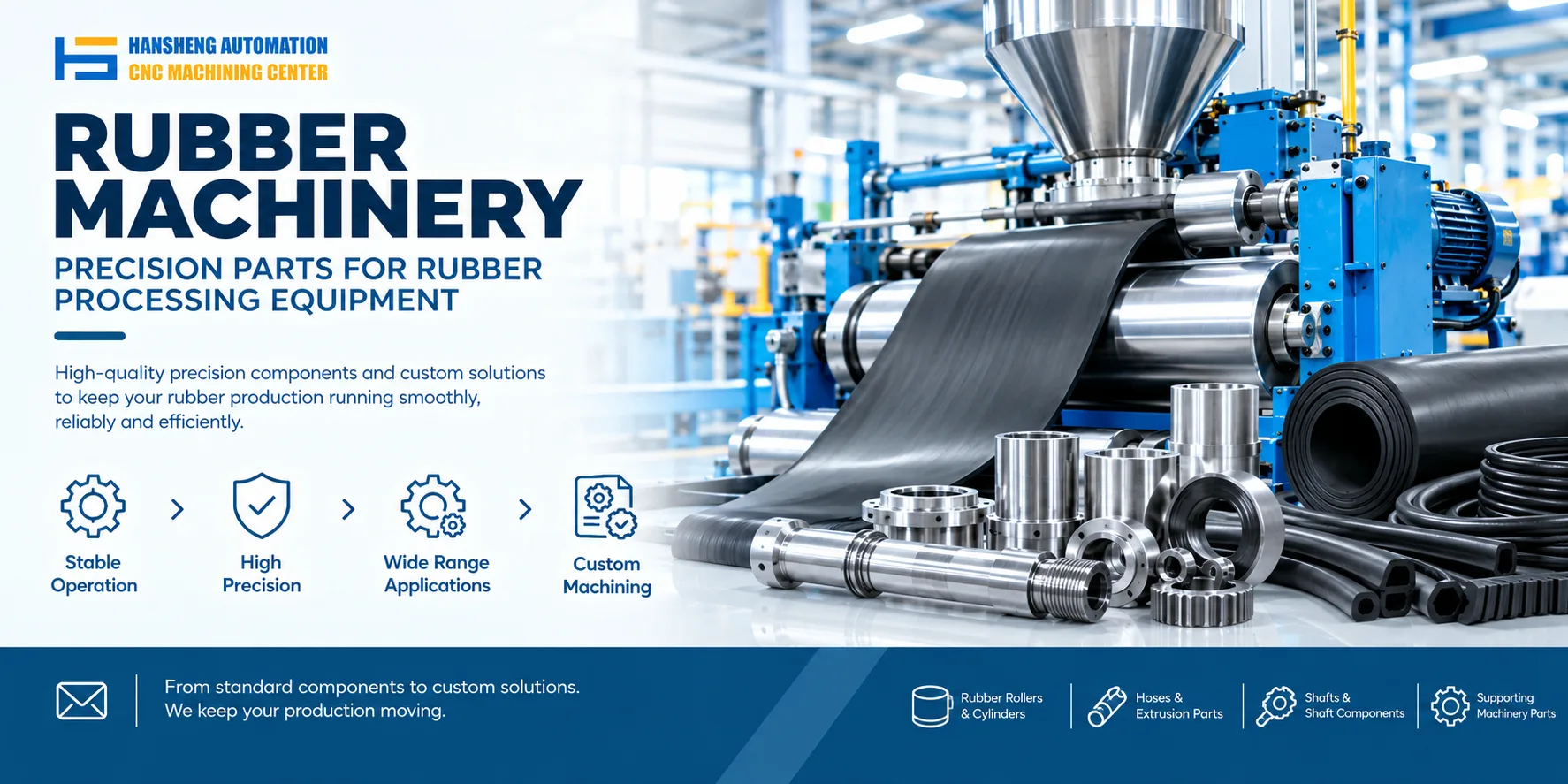
Hansheng Automation provides custom precision machining for nonstandard components based on customer supplied drawings. We manufacture parts according to specified dimensions, tolerances, and structural requirements to support equipment maintenance, component replacement, and custom manufacturing projects.
Our machining services also cover precision components for tobacco packaging and filling machinery, along with structural parts for yachts and remote control racing cars. Each component is manufactured according to customer drawings and application requirements.