Filter presses can be classified according to their installation orientation and filter chamber design. Based on their orientation, the main types are vertical and horizontal filter presses. Based on chamber construction, common types include plate-and-frame filter presses and chamber filter presses. These designs differ in filter plate arrangement, chamber construction, and cake discharge methods.
Vertical Filter Presses
A vertical filter press has horizontally positioned filter plates stacked vertically to form a series of filter chambers. This arrangement requires relatively little floor space.
The machine typically uses a continuous filter belt to carry out the filtration process. After filtration, the belt moves to discharge the filter cake and is then cleaned before the next operating cycle. This process can be automated.
Horizontal Filter Presses
A horizontal filter press consists of multiple filter plates assembled to form filter chambers. Depending on the plate design and chamber structure, common types include chamber filter presses, plate-and-frame filter presses, membrane filter presses, and Changjie washing filter presses.
The Changjie washing filter press uses a diaphragm-free design, with air-blowing pressing and a side-feed arrangement.
Plate-and-Frame Filter Presses
A plate-and-frame filter press consists of filter plates and filter frames arranged alternately to form a series of filter chambers. The filter plates have grooves on their surfaces, while the raised sections support the filter cloth.
Holes at the corners of the filter frames and plates form channels when the components are assembled. These channels allow the suspension and wash water to enter the chambers and provide an outlet for the filtrate.
During operation, the handles on both sides of the plates and frames rest on supporting beams. A closing device applies pressure to hold the plates and frames together. The filter cloth between each plate and frame acts as a seal to prevent material from leaking through the joints during filtration.
Chamber Filter Presses
The basic structure and working principle of a chamber filter press are similar to those of a plate-and-frame filter press. The main difference lies in the filter plate design.
Both sides of each chamber filter plate have recessed areas. Two plates are assembled face to face to form a filter chamber, eliminating the need for separate filter frames.
A circular feed opening is usually located at the center of each filter plate. The suspension enters through this opening and flows into the individual filter chambers.
This design is suitable for suspensions that require filtration under relatively high pressure when the resulting filter cake does not need to be washed.
Custom Machining for Filter Press Components
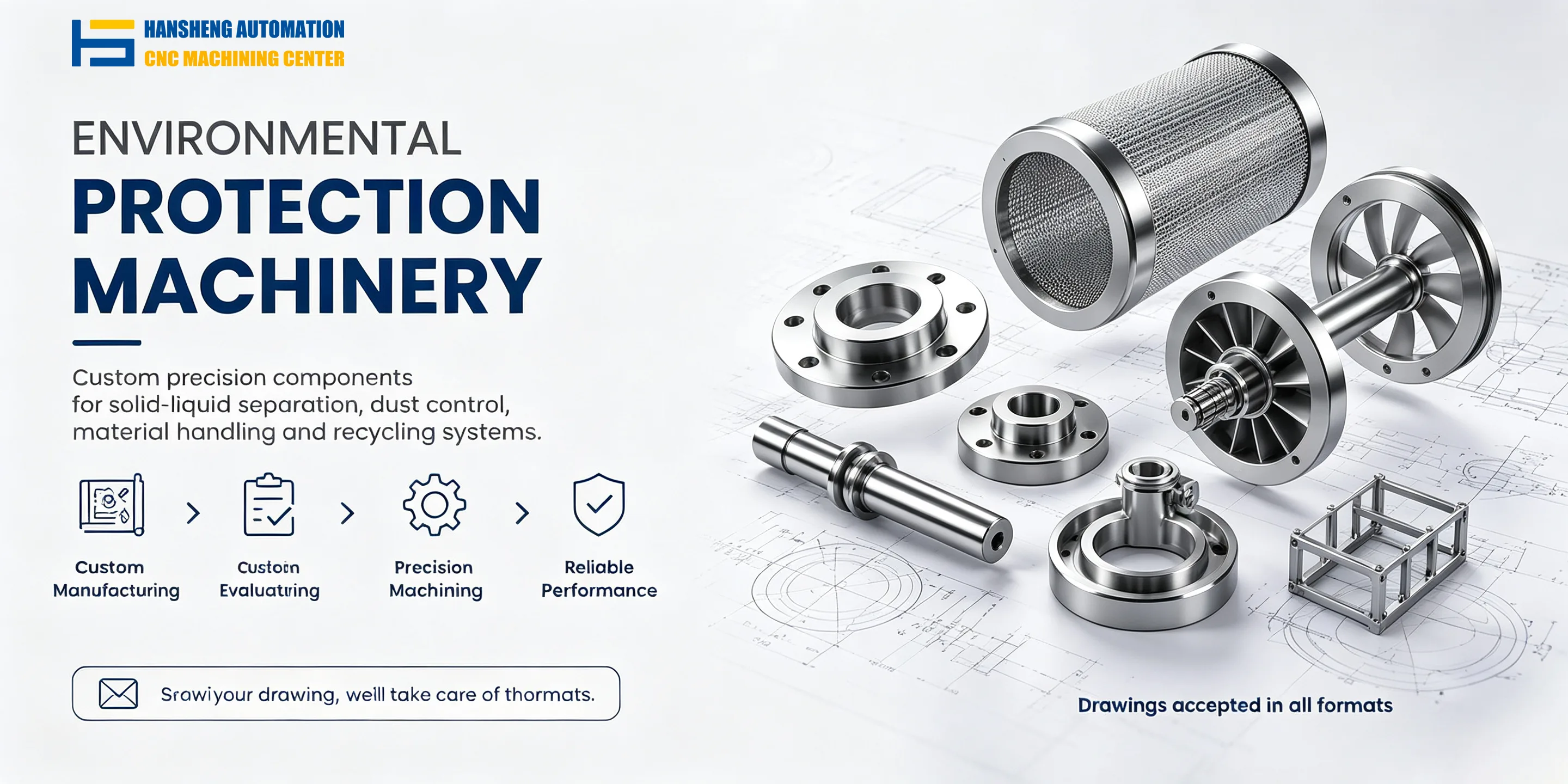
Different filter press designs have different structural requirements and component configurations. Hansheng Automation provides custom machining for non-standard mechanical components used in filter press equipment. We can manufacture precision parts according to customer-supplied drawings, supporting both single-piece production and small-batch orders.
Our custom machining services also cover components for other equipment and industries. These include parts for yacht equipment, tobacco and packaging machinery, and precision structural components for remote-controlled racing cars. Customers can provide their drawings and machining requirements for the manufacture of corresponding components.