A robot hand has three core characteristics: high-precision biomimetic design, adaptability across multiple scenarios, and intelligent interaction.
The structure becomes clearer once the application is understood. Robot hands generally use a multi-joint modular design. The number of finger joints can exceed 1.5 times that of a human hand. Some high-end models carry pressure, temperature, and material recognition sensors and can detect contact differences at the 0.1 g level. On industrial welding arms, repeat positioning accuracy at the hand has reached 0.02 mm.
Function in actual use is the more important point. For environment adaptability, deep-sea manipulators can maintain sensitive gripping at 6,000 m underwater. Robot hands used for space station maintenance have antistatic coatings for vacuum conditions. Micro hands on surgical robots can perform microsurgery such as suturing blood vessels 0.5 mm in diameter.
Another trend is smarter algorithms. New-generation robot hands use deep learning to recognize object deformation. When gripping soft objects such as strawberries, they calculate the best force point at the moment of contact to avoid damage. In warehouse sorting, vision and touch systems can keep damage rates below one in 100,000.
Recent composite material advances have improved practical use. Flexible electrochromic materials give robot hands visual feedback. Carbon fiber reinforced frames reduce overall weight by 40% while increasing load capacity by 3 times. These improvements let rehabilitation robot hands work more than 12 hours continuously and make them more comfortable and convenient for users with limb impairment.
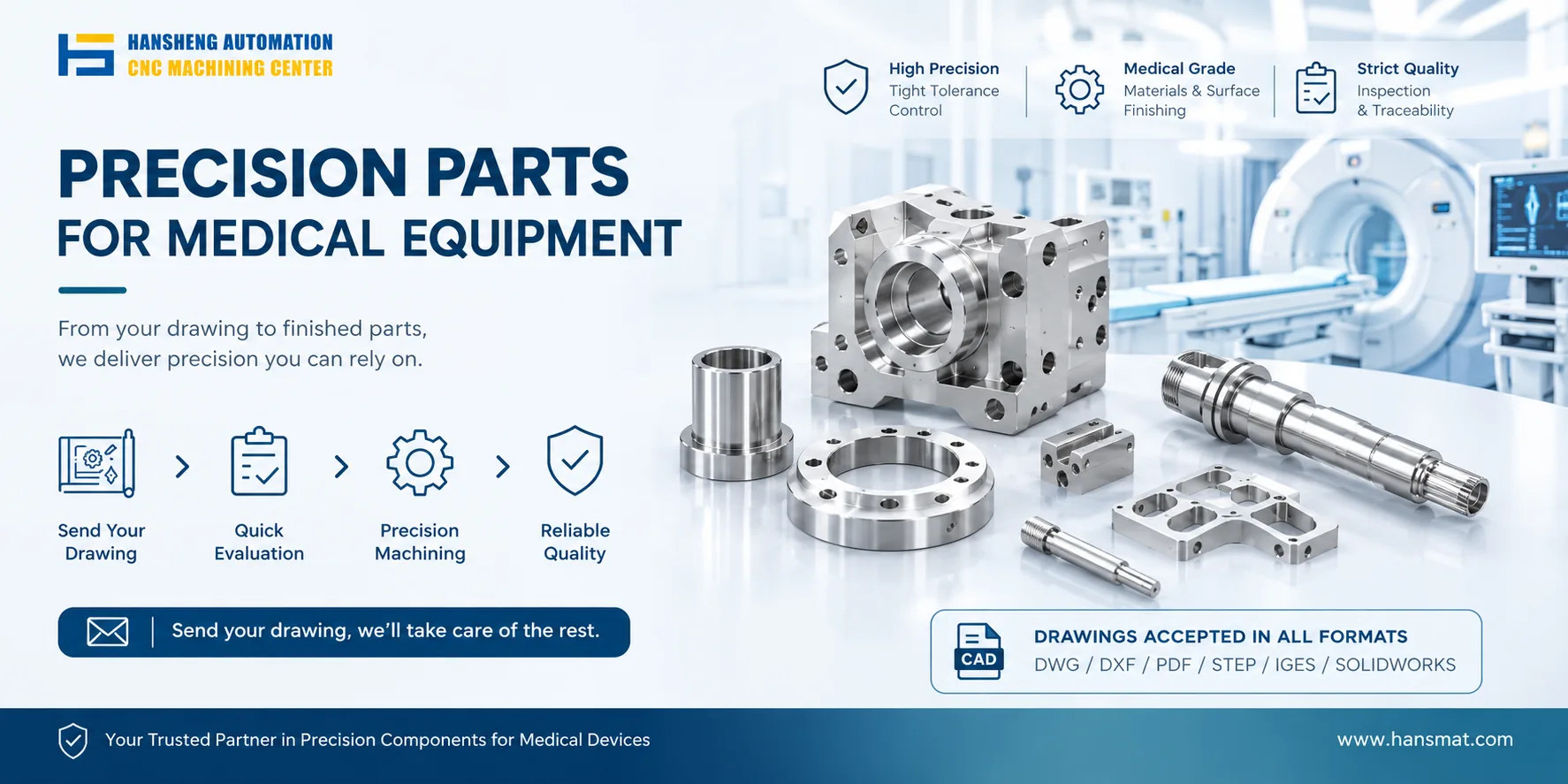
Hansheng Automation machines precision parts for robot hands and joints from customer drawings, including finger joint components, sensor mounts, and lightweight structural parts. Single-piece and small-batch orders are supported.