Needle notch damage in rotary printing presses is mainly caused by mechanical wear, material fatigue, improper installation and adjustment, and operational or maintenance problems.
1. Mechanical Factors
Wear on needle components: Long-term high-speed operation causes the needle or needle slot to wear and deform. The increased clearance leads to wobbling, and under impact loading, notches can form.
Transmission system faults: Reduced accuracy in the gearbox, couplings, and other transmission parts causes deviation in the needle movement path, resulting in periodic mechanical collisions.
2. Material and Process Problems
Metal fatigue cracks: If the needle material is improperly heat-treated or has insufficient hardness (usually HRC 58–62 is required), microcracks can form under alternating stress and gradually develop into notches.
Manufacturing defects: Inclusions, blowholes, or other inherent defects in the raw material, as well as stress concentration points created during machining, can also contribute to failure.
3. Installation and Debugging Defects
Concentricity deviation: If the installation concentricity between the needle and the cylinder exceeds the required tolerance of 0.02 mm, uneven wear will occur.
Dynamic balance failure: If the cylinder group dynamic balance does not meet the standard (vibration velocity usually required to be ≤1.5 mm/s), additional centrifugal force impacts are generated at high speed.
4. Operational and Maintenance Factors
Poor lubrication: Aging of the grease in the needle slot or use of an improper grease grade (ISO VG68 high-temperature extreme-pressure grease is normally required) leads to dry friction and accelerated wear.
Overload operation: Running the machine above its rated speed (for example, over 90,000 revolutions per hour) for extended periods accelerates fatigue damage.
Foreign matter intrusion: Contaminants such as paper dust and dried ink lumps entering the clearance between mating parts cause abrasive wear.
5. Environmental and Load Influences
Temperature and humidity changes: Unstable workshop temperature control causes thermal expansion and contraction of materials, altering the fit clearances.
Sudden load changes: Abrupt changes in paper thickness or tension can cause impact loads beyond the design limit.
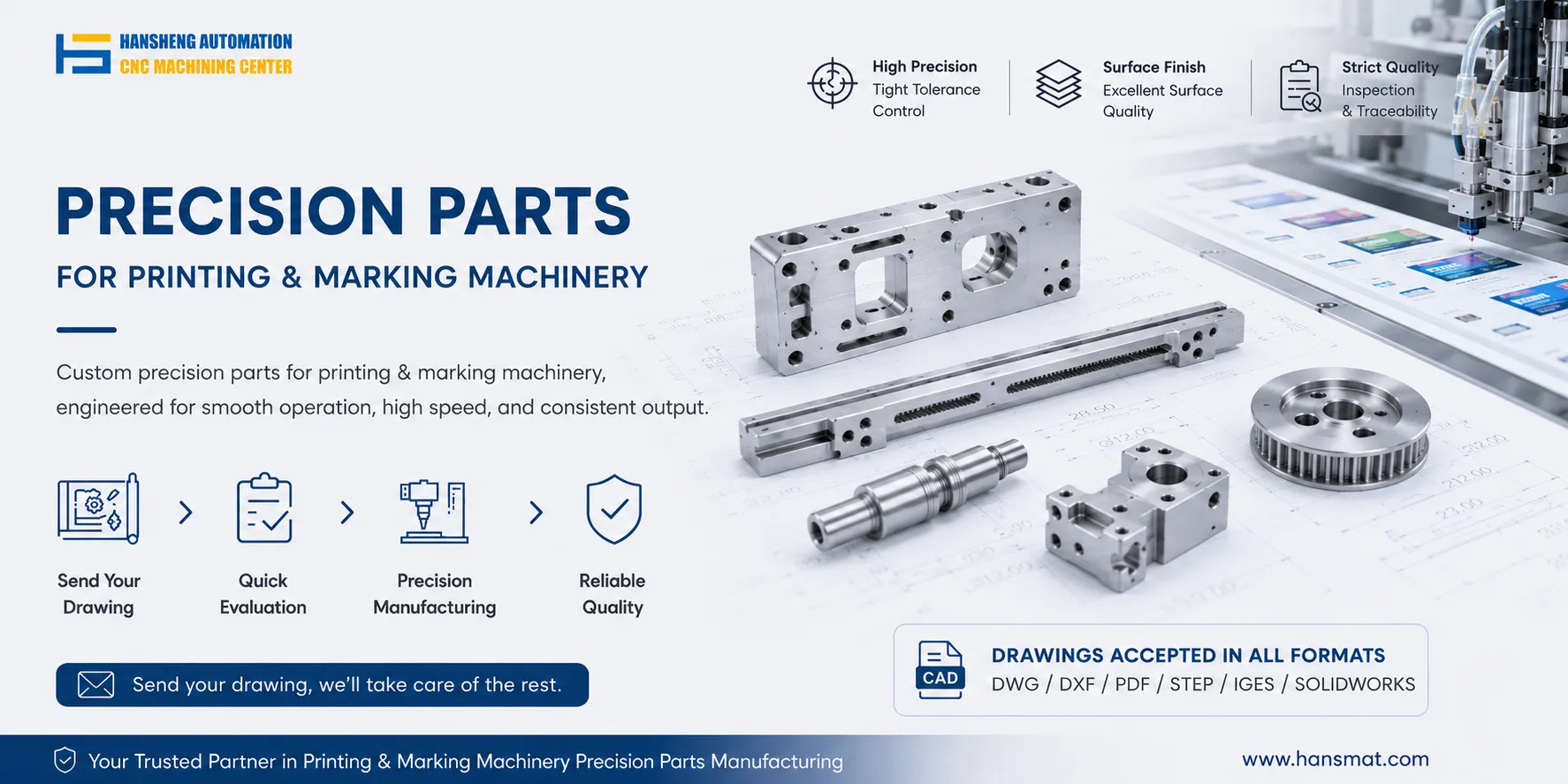
For replacement of worn needle components or other high-precision parts in rotary presses, Hansheng Automation provides custom machining based on customer drawings or samples, including single-piece and small-batch orders.