N-type, B-type, and S-type pressure steam sterilizers are classified by sterilization principle and the types of instruments they can handle. The differences are below.
N-type pressure steam sterilizer
Sterilization principle: No vacuum is pulled before sterilization. Steam directly displaces air in the chamber to complete sterilization.
Suitable instruments: Only solid metal instruments, such as scalpels and forceps. Air removal is inefficient, so steam cannot fully penetrate porous or complex instruments.
Features: Simple structure and lower cost. Sterilization is limited by instrument shape, so N-type units are not suitable for high-risk instruments.
B-type pressure steam sterilizer (pre-vacuum type)
Sterilization principle: A vacuum pump pulls vacuum several times before sterilization. This removes air from the chamber, then steam enters. The negative pressure environment improves steam penetration.
Suitable instruments: Porous instruments, implants, and complex instruments such as orthopedic tools and dental handpieces. Air removal is thorough, so steam reaches deep structures.
Features: High sterilization efficiency and a short cycle. Equipment cost is higher, and the vacuum pump system needs regular maintenance.
By industry standard, pre-vacuum sterilizers are usually grouped as B-type. This contrasts with N-type, which is non-pre-vacuum, and S-type, which uses gravity displacement.
S-type pressure steam sterilizer (gravity displacement type)
Sterilization principle: Gravity removes air before sterilization. This is called gravity displacement. Steam enters from the top, cold air leaves from the bottom, and the chamber forms a positive pressure environment.
Suitable instruments: Solid instruments and basic medical instruments, such as dental and gynecological instruments. Air removal depends on gravity, so sterilization of complex instruments is limited.
Features: Simpler structure and lower cost than pre-vacuum type. The sterilization cycle is longer, and instruments must be placed properly so air can escape.
Core differences
Vacuum handling: N-type uses no vacuum. B-type uses multiple pre-vacuum cycles. S-type relies on gravity displacement.
Instrument suitability: B-type > S-type > N-type, from complex to simple.
Sterilization efficiency: B-type is fastest because pre-vacuum shortens steam penetration time. S-type is next. N-type is slowest.
Selection guidance
For basic solid instruments, N-type or S-type can work.
For high-risk and complex instruments such as implants, use a B-type pre-vacuum sterilizer to ensure safety.
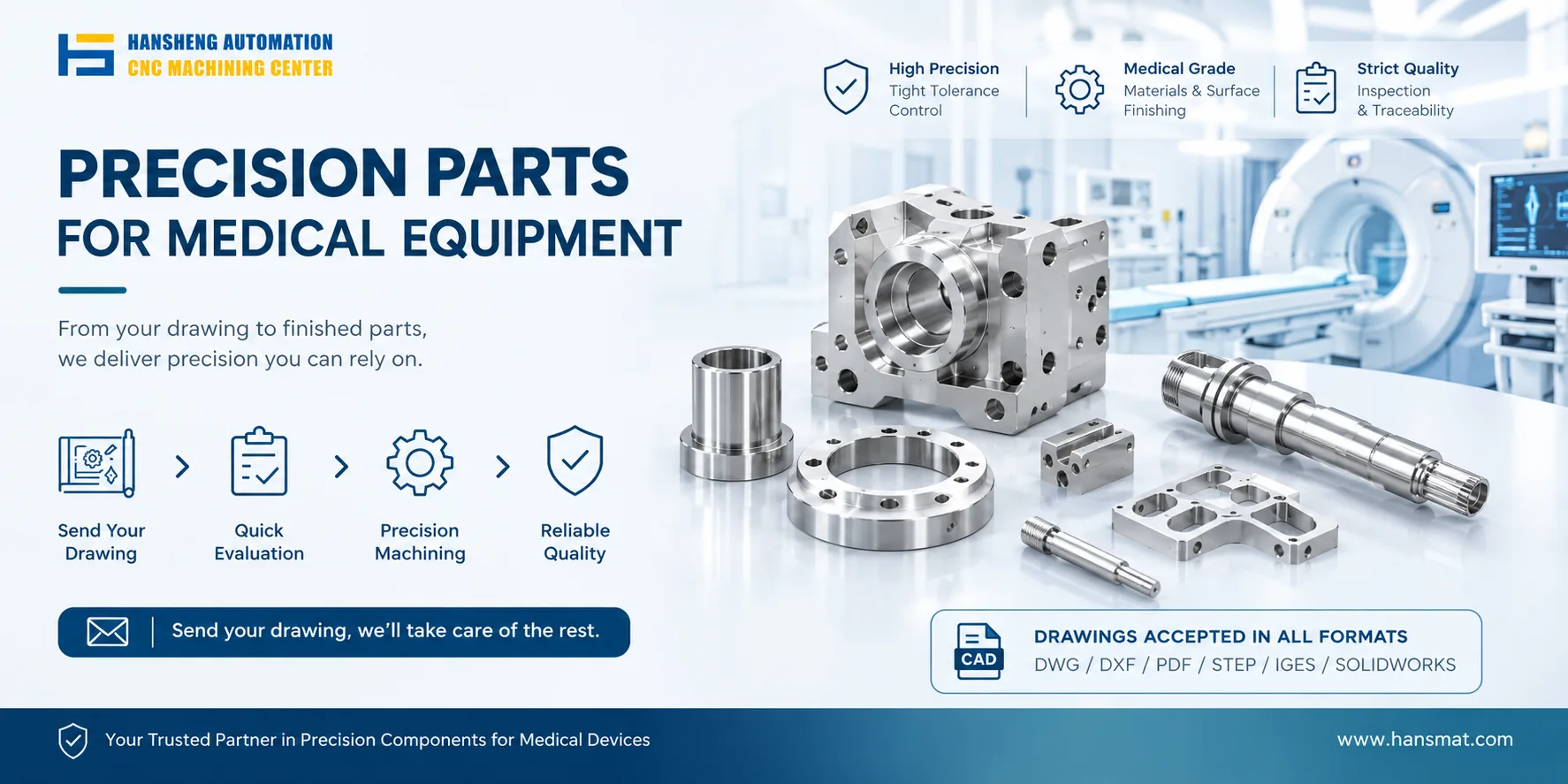
For sterilizer manufacturers, Hansheng Automation machines non-standard parts such as door lock components, valve bodies, and seal seats from customer drawings. Single-piece and small-batch orders are supported.